Headlines
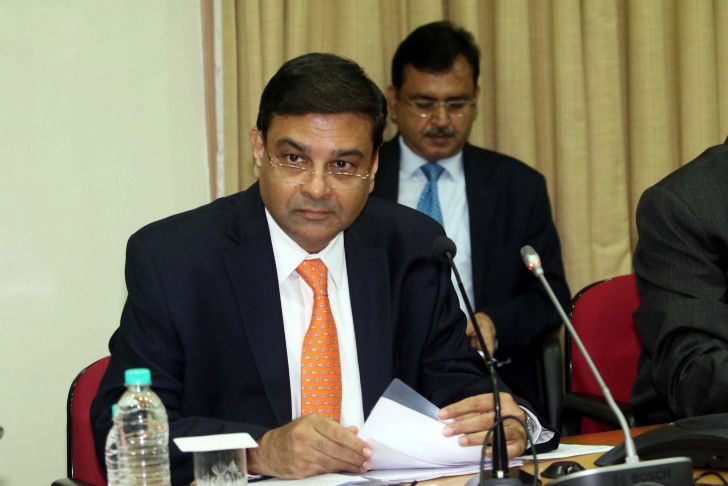
RBI Governor Urjit Patel resigned citing 'personal reasons'
Mumbai, Dec 10
The Reserve Bank of India (RBI) Governor Urjit Patel resigned from his post on Monday with immediate effect, citing "personal reasons", setting of a major crisis in India's politico-economic sphere.
Patel's resignation comes in the backdrop of the ongoing tiff between the government and the central bank over the liquidity and credit crunch in the economy that provoked an extraordinary meeting of the RBI board on November 19.
"On account of personal reasons, I have decided to step down from my current position effective immediately," Patel said in a brief statement released by the RBI.
Patel had taken charge as Governor on September 4, 2016, for a three-year term, following Raghuram Rajan's decision not to seek a second term.
The historic tensions in government-central bank relations were reignited in October when, in a public lecture, RBI Deputy Governor Viral Acharya talked about the independence of the Reserve Bank, arguing that any compromise could be "potentially catastrophic" for the economy.
The government responded with the Finance Ministry seeking discussions with the central bank under the never-used-before Section 7 of the RBI Act which empowers the government to issue directions to the RBI Governor, who then summoned a meeting of the bank board.
The government's differences with the RBI centres on four issues - it wanted liquidity support to head off any risk of a credit freeze, a relaxation in capital
requirements for lenders, relaxing the prompt corrective action (PCA) rules for banks struggling with accumulated non-performing assets (NPAs or bad loans) and support for micro, small and medium enterprises.
Central to the liquidity issue was the government's demand that the RBI hand over its surplus reserves by amending its "economic capital framework". Analysts noted that the government's demand came in the face of a huge fiscal deficit and the need to boost the economy in an election year.
The RBI's central board has 18 members, which includes the Governor and his four deputies as full-time official directors, while the rest have been nominated by the government, including the Economic Affairs and Financial Services Secretaries.
Prime Minister Narendra Modi met with Patel before the board meeting and what emerged on November 19 was seen as settling the debate on the central bank's autonomy and clearly establishing the government as a stakeholder in policy making.
On the issue of reserves, the RBI board decided to form an expert committee to examine its economic capital framework, which will decide the amount of reserves it can maintain, handing over the balance to the government.
On the matter of relaxing the Prompt Corrective Action (PCA) norms for banks with bad loans, it decided that the issue will be examined by the RBI's Board for Financial Supervision.
Eleven of the 21 state-run banks are under the PCA framework, while NPAs accumulated in the Indian banking system have touched a staggering Rs 12 lakh crore.
"The RBI-government fight has been pushed down, abated for now and postponed, but the NPAs issue continues to remain," Sudipto Mundle on the Board of Governors of the National Institute of Public Finance and Policy had said following the RBI board meeting.
Asked about the government-RBI tiff, former Chief Economic Advisor (CEA) Arvind Subramanian told reporters here on Saturday that the central bank's autonomy must be protected because the country will benefit from strong institutions.
"I have myself advocated that RBI should play a pro-active role, but its surplus funds should not go towards routine financing of spending and deficit financing -- that would amount to raiding the RBI," he added.
On the RBI board, with a majority of government nominees, the former CEA said: "I think that part of maintaining a real autonomy is not to politicise the board. The board should not be politicised. Not only it must not be done, it must not be seen to be done either."
Patel's resignation comes in the backdrop of the ongoing tiff between the government and the central bank over the liquidity and credit crunch in the economy that provoked an extraordinary meeting of the RBI board on November 19.
"On account of personal reasons, I have decided to step down from my current position effective immediately," Patel said in a brief statement released by the RBI.
Patel had taken charge as Governor on September 4, 2016, for a three-year term, following Raghuram Rajan's decision not to seek a second term.
The historic tensions in government-central bank relations were reignited in October when, in a public lecture, RBI Deputy Governor Viral Acharya talked about the independence of the Reserve Bank, arguing that any compromise could be "potentially catastrophic" for the economy.
The government responded with the Finance Ministry seeking discussions with the central bank under the never-used-before Section 7 of the RBI Act which empowers the government to issue directions to the RBI Governor, who then summoned a meeting of the bank board.
The government's differences with the RBI centres on four issues - it wanted liquidity support to head off any risk of a credit freeze, a relaxation in capital
requirements for lenders, relaxing the prompt corrective action (PCA) rules for banks struggling with accumulated non-performing assets (NPAs or bad loans) and support for micro, small and medium enterprises.
Central to the liquidity issue was the government's demand that the RBI hand over its surplus reserves by amending its "economic capital framework". Analysts noted that the government's demand came in the face of a huge fiscal deficit and the need to boost the economy in an election year.
The RBI's central board has 18 members, which includes the Governor and his four deputies as full-time official directors, while the rest have been nominated by the government, including the Economic Affairs and Financial Services Secretaries.
Prime Minister Narendra Modi met with Patel before the board meeting and what emerged on November 19 was seen as settling the debate on the central bank's autonomy and clearly establishing the government as a stakeholder in policy making.
On the issue of reserves, the RBI board decided to form an expert committee to examine its economic capital framework, which will decide the amount of reserves it can maintain, handing over the balance to the government.
On the matter of relaxing the Prompt Corrective Action (PCA) norms for banks with bad loans, it decided that the issue will be examined by the RBI's Board for Financial Supervision.
Eleven of the 21 state-run banks are under the PCA framework, while NPAs accumulated in the Indian banking system have touched a staggering Rs 12 lakh crore.
"The RBI-government fight has been pushed down, abated for now and postponed, but the NPAs issue continues to remain," Sudipto Mundle on the Board of Governors of the National Institute of Public Finance and Policy had said following the RBI board meeting.
Asked about the government-RBI tiff, former Chief Economic Advisor (CEA) Arvind Subramanian told reporters here on Saturday that the central bank's autonomy must be protected because the country will benefit from strong institutions.
"I have myself advocated that RBI should play a pro-active role, but its surplus funds should not go towards routine financing of spending and deficit financing -- that would amount to raiding the RBI," he added.
On the RBI board, with a majority of government nominees, the former CEA said: "I think that part of maintaining a real autonomy is not to politicise the board. The board should not be politicised. Not only it must not be done, it must not be seen to be done either."
Tyrannical Modi regime has unleashed financial emergency: Congress on Urjit's exit
Attacking the Narendra Modi government over RBI Governor Urjit Patel's resignation, the Congress on Monday said the "tyrannical Modi regime" had unleashed a de facto financial emergency in the nation and that the integrity of another institution had been "denigrated".
Congress spokesperson Randeep Singh Surjewala said creating economic anarchy and compromising India's monetary policies through stifling the Reserve Bank of India's (RBI) independence was the DNA of the Bharatiya Janata Party.
"Integrity of another institution-RBI, stands denigrated by a tyrannical Modi regime as reflected in RBI Governor's unceremonious exit. Economic anarchy, compromising India's monetary policies and attempting to stifle RBI's independence by government-appointed puppets is the DNA of the BJP," Surjewala tweeted.
Congress MP Ahmed Patel said the manner in which the RBI Governor had been forced to quit was a blot on India's monetary and banking system.
"BJP government has unleashed a de facto financial emergency. The country's reputation and credibility is now at stake," he said.
Patel on Monday resigned from his post with immediate effect, citing "personal reasons".

Congress spokesperson Randeep Singh Surjewala said creating economic anarchy and compromising India's monetary policies through stifling the Reserve Bank of India's (RBI) independence was the DNA of the Bharatiya Janata Party.
"Integrity of another institution-RBI, stands denigrated by a tyrannical Modi regime as reflected in RBI Governor's unceremonious exit. Economic anarchy, compromising India's monetary policies and attempting to stifle RBI's independence by government-appointed puppets is the DNA of the BJP," Surjewala tweeted.
Congress MP Ahmed Patel said the manner in which the RBI Governor had been forced to quit was a blot on India's monetary and banking system.
"BJP government has unleashed a de facto financial emergency. The country's reputation and credibility is now at stake," he said.
Patel on Monday resigned from his post with immediate effect, citing "personal reasons".
10 hours ago
Rajinikanth-starrer Jailer 2's first single 'Ala Bolelo' out; mesmerising dance performance wins hearts!
12 hours ago
Asian voters emerge as swing bloc in Texas
12 hours ago
Mohan Bhagwat to visit US, UK, Canada to counter propaganda against India, Hindus and RSS
12 hours ago
Telangana CM’s visit to US not given political clearance as proposed programmes not appropriate: MEA
12 hours ago
'Follow the money, cut links': How India can crush transnational gangs
13 hours ago
Telangana CM’s visit to US not given political clearance as proposed programmes not appropriate: MEA
13 hours ago
Credit US Ambassador Gor for providing correct perspective on J&K: Harsh Vardhan Shringla
14 hours ago
Melania Trump expands foster youth scholarships
14 hours ago
USCIS changes key Green Card form
17 hours ago
Divya Dutta urges compassion for stray dogs after emotional encounter on film set
17 hours ago
Sebastian Ingrosso announced as second headliner for Sunburn Festival 2026 in India
17 hours ago
Kiara Advani calls ‘Toxic’ a ‘peculiar alchemy’: A fairy tale isn’t just what this film is
17 hours ago
Adnan Sami remembers late mother on her birth anniversary: Her number’s still on my speed dial