New Delhi, April 25
Between April 11 and 20, the Ministry of Environment, Forest and Climate Change introduced a bunch of amendments through three gazette notifications -- one set is proposed while two are done -- to the Environment Impact Assessment (EIA) notification of 2006 that has drawn widespread criticism from environmentalists.
The EIA notification of September 2006 is for mandating prior environmental clearance for certain categories of projects. While the changes -- both proposed and done -- have a lot to be debated, it is the manner in which these amendments are being carried out has drawn equal or more criticism.
On April 11, the Ministry of Environment, Forest and Climate Change brought out the first set of amendments to the EIA notification that provides for exemption of environmental clearance to several projects, including defence related or border area projects, those up to 25 MW thermal plants based on biomass or expansion of terminal building of airport, basically for projects deemed as public utility works.
The exemptions come with the condition that standard environmental safeguards for such projects would be followed by the agency executing such projects or the incremental environmental impacts can be catered by providing for environmental safeguards which can be built into the Environmental Management Plan (EMP) at the time of grant of such clearances.
The next set of amendments published on April 13 extended the validity of environmental clearance to hydro-power and nuclear projects, among others.
On April 20, a major amendment, among others, was that the Centre will now exercise the power to assess and grant environmental clearance to the projects under national defence or security importance, instead of the state.
Environmentalist Manoj Mishra, who is also the Convenor of 'Yamuna Jiye Abhiyaan', said, "An amendment to the principal Act needs to go to the Parliament for any kind of change, big or small."
"Even if you give a public notice, you get public or stakeholders' opinion, then also you will need to take it back to the Parliament," Mishra said, adding, "Only if there are any changes being done to the Rules (set of dos and don'ts that help in implementation of a given Act), then a 30 or 60-day notice for public or stakeholders can be a way to do it."
But that is what the ideal situation should have been. The Environment Ministry has given reasons from 'national security' to 'in the public interest'.
The Centre has mentioned that they have dispensed with the requirement of notice under clause (a) of sub-rule (3) of Rule 5 of the Environment Protection Rule for 'public interest' under powers conferred by sub-section (1) and clause (5) of sub-section (2) of section 3 of the Environment (Protection) Act, 1986, (29 of 1986), read with sub-rule (4) of Rule 5 of the Environment (Protection) Rules, 1986.
Senior Resident Fellow at the Vidhi Centre for Legal Policy, Debadityo Sinha said, "Such power is limited within the purview of Section 3 of the Act, which states that the Central government has powers to take measures to protect and improve the environment. This simply means the exception can be used only for purposes where the intention is strengthening environmental safeguards. Using this power to take any regressive or relaxation of the existing regulation is simply regressive and ultra vires to the Environment (Protection) Act."
In the April 20 set of amendments, the Centre has usurped states' power of assessing for and granting environmental clearance for projects in category B that are for defence or strategic importance.
"Stating that overriding state's authority in the environmental clearance process is undermining the federal structure guaranteed under the Constitution," Sinha said, adding that, "Land is a 'state' subject while environment and forest conservation is in the 'concurrent list' of the Constitution. Centre must consult and take concurrence with the state before undertaking any activity on their land. This amendment is deeply problematic."
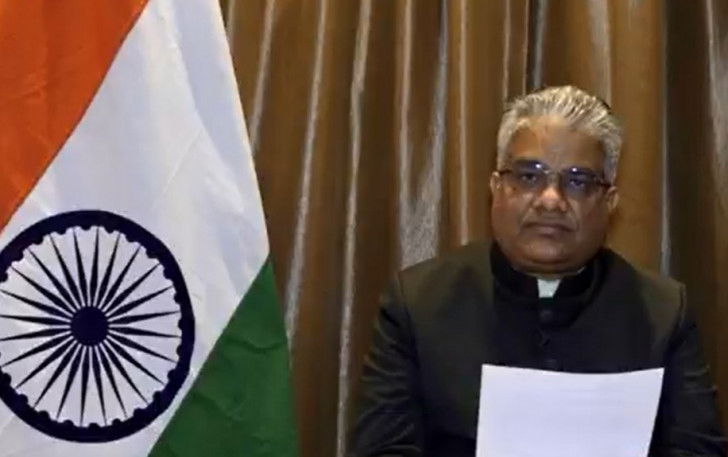
Last week, when asked about the amendments and the poor manner of the implementation of environmental management plan, Union Environment Minister Bhupender Yadav had told IANS, "We are working out the modalities to address all such issues and will soon come out with a policy regarding the same."
The Environment Ministry had already proposed a volley of amendments that have been deemed as 'dilution' of the EIA process and criticised heavily by environmental activists.
Those amendments, introduced in 2020, are yet to be finalised. And now these additional amendments.