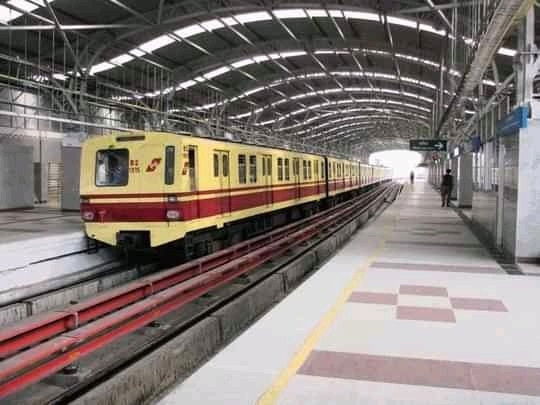
Kolkata, May 31
After a disastrous year that saw its Operating Ratio (OR) shoot up to 678, the Kolkata Metro Railway is hoping for an improvement even as performances of zonal railways are being worked out for the 2021-22 fiscal.
OR is the figure that denotes how much a railway zone spent to earn Rs 100. In 2020-21, Metro Railway spent Rs 678 to earn Rs 100. Suspension of services due to the pandemic and a drop in non-fare revenue was to blame for this.
"We are hoping for an improvement in 2021-22. However, we don't expect the OR to return to what it was in 2019-20. After all, we were carrying nearly 7 lakh passengers daily before the pandemic forced us to regulate services, impose restrictions and then suspend them altogether.
"Though services resumed in 2021-22, it will take time to get to that 7 lakh-mark. People are still hesitant to move around freely and many are continuing to work from home. We have done better in the non-fare revenue segment though," a senior Metro Railway official said.
Metro Railway has achieved a drop in OR over the years since 2017-18. In 2017-18, the OR was 278. In 2018-19, it dropped to 248. In 2019-20, Metro recorded an OR of 216, the lowest since 2015-16. In 2019-20, Metro's earnings from passenger revenue was Rs 219.53 crore. It had also earned an additional Rs 33.78 crore from non-fare revenue.
In 2020-21, passenger earnings dropped to Rs 42.62 crore and non-fare revenue to Rs 23.55 crore. Non-fare earnings are what Metro Railway can earn through branding of station premises, allowing advertisements on and inside trains and letting out space.
"Passenger earnings can never surpass operating expenses of any zonal railway. Rather, passenger traffic tends to push up the OR. Freight traffic is the key. That is why many zonal railways registered good ORs even during the pandemic as freight trains continued to run but passenger services were suspended.
"Unfortunately, there is no scope for freight movement in Metro Railway. Non-fare revenue from advertisements and branding are also dependent on footfall and 'eyeballs'. As the number of passengers dropped, corporates seemed less interested. After all, the corporates also took a major hit due to the pandemic," another Metro official said.
Though services were suspended, Metro Railway had to keep its fleet of rakes in running condition. All efforts were made to reduce expenditure but maintenance costs in an underground section are much higher.
Metro Railway has an underground section between Mahanayak Uttam Kumar (Tollygunge) and Dumdum. This is a distance of nearly 16.45 km. Officials point to how rakes continued to be maintained and made to undergo trial runs even during the pandemic. The stations also had to be maintained.
"We had to be prepared as services could resume any day. Maintenance staff had to be protected against Covid-19 and all precautions were taken. Operating staff also had to be present and taken care of. These did involve expenses," an official said.