New Delhi, June 11
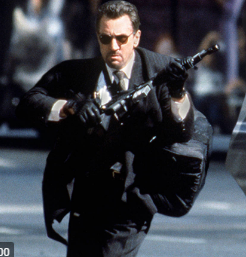
Violence lurks somewhere in the darkness. Perhaps within. The uneasy quiet, the suggestions of consequences. The minimal background score ensures that comfort sits nowhere close. Cold stares do more than cold metal in leather holsters.
But then this is the Punjabi cinema of the likes of Gurvinder Singh ('An Ghore Da Daan', 'Chauthi Koot' and others), Anup Singh ('Qissa'), Jatinder Mauhar ('Qissa Punjab', 'Sade Ale') or Rajeev Kumar ('Chamm').
And they seldom get full houses.
While for many serious Punjabi movie directors, even a theatrical release is a distant mirage, the mainstream Punjabi cinema with a laboratory tested formula -- a potpourri of love stories, gang war, a portion shot in Chandigarh (even if the film is based in rural Punjab); it is about effortlessly setting the box office on fire with loudness in every department conceivable. Here, thematic essence, social relevance, and technical prowess are not in the picture.
For an industry that produced its first sound film, 'Heer Ranjha' in 1932 and a society where the self-congratulatory mode has become a way of life, it is ironic that despite producing some fine literature, its cinema has mostly failed to look beyond the physical aspect of violence and failed to unearth different pulls and contrasts plaguing the society here, like everywhere else.
The argument that it is an easy way out for filmmakers is lame, that it is what people want to see -- a very surface reading of the phenomenon.
For those who have watched Jatinder Mauhar's 'Qissa Punjab', which revolves around the drug problem in Punjab, it is evident that the script had plenty of scope for violence -- but he chose to hold back, intentionally suffocating the audience at times. Precisely why the impact of impending doom could be seen in almost every frame.
He tells IANS, "Sadly, for most directors here, only two kinds of films can be made -- love stories or an action flick. There are no greys. In this clear brutal classification, love stories are about chasing a woman even if she is least interested, but will eventually give in, loads of slapstick comedy and enough double-meaning dialogues."
"When it comes to action movies, just follow the stunts straight out of South Indian or Hollywood films and ensure that the protagonist is more flexible than Superman. How can we assume that what is shown on the screen will not have an effect on a young audience, that they will not ape their idols?"
In his latest film, 'Sade Aale', where violence plays a central character, not even a slap has been shown on the screen... "Where is the need? Also, when you show violence in its physical manifestation, is it not a way of normalising it?"
He feels that seeing the action depicted, one wonders in which part of the state is it from? Stressing that the argument that people want to watch such films, the reason they are being made, holds no ground, he adds, "The audience never decides. It is the prerogative of the director and the producer. They show what they like and lend that perspective to the audience," he says.
Citing Marathi cinema's example which mostly saw comedies being made before the year 2000, Mauhar says, "After a few serious films became blockbuster hits, most producers there want a socially relevant and serious project. What does this say? Also, I feel why cannot major production houses in Punjab decide that out of 10 films they make, let two be serious and issue-based. Would that not be a feasible experiment?"
Well-known poet and writer Desraj Kali, who has closely watched the Punjabi society over decades, also as a Dalit activist, feels that the vulgar display of wealth, obsession with weapons, and deep caste divides that are reflected in Punjabi cinema and new-age songs can be traced back to the Green Revolution.
"In the '80s, a new rich Jatt farmer emerged. There was immense wealth but not the education and exposure on how to utilize it," Kali explains. "The need to celebrate economic development led to several socio-cultural changes. It manifested into jeeps, licensed weapons and everything loud."
"Now, even the Jatts with small landholdings who did not have that kind of land and wealth aspired for it. This created a market for these singers and filmmakers to cater to. The young listening to such songs and watching these films were bound to be magnetised."
Talk to him about the violence and male pride reflected in mainstream content from the region, and Kali asserts that this is not a new phenomenon. "Look at the singer Chamkila, who is almost revered. His songs were mostly double meaning, for him being a Punjabi man was about beating his wife. Even the act of sex needed to be violent."
Asserting that this does not mean that serious work is not being done in the region, he laments that the quantity is far too low. "Many filmmakers from here whose films go to Cannes and Venice don't even get a theatrical release in Punjab. What more do I say?"
On the ever-growing obsession with personal firearms, Kali observes, "Someone should research the huge number of arms licenses that were approved during the Akali regime."
"A few years back, no Jatt marriage would be complete unless a few shots were fired in the air at the marriage palace. Now try explaining to me the logic of firing during a marriage ceremony?"