Sochi (Russia), Nov 22
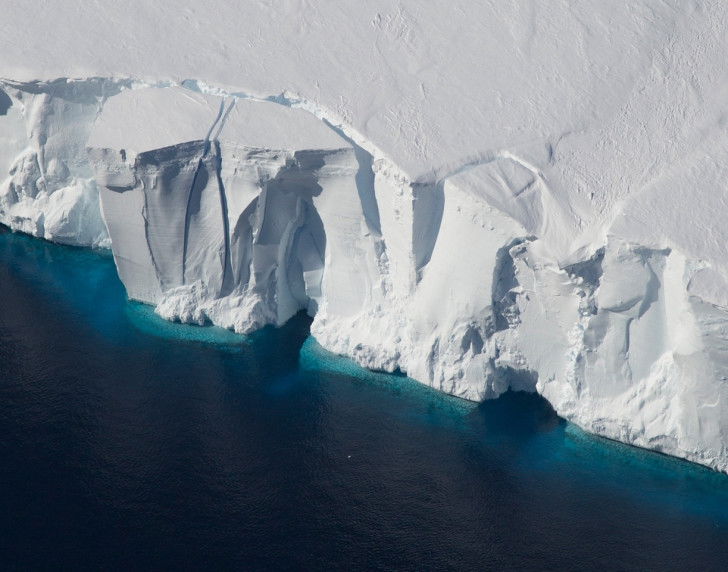
The melting of the Arctic will open up a new shipping route which will have an impact on the Indian Ocean traffic, an Indian academician said on Monday.
Speaking to IANS on the sidelines of the global nuclear power exhibition-cum-conference held here by Russian company Rosatom, Prof Rudra Prasad Pradhan, Professor, Department of Humanities and Social Sciences, Birla Institute of Technology and Science, Pilani, said: "If the Arctic melts and the shipping route opens up, it will cut the cost by 40 per cent for shipping lines."
He also added the shipping route will also have its impact on the traffic in the Indian Ocean.
Pradhan said currently traffic on the Indian Ocean is a transit route where ships deliver goods to India and move forward and what will be the future impact of Arctic opening up on India will have to be seen.
There could also be a circular route for the shipping lines, he added.
He also said India can take advantage of the new themes like Smart Port, Green Shipping and Net Zero.
Earlier speaking at the Round Table at the nuclear conference on 'Blue Economy: Government, Business, and Science for a Sustainable Future', Pradhan said India has an Arctic policy and has institutional linkages.
Pointing out ocean is called Sagar in Hindi, Pradhan cited Prime Minister Narendra Modi who had said Sagar is Security and Growth for All.
Ocean resources contribute to social and economic growth and welfare in many countries around the world through the industries associated with marine and coastal resources.
According to OECD estimates, the global ocean economy generates $1.5 trillion in global value added annually, and this figure is expected to double in size to $3 trillion by 2030.
At the same time, the ocean economy is becoming increasingly influenced by sea freight, which already accounts for more than 80 per cent of the global trade.
Meanwhile, ship-building, port infrastructure, and other marine-based industries continue to grow.
According to Nikolai Shabalin, Executive Director, Lomonosov Moscow State University Marine Research Centre, the biggest part of Russia is harsh sea like the Arctic region.
Russia wants to connect to the Arctics and other industries like tourism, said Ekaterina Lyakhova, Director for Business Development, the State Atomic Energy Corporation Rosatom.
The other speakers were: Natalia Stapran, Director, Department of Multilateral Economic Cooperation and Special Projects, Russia's Ministry of Economic Development, Prof. Mohamed Ahmed Said, Professor of Physical Oceanography, National Institute of Oceanography and Fisheries, Egypt, amd Raj Jit Singh Wallia, Deputy Chief Financial Officer, DP World.