




America
US Supreme Court strikes down race-based affirmative action in college admissions
Washington, June 29
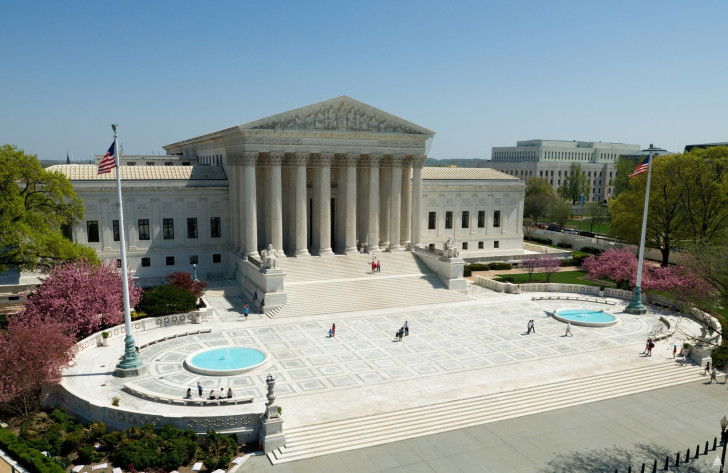
In a landmark judgment, the US Supreme Court on Thursday declared race-based affirmative action in college enrollment unconstitutional.
The court held affirmative action violative of the US Constitution’s 14th Amendment, which guarantees equal protection.
All six conservative justices, including Chief Justice John Roberts, ruled to strike down affirmative action, while the three liberals ruled against.
The court’s ruling came in a challenge to the race-based affirmative action by Harvard and University of North Carolina.
“The student must be treated based on his or her experiences as an individual—not on the basis of race,†Chief Justice Roberts wrote in the majority opinion.
“Many universities have for too long done just the opposite. And in doing so, they have concluded, wrongly, that the touchstone of an individual’s identity is not challenges bested, skills built, or lessons learned but the color of their skin. Our constitutional history does not tolerate that choice.â€
Roberts added that the court had previously “permitted race-based admissions only within the confines of narrow restrictions. University programs must comply with strict scrutiny, they may never use race as a stereotype or negative, and -- at some point -- they must endâ€.
Justice Sonia Sotomayor wrote in her dissent note for the minority decision that the ruling “rolls back decades of precedent and momentous progress. It holds that race can no longer be used in a limited way in college admissions to achieve such critical benefitsâ€.
“In so holding, the Court cements a superficial rule of colorblindness as a constitutional principle in an endemically segregated society,†she added.
But the court allowed for colleges to consider race in discussions in the admission process — an applicants can bring up race in their essays and applications forms as a factor in their life, as an impediment or an inspiration.
Roberts wrote that “nothing in this opinion should be construed as prohibiting universities from considering an applicant’s discussion of how race affected his or her life, be it through discrimination, inspiration, or otherwiseâ€.
While the ruling will end affirmative action based on race, universities would be able to switch to using socio-economic factors in the admission process, which could be based on the applicants’ family incomes or residential address.
6 hours ago
UAE: Two Indians among four injured by missile debris in Dubai
7 hours ago
AAPI Announces 44th Annual Convention In Tampa, FL
7 hours ago
US presses Iran with strikes, open to deal
7 hours ago
Trump slams allies France and UK over Iran, Hormuz
7 hours ago
US signals action to keep Hormuz open
7 hours ago
US troops push for faster, decisive Iran war
8 hours ago
Trump invites King Charles, Camilla for state visit as US commemorates 250th Independence anniversary
8 hours ago
Russia expecting PM Modi's visit to Moscow in 2026: Deputy FM Rudenko
13 hours ago
From Nalanda to Prayagraj, crowd crush incidents raise safety concerns
13 hours ago
Bhumi Pednekkar says it’s ‘heartbreaking’ to see women-led stories shrinking in mainstream cinema
13 hours ago
‘Satrangi - Badle Ka Khel’ starring Mahvash, Kumud Mishra to tell story of cross-dressing dancer burning with vengeance
13 hours ago
4th Florida South Asian Film Festival (FL-SAFF) Showcases Global South Asian Cinema in New Jersey
13 hours ago
Simbu-starrer Arasan's shooting to be wrapped up by June first week?
