New Delhi, July 10
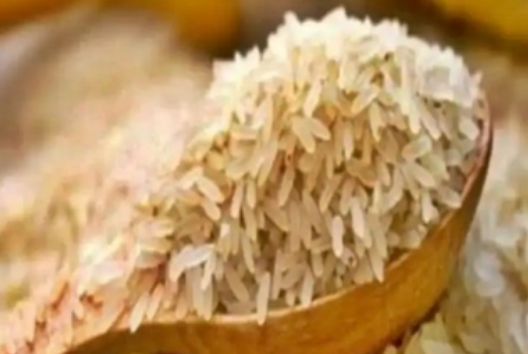
Deficient rainfall, and consequently lower sowing, will push rice prices higher, Motilal Oswal Financial Services said in a report.
The report said that rising global rice prices would further push local prices up, adding that rice constitutes around 4.4 per cent of the overall CPI basket.
A deficient monsoon in major rice-producing states (with 49 per cent share), such as West Bengal (11 per cent below normal), Uttar Pradesh (2 per cent), Andhra Pradesh (22 per cent), Odisha (25 per cent), Telangana (35 per cent), Chattisgarh (12 per cent), Bihar (29 per cent) and Assam (2 per cent), has affected rice sowing, the report said.
Though, states with higher irrigation cover, such as Uttar Pradesh, Andhra Pradesh and Telangana, will be less impacted.
Apart from the northwest region, 59 per cent above normal and central India at 4 per cent above normal, all other regions have witnessed below normal rainfall, Motilal Oswal Financial Services said in the report.
Cumulative rainfall until July 9 was 2 per cent above normal compared with an 8 per cent deficit as of July 1 and 3 per cent above normal last year. However, the distribution of rainfall remains uneven.
The rainfall deficit in the southern peninsula has reduced from 45 per cent below normal last week to 23 per cent below normal now. The eastern and northeastern regions have witnessed a deficit of 17 per cent, the report said.
July is a crucial period for sowing kharif crops as about 32 per cent (average CY02-CY21) of monsoon precipitation typically occurs during this month.
Kharif sowing as of July 7 stood at 8.7 per cent lower than last year. This is mainly due to lower sowing of rice and pulses. The area under paddy cultivation is still 23.9 per cent lower than last year. The area under pulses is 25.8 per cent lower than last year, the report said.
Production of oilseeds, jute and cotton is also lower.
On the other hand, coarse cereals (19.7 per cent YoY) and sugarcane (4.7 per cent YoY) are doing well.
As of July 7, water reservoir levels stood at 29 per cent of the live storage capacity, the lowest in four years, mainly due to lower storage in the southern region of the country.
According to the India Meteorological Department (IMD), July rainfall is likely to be on the upper side of the "normal" range, which is 94-106 per cent of the long-period average (LPA).
The IMD further mentioned that El Nino conditions are likely to develop by the end of July, but they could be offset by the development of a positive Indian Ocean Dipole (IOD).
The IMD has indicated that certain regions of Uttar Pradesh, Bihar, Assam, Punjab, Karnataka and Tamil Nadu may witness "below normal" rainfall in July.
It could affect sowing of paddy and pulses in these states, the report said.
Although irrigation facilities have improved in the past two decades, key kharif crops, such as paddy, tur and groundnut, still heavily rely on rainfall.