




Business
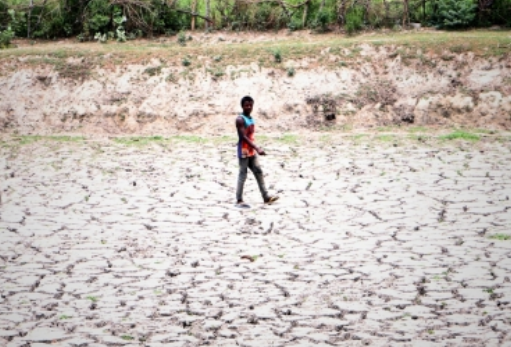
Apart from India's northwestern region, all others witnessed deficient rainfall
New Delhi, August 21
In August, the monsoon has fallen significantly short of the long-term average, registering a deficit of 30 per cent, Motilal Oswal Financial Services said in a report.
The southern regions of India, in particular, have experienced notably dry conditions.
After starting the month on a positive note with a 5 per cent surplus due to a wet July, the monsoon took a downturn in August, with an overall deficit of 7 per cent as of August 20, the report said.
While the northwest (6 per cent above normal) has received above normal rainfall, Central India (2 per cent below normal), South Peninsula (13 per centbelow normal) and eastern and northeastern regions have witnessed deficient rainfall patterns (20 per cent below normal).
El Nino has strengthened from a "weak" to a "moderate state and the latest update from the US weather agencies said there was a 66 cper centhance of it developing into a strong event later this year.
Kharif sowing as of August 18 stood at 0.1 per cent higher than last year.
The area under paddy cultivation is now 4.3 per cent higher than last year. However, the area under pulses is still 9.2 per cent lower than last year.
Production of jute, cotton, and oilseeds is also lower. Coarse cereals (1.6 per cent YoY) and sugarcane (1.3 per cent YoY) continue to do well, the report said.
Above normal rainfall in Telangana has led to an improvement in rice sowing.
However, deficient rainfall in major rice producing states (with 56 per cent share in overall rice production) such as West Bengal (14 per cent below normal), Uttar Pradesh (22 per cent), Andhra Pradesh (14 per cent), Chhattisgarh (13 per cent), Bihar (31 per cent), Odisha (8 per cent), Tamil Nadu (5 per cent) and Assam (19 per cent) is a cause of concern.
States with higher irrigation cover, such as Uttar Pradesh, Andhra Pradesh and Telangana, are expected to face less impacted from the deficient monsoon conditions.
Deficient monsoon in states (with 64 per cent share), such as Madhya Pradesh (5 per cent below normal), Maharashtra (5 per cent), Uttar Pradesh (22 per cent), Karnataka (15 per cent), Andhra Pradesh (14 per cent), and Jharkhand (36 per cent), coupled with large excess rainfall in states (24 per cent share) of Gujarat (23 per cent above normal) and Rajasthan (27 per cent) is affecting sowing of pulses, the report said.
Lower irrigation cover across the major states could have a more pronounced impact on the production of pulses.
Inflation in pulses has nearly doubled in the past five months.
Deficient rainfall, and consequently lower rice and pulses sowing, has pushed prices higher. Rice constitutes around 4.4 per cent and pulses has a weight of 6 per cent in the overall CPI basket.
2 hours ago
Malavika Mohanan opens up on what recently made her fall in love with Mumbai a little more!
2 hours ago
Kajol celebrates husband, Ajay Devgn’s birthday with a funny twist
4 hours ago
NASA astronauts carry iPhones to Moon for 1st time aboard Artemis II mission
5 hours ago
US lifts sanctions on Venezuela's acting president
6 hours ago
RS: Oppn accuses govt of rushing through key bills for political 'gains' ahead of Assembly polls
6 hours ago
Not convinced that elections in India are free and fair, says Indian Overseas Congress chief Pitroda
6 hours ago
Priyanka Gandhi opens Kerala poll campaign slamming Centre and Left
6 hours ago
Tovino Thomas on how a church set for 'Pallichattambi' was so good that an old person thought it to be real!
6 hours ago
Akshay Kumar-starrer ‘Bhooth Bangla’ moves release date, to bow in cinemas on April 16
6 hours ago
Shilpa Shetty digs in nostalgia, shares what she was doing in the 90s
6 hours ago
Ranbir Kapoor’s no-show at ‘first look of Rama’ launch raises eyebrows
7 hours ago
Raj Kundra’s ‘The Great Punjab Robbery’ is locked for August 7 release
7 hours ago
Sanjay Dutt’s ‘Aakhri Sawaal’ teaser dives into fiery academic face-off, hidden past
