




Business
De-rating of BPCL, HPCL, IOC on the cards as dominance in petroleum pipelines gets challenged
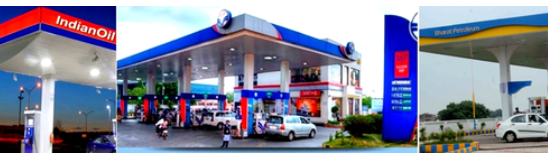
New Delhi, Sep 18
The common carrier access of product pipelines may result in sustained de-rating of BPCL, HPCL, Indian Oil even lower, Swarnendu Bhushan - Co-Head of Research, Prabhudas Lilladher said in a research.
Although HPCL/BPCL/IOCL are trading at 0.9/1.2/0.8x FY24 PBV, a look at their long term valuation charts suggests that they could still correct from here.
Marketing margins losses continue for OMCs. Average HPCL and BPCL returns have under-performed Nifty by 15/7/6 per cent in past 3/6/12month, while IOCL’s performance has given 8 per cent underperformance against Nifty in 3 months (overperformed 3/16 per cent in 6/12m) due to inability of raising retail prices amid rising crude oil prices.
As per our calculation, the gross marketing margin on petrol and diesel stand at Rs 5.5lit and loss of 3.8/lit respectively in September compared to Rs10.6lit/10.2/lit in 1QFY24 and Rs 8.4/2.7/lit in 2QFY24YTD, the report said.
“We remain cautious on PNGRB’s decision to implement common carrier for product pipelines due to the challenge it poses for OMCs. OMCs own 90 per cent of marketing infrastructure including pipelines, marketing terminals and depotsâ€, the note said.
While pipelines constructed under bidding process already have provisions for common carrier, older pipelines are still lacking behind. Overall utilisation of product pipelines at 68 per cent in FY23 does present an opportunity to other interested parties including private players.
Pipelines provide the cheapest method of transportation, as next best coastal is 46 per cent costlier while roadways are even twice as costly. In addition to the cost of creating new infrastructure, uncertainty of obtaining right of using land for laying pipelines remains a key challenge limiting expansion of private players in product retailing. However, post implementation of unified tariff of natural gas pipelines, we expect PNGRB to open petroleum product pipelines, a step that may sound like fall of the last bastion for OMCs, the note said.
Pipelines are the most critical part of the supply-chain as their construction takes long time. Just to share a perspective, Kochi-Bengaluru gas pipeline has still not been completed even after a decade of commissioning the Kochi LNG terminal.
Private players have largely remained at bay (6-7 per cent market share in sale of petrol/diesel in FY23) given 1) pricing interventions in petrol and diesel resulting in non-competitive environment, and 2) high cost plus time involved in laying marketing infrastructure alongside risk associated with it. However, at times OMCs have bled in terms of losses in marketing segment due to inability to pass on high cost to consumers, over a longer period of time; they have shown resilient profits. The common carrier access in product pipelines, could thus, lower the entry barrier for private players, thereby challenging dominance of OMCs over a period of time, the note said.
11 hours ago
Great Nicobar project to solidify India’s position in Strait of Malacca: Report
11 hours ago
Hindu groups join White House faith dialogue
11 hours ago
Two dead in mass shooting at Canada street festival
11 hours ago
Fast-moving wildfire in US Southern California forces evacuations
11 hours ago
12 nations reaffirm commitment to free, open Indo-Pacific
11 hours ago
US renews call to free Cuba prisoners
11 hours ago
Trump renews criticism of US media, alleges 'fake news'
11 hours ago
US launches third round of strikes on Iran
11 hours ago
Man held after Indian American wife killed, son shot in US
11 hours ago
18-member panel to review ongoing survey identifying illegal, unrecognised madrasas in Bengal
11 hours ago
Bomb threat at Mumbai's Taj Hotel declared hoax after security check
11 hours ago
Vietnam boat tragedy: CM Naidu orders swift measures to bring back bodies of three Andhra men
11 hours ago
Kashmir advocacy group to intensify fight against drug addiction, women to lead awareness drive
