Las Vegas, Sep 25
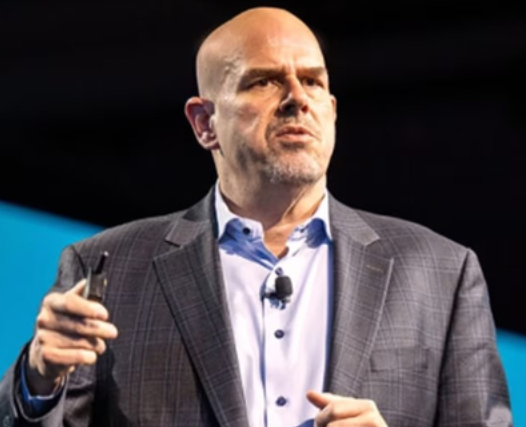
Mike Sicilia, Executive Vice President of Oracle's vertical businesses globally, has said that healthcare is a “very logical place†for the Cloud major to engage with the Indian government.
The top company executive made the remark to IANS at the just-concluded ‘Oracle CloudWorks’, an annual flagship event of the company, here.
When asked about how Oracle plans to increase its footprint in India, especially within the state/Central governments and help them with their workloads, Sicilia said the company manages a big workforce in the country and is working hard towards increasing it further.
He gave the example of Cerner healthcare solutions which Oracle recently acquired. Cerner has chosen to spend its corporate social responsibility (CSR) funds to support the digitalisation of primary health centres (PHC) across India, aimed at benefiting healthcare in communities.
The company has also partnered with NGOs that manage PHCs to implement innovation.
The largest of these partners manages about 73 PHCs, while others look after varying amounts of organisations.
There are approximately 30,000 PHCs throughout India.
Sicilia went on to say that “particularly in the area of public health, our hope and goal is to work with governments worldwide, including in India, to develop and deploy public health dashboards which will be quite advantageous when there are disease outbreaks or pandemicsâ€.
“Providing governments with real-time information about what’s happening in large population centres is really crucial to containing and preventing the potential next health crisis.
Healthcare is an area that we can work with the states as well as the Central government,†he said.
According to the Oracle executive, India has a “wonderful labour force that is incredibly competent in terms of creating new technologies, with highly advanced engineering skillsâ€.
But “one of the challenges is a lot of bespoke things that are running in Indiaâ€.
“A lot of bespoke things that were built on top of technologies got the Indian government and private sectors to be able to adopt technology at a very high rate. The ongoing challenge is that bespoke things are very expensive, because you have to have human beings go back to maintain it,†Sicilia said.
“It is not like India is short on labour, but you want to focus that labour on doing higher order things like creating systems in scale for the entire country or an entire state, rather than creating bespoke things.
“I think the challenge is to move from bespoke applications to true Cloud services. But the first step is to lift and shift a lot of those bespoke applications to have them from running on the Cloud.
“And overtime, to replace them with more economical, more reliable and more secure Cloud services with standard systems,†he added.
The top official believes that “there is benefit in utility at either level and I don’t think that it necessarily has to be a nationwide thing to have a lot of value for a lot of human livesâ€.
“I do believe that healthcare is a very logical place for oracle to engage with India at the government level,†he asserted.
Sicilia also spoke about Oracle’s ‘Fusion Data Intelligence Platform’, a next-generation data, analytics, and AI platform that will help Oracle Fusion Cloud Applications customers achieve better business outcomes by combining data-driven insights with intelligent decisions and actions.
He said the usage of this platform will enable it to aggregate a patient’s clinic visits, prescriptions into a central database.
“One of the things that becomes difficult for people seeking healthcare is to go from one doctor to the next doctor and then to understand what happened at the first when you get to the next, with things like medical records. Overtime, implementing digital health records will be the ultimate solution to such problems.â€
When asked if such a platform will work in a country like India, Sicilia replied by saying that “something like this could work anywhereâ€.
“The process where providers, doctors and nurses have to actually tap into their computer screens to physically enter data into systems, will go away relatively soon.
“The very interesting combination of voice recognition, voice dictation, voice navigation plus generative AI can make a lot of these existing systems completely transformed,†he added.
Sicilia also said that although India has a wonderful amount of IPS that has been developed over time, a lot of the existing systems are built bespoke.
“Each provider, each hospital system has their own bespoke system in place. And that’s okay. Overtime standardizing is a good idea, but in a country the size of India, standardizing will take some time.
“So, it’ll be better to put a layer on top of all of it.â€