New Delhi, Oct 27
Amid remarkable progress marked by rapid technological integration, enhanced focus on sustainability measures and a highly proficient workforce, the hospitality sector still grapples with the persistent challenge of the gender gap.
Delving deeper into the issue, a recent study by Payal Kumar, Principal Academic Advisor, Professor HR & OB, Indian School of Hospitality underlines the obstacles women face in their pursuit of leadership roles and offers insights into potential solutions for accomplishing greater gender equality in the corporate world.
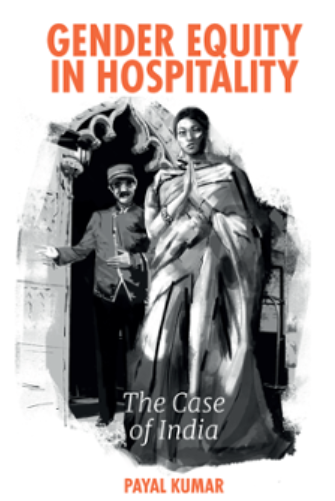
In her recently unveiled comprehensive book titled 'Gender Equity in Hospitality', Kumar underlines that hospitality and tourism are one of the fastest-growing industries in India.
The book highlights that the hospitality sector, according to the World Tourism & Travel Council (WTTC) accounted for 6.8 per cent of the country's total GDP, creating 39 million jobs in India in 2019.
However, for a substantial number of women, the road to becoming hospitality professionals is full of barriers and societal challenges.
"After interviewing a significant number of women working in the hospitality sector, I observed that while there is genuine interest among some women to be a part of the hospitality sector, they are discouraged by certain stereotypes. These stereotypes revolve around concerns that they might have to work for long hours even during festivals like Diwali and Christmas," says Kumar.
"I refer to them as the missing women as, despite a willingness to join the sector, they are unable to accomplish their goals, and we do not even know what the numbers are," adds Kumar.
Detailing the glass ceiling effect, Kumar also sheds light on how women and men are initially promoted at similar rates across diverse industries worldwide. However, as time progresses, the career advancement of women slows down owing to factors like taking breaks to have children.
"While at the entry-level, women and men tend to progress at a similar pace across different industries. However, the glass ceiling effect becomes evident over time. This phenomenon transpires when women take breaks from their professional life primarily due to life events such as having children," adds Kumar.
She further opines that to mitigate this challenge, strategic measures must be taken to promote women to the same level as their male counterparts once they rejoin the workforce.
The study also put forth a host of recommendations for policymakers and industry leaders to bridge the gender disparity in the hospitality sector. Some of the noteworthy recommendations in this regard include :
â— Incentive schemes and creating enhanced awareness for mobilisation of young girls to enrol for Government programmes such as the apprenticeship program, Hunar se Rozgar
â— Providing scholarships and concessions in fees to females from economically weaker sections to improve their participation in tourism and hospitality.
â— Designing sponsorship, mentorship programmes by the industry
â— Training & skill development programmes with certification for women with a specific focus on rural areas and travel and tourism study scholarships for women as part of designated travel, tourism and hotel-focused institutes like IHM, ISH, etc.
â— Return to work programmes to support, encourage return after maternity breaks.
â— Commissioning a separate study to understand the effect of post-natal job losses and encourage organisations to offer a second opportunity to women returning from maternity leave.
Kumar, in her book, also emphasises how the absence of mobility is a significant barrier for women in professional growth in the hospitality sector.
"Mobility in terms of shifting to different geographical locations, even abroad, is particularly important in the hospitality industry for career progression, especially for those in hotel operations. When you have a family and children, it becomes difficult for them to kind of (approve) uproot themselves and go to another location," asserts Kumar.
In addition, the study also highlights that women lack the necessary mentorship support compared to their male counterparts and often witness the challenge of the absence of family support.
"Mentorship plays a huge role in promotion and selection for one's next role. This may be easier for male employees to procure. Also, at the end of the day, a woman has to take care of the household activities. Considering a woman who is working for at least nine hours on the property and then going back home to take care of the kids brings a different set of challenges," claims the study.
Another critical challenge looming in the sector for women professionals is fewer role models for women, as the study reveals that new entrants learn significantly by observing their seniors perform in a given situation. However, female entrants may lack relatable seniors in this regard.