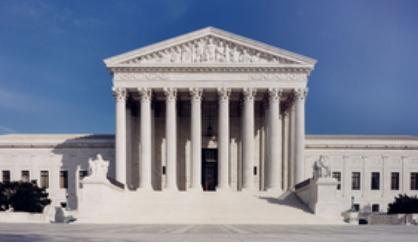
Washington, Dec 15
The US Supreme Court's decision to hear cases challenging people's access to the abortion pill Mifepristone could threaten the lives of hundreds of thousands of patients in states where abortion is legal and protected.
Experts, especially from the government and the medical community, who swear that the abortion pill is safer than a paracetamol said the justices agreed on Wednesday to review an appellate ruling that significantly restricted use of the drug mifepristone, rolling back the Food and Drug Administration's decision to make the pregnancy termination drug available to patients through telemedicine and the US mail, media reports said .
The apex court is expected to rule in the two Mifepristone-related cases by June 2024, when the race for the White House hots up as Democrats are putting abortion rights as top of the agenda of their campaign for re-election of incumbent president Joe Biden to the White House.
If the majority determines the FDA overstepped its bounds by making abortion medication accessible through video appointments and mailed medicine, people would no longer be able to obtain these abortions in their first trimester remotely, regardless of state laws that protect access to abortion, experts at the USA Today opined in a special dispatch.
The court's ruling could also cut off remote prescriptions for patients in states where abortion is illegal.
"The real risk is everywhere that (it) is legal today," said Sara Rosenbaum, professor of health law and policy at George Washington University's Milken Institute School of Public Health.
A ruling against telemedicine appointments and mailing the abortion pill to patients "would be equivalent to a nationwide ban".
In 2020, medication abortions accounted for more than half of all abortions in the US, according to the Guttmacher Institute, a research and policy organization that supports abortion rights.
Patients in rural areas with no access to an abortion clinic or who cannot travel to a state where abortion is legal are high risk sections that could lose their access to abortion.
People traditionally underserved by the health care system, including minority populations and poverty stricken people, would be most impacted by this decision, said Melissa Grant, COO of carafem, a network of reproductive health clinics and telehealth providers across the US.
"Abortion care is already out of reach for millions," said Grant, who noted that most of her patients use telehealth services in the 16 states that carafem serves.
"This is not just a small thing where we're limiting one type of access; we're limiting service to the most used and accessible type of abortion that we have left in this country."
Limiting access to mifepristone to people who make in-office visits would also reverse a trend in healthcare that became popular and was widely adopted during the Covid-19 pandemic amid stay-at-home orders, Rosenbaum said.
"This is the way healthcare works now," she said.
"You would have to get a physical prescription and carry the prescription to the pharmacy. It's just not the way health care rolls anymore in the US."
Studies have found that telemedicine increased access to abortion care across the country. Most patients preferred it due to its convenience, low cost and their belief that the telehealth service would maintain their confidentiality.
The Supreme Court ruling could also impact how many times doctors must see a patient before they can prescribe the abortion pill.
The FDA's decision in 2016 reduced the number of visits necessary to access medicine.
Patients only needed one doctor's visit, instead of three, the FDA determined.
The SC has however made it clear it is not going into the FDA approval of the drug but reviewing the case in general.
If the apex court were to impose more mandated doctor visits, and effectively longer wait times, it would largely impact patients traveling long distances, including those traveling from states where abortion is illegal.
Bristol Women's Health in southwest Virginia typically dispenses the drug the same day patients come in for their doctor's visit.
Increasing appointments dictated by making the prescription will hit hard patients travelling long distances from states that have banned abortion, said Karolina Ogorek, the clinic's administrator.
Decades of medical research have firmly determined that mifepristone is extremely safe and effective, said Dr. Nisha Verma, an OB-GYN and complex family planning specialist in Atlanta.
Studies have repeatedly shown it to be safe when used, typically side-by-side with the drug misoprostol, to end a pregnancy up to 11 weeks of gestation and to help patients who have miscarried.
Over 7,000 people a month receive the combination of mifepristone and misoprostol from the abortion advocacy organization, Aid Access, said Dr. Linda Prine, its medical director.