New Delhi, Jan 7
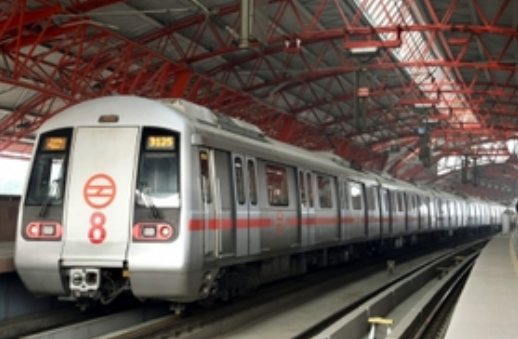
India’s metro network is expanding at an unprecedented pace and is likely to surpass that of the US in the next couple of years to become the second largest in the world.
“In 2014, only 248 km of metro rail was operational in India. Merely in nine years, 895 km of metro lines are operational in 20 different cities,†Union Housing & Urban Affairs Minister Hardeep Singh Puri said recently at the Urban Mobility India Conference cum Expo 2023.
Currently construction work is in progress on metro rail projects covering 986 km in various cities. These include two new major metro lines in Mumbai and Delhi which will be completed this year and thrown open to commuters for travel.
The 33.5-km Aqua line 3 of Mumbai’s Metro Network is an engineering marvel that is completely underground and is being built with an investment of Rs 33,000 crore.
The line runs along Colaba-Bandra-SEEPZ corridor connecting the city's financial hubs such as Nariman Point, Bandra-Kurla-Complex, Fort, Worli and goes up to Goregaon. The entire route is expected to be operational in 2024, with Phase 1 likely to be inaugurated by April.
â€The first section of Delhi Metro’s Phase IV is to be opened by July 2024. This comprises the Magenta Line from Janakpuri West-RK Ashram Marg which covers a 28.92 km route with a 21.18 Km elevated structure while the remaining 7.74 Km is underground.
The other two lines of Phase IV on which work is underway are the Majlis Park- Maujpur (12.55 Km) and Aerocity- Tughlaqabad ( 23.62 km) routes.
The country’s metro network boasts of a daily ridership of around 1 crore and has brought about a transformational change with greater comfort, stability and security in urban mobility.
Currently construction work is being carried out on several metro projects across the country such as Navi Mumbai Metro, Pune Metro, Madhya Pradesh Metro, Kanpur Metro, Agra Metro, Meerut Metro and Surat Metro.
A pathbreaking step is also being taken to decongest big cities with the rolling out of the country’s first rail-based Regional Rapid Transit System (RRTS) linking the 82 km distance between Delhi and Meerut.
Prime Minister Narendra Modi inaugurated the first 17-km stretch from Sahibabad to Duhai Depot recently by riding the Namo Bharat train on the route. The entire corridor is scheduled to be operational by 2025.
Namo Bharat is an Indian Electric multiple unit (EMU) train, specially built for RapidX (Regional Rapid Transit services). The train was designed by the French rolling stock manufacturer Alstom at its engineering centre in Hyderabad and was manufactured in Savli, Gujarat. More such trains are expected to be introduced in other cities as well.
The PM-eBus Seva Scheme, is also being introduced as part of the new urban mobility landscape. The government plans to deploy 10,000 e-buses on a Public-Private Partnership (PPP) model across 169 cities.
This initiative is part of the green mobility drive to being the country’s carbon footprint in the fight against climate change.