Washington, Feb 25
The US push to lead in artificial intelligence is colliding with a hard constraint: power — and a permitting and litigation system lawmakers said can take “five years, sometimes ten years” just to connect new data centres to the grid.
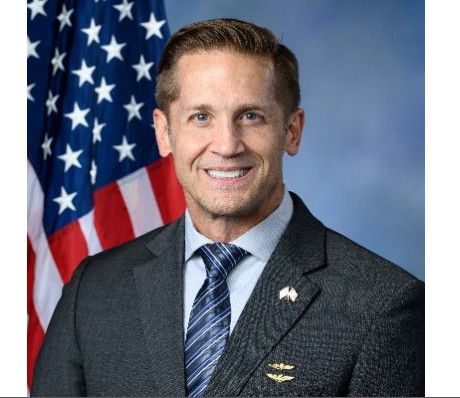
At a House Science subcommittee hearing, Congressman Rich McCormick said the scale of AI’s electricity demand is no longer in dispute. “Artificial intelligence requires enormous computing power, and that means enormous amounts of electricity that's not up for debate,” he said.
What is at issue, he added, is whether Washington’s infrastructure approval system can keep pace.
Transmission permitting “currently averages about four years in some cases and stretches up to a decade”, McCormick rued. Federal environmental reviews “under NEPA (National Environmental Protection Act) averaged 26 months in 2020”. Even after approvals, court challenges can drag on, he said.
“Even when agencies ultimately prevail, when they do roughly just three-quarters of the time, the process itself can add up to six more years in litigation delays,” he said.
Google’s Marsden Hanna told lawmakers that grid congestion is already shaping corporate decisions. “We have utilities telling us it can be five years, sometimes ten years, to interconnect new facilities,” he said. He framed the issue in strategic terms. “We believe fundamentally that energy supply is a national security imperative. Winning the AI race requires winning the energy race.”
Hanna warned that rivals operate under fewer constraints. Currently, the United States is ahead of global competitors on AI. However, the gap is closing. The speed with which China can plan, permit, and deploy energy infrastructure is a comparative advantage,” he said.
Democrats on the panel cautioned that rapid build-out without safeguards could hurt households. Ranking member Emilia Sykes said communities hosting large facilities must not shoulder higher bills. “However, that does not mean that Ohioans should pay higher electricity bills for billionaires in Silicon Valley to see higher profits,” she said.
Paige Lambermont of the Competitive Enterprise Institute called for broad changes to the approval framework. “Permitting reform is essential to meet this challenge,” she said, urging amendments across environmental statutes to remove “overbroad, duplicative and unnecessary requirements to secure permits.”
Beyond permitting, experts said the country lacks basic visibility into the sector’s footprint. Eric Masanet, a professor at the University of California, Santa Barbara, said, “No other major US sector, and especially one that is growing so quickly, suffers from as many public data blind spots.” He noted that “very few data center operators disclose the energy and water use of their specific data centers”, leaving policymakers to rely on assumptions.
“As the old adage goes, you can't manage what you don't measure,” Masanet said, urging more systematic federal data collection.Data centres have expanded rapidly across US states as AI models require vast computing power, driving new demand for electricity, transmission upgrades and water-intensive cooling systems. Companies have announced tens of billions of dollars in investments in recent years, even as utilities warn of tightening capacity in several regions.
For India and other technology-driven economies, US decisions on energy, grid reform, and AI infrastructure will shape global supply chains for chips, cloud services and digital platforms. As Washington debates speed versus safeguards, the outcome could influence where the next wave of AI investment flows.