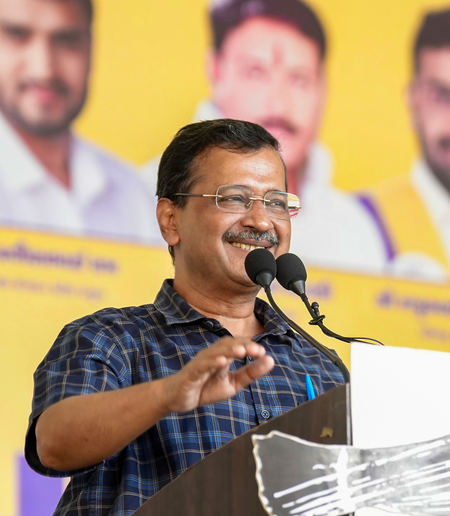
New Delhi, April 1
The Delhi High Court on Wednesday issued notice to Aam Aadmi Party (AAP) national convenor and former Chief Minister Arvind Kejriwal on a plea filed by the Enforcement Directorate (ED) challenging his acquittal in complaint cases related to alleged non-compliance with summons in the excise policy money laundering matter.
A single-judge Bench of Justice Swarana Kanta Sharma took note of the submissions made on behalf of the federal anti-money laundering agency and directed issuance of a fresh notice to the respondent, observing that despite advance service, there was no appearance on behalf of Kejriwal.
Appearing for the ED, counsel Zoheb Hossain submitted that the trial court had committed a “grave error” in acquitting Kejriwal, arguing that the material on record clearly established that the summons issued under the Prevention of Money Laundering Act (PMLA) was duly served and acknowledged.
“There are various judgments which hold that where a document is not disputed, there is no requirement of formally proving it,” Hossain contended.
After hearing the submissions, the Delhi High Court ordered: “Respondent has chosen not to appear despite advance notice. Issue fresh notice. Let the trial court record be called.” The matter has now been posted for further hearing on April 29.
The ED’s appeal comes against the backdrop of the acquittal granted by the Rouse Avenue Court in complaint cases filed by the ED, which had accused Kejriwal of deliberately skipping multiple summons issued under Section 50 of the Prevention of Money Laundering Act (PMLA).
Earlier, Additional Chief Judicial Magistrate (ACJM) Paras Dalal had acquitted Kejriwal in the said complaints, holding that the material on record did not warrant his prosecution for non-compliance.
The ED had alleged that despite the issuance of five summons on different dates, Kejriwal failed to appear before the Central agency, prompting it to initiate prosecution proceedings.
It had contended that non-compliance by a high public functionary would set a wrong precedent.
During earlier proceedings before the Delhi High Court, the ED had indicated its intention to challenge the acquittal after Kejriwal withdrew his plea questioning the summons issued to him.
The present development also assumes significance in view of parallel proceedings arising out of the Delhi excise policy case. The Central Bureau of Investigation (CBI) has already approached the Delhi High Court challenging a trial court order discharging all 23 accused, including Kejriwal and former Deputy Chief Minister Manish Sisodia, in the corruption case linked to the now-scrapped excise policy.
The trial court, in a detailed order, held that the prosecution failed to establish even a prima facie case and that the material on record did not give rise to any grave suspicion against the accused.
Meanwhile, Kejriwal has moved the Supreme Court challenging the decision of the Delhi High Court Chief Justice declining his request to transfer the hearing of the CBI’s plea from the Bench of Justice Swarana Kanta Sharma.
In his writ petition, Kejriwal has contended that the refusal to reassign the matter raises a reasonable apprehension regarding the impartiality of the proceedings.
He has also filed a Special Leave Petition (SLP) against certain observations made by Justice Sharma while hearing the CBI’s revision plea.
Notably, the Delhi High Court had recently stayed adverse remarks made by the trial court against a CBI officer and the investigating agency while issuing notice on the CBI’s revision plea challenging the discharge of the accused in the excise policy case.