




AMERICA
Global leaders bypass US to tackle Strait of Hormuz crisis
Washington, April 5
World leaders are moving to contain the Strait of Hormuz crisis without direct US leadership, as deepening divisions emerge between Washington and its European allies over the Iran war and its global fallout.
Countries heavily dependent on Gulf energy supplies are scrambling to reopen the Strait of Hormuz, even as frustration grows over the US approach to the conflict, according to The Hill .
The United Kingdom convened more than 40 nations this week to coordinate efforts to restore maritime traffic through the critical waterway, placing responsibility on Iran for disrupting global trade.
But the meeting also exposed sharp tensions within the Western alliance.
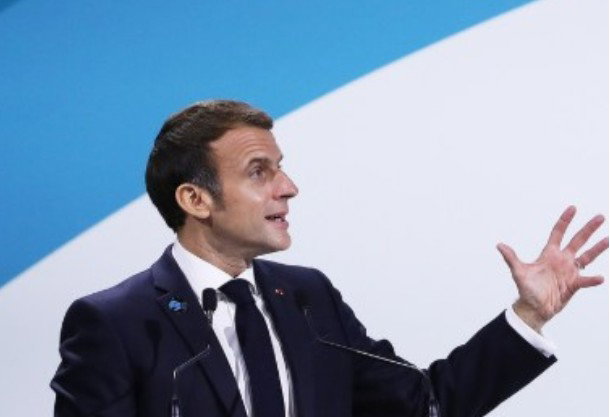
French President Emmanuel Macron openly rejected US calls for support in military operations, saying, “They cannot then complain about not being supported in an operation they decided on their own. It is not our operation,” he said.
European leaders have instead pushed for diplomatic and economic pressure rather than force. Military options to reopen the Strait are seen as unrealistic and risky, The Wall Street Journal reported, citing officials and experts.
At the United Nations, Bahrain has introduced a Security Council resolution to protect commercial shipping in the region, though it faces resistance from China, The Hill reported.
The divergence reflects a broader rupture in trans-Atlantic ties.
The Iran war has triggered a “breaking point” in relations between the United States and Europe, with Washington angered by allies’ refusal to join the conflict, The Wall Street Journal reported.
President Donald Trump has reportedly expressed “disgust” at European allies and questioned the future of NATO, intensifying concerns about the durability of the alliance, the report said.
Meanwhile, Trump has issued mixed signals on responsibility for reopening the Strait.
In a national address, he said countries reliant on Gulf energy must take the lead, adding, “They must grab it and cherish it. They can do it easily. We will be helpful,” Trump said.
He later suggested the US could reopen the passage itself and profit from oil flows, underscoring policy inconsistencies.
On the ground, Iran has effectively tightened control over the Strait through missile and drone threats and selective passage for friendly nations, while proposing tolls for vessels, The Hill reported.
The disruption has triggered urgent contingency planning among governments, including coordination with shipping companies and discussions on sanctions to pressure Tehran.
Humanitarian concerns are also rising. The United Nations has launched a task force to address shortages of essential supplies such as fertilisers and food inputs affected by the blockage, according to The Hill.
Ukrainian President Volodymyr Zelensky has advised separating energy negotiations from war talks, suggesting parallel tracks to stabilise the situation.
The diplomatic scramble highlights growing uncertainty over the duration of the conflict and the absence of a clear US exit strategy.
