








AMERICA
India in 2047 to be 'materially prosperous, spiritually leading world': RSS leader Dattatreya Hosabale
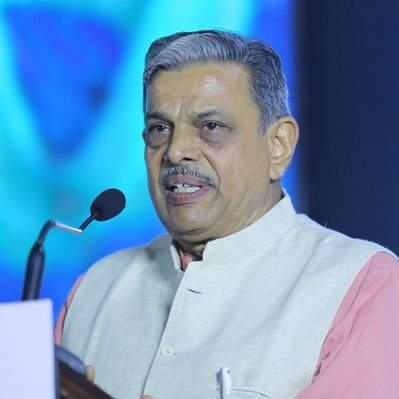
Washington, April 25
RSS general secretary Dattatreya Hosabale has said that India’s vision for 2047 is one of both material prosperity and spiritual leadership on the global stage.
In an interview with IANS, marking 100 years of the RSS, he said the organisation believes India is steadily moving towards a position where it can combine economic strength with its civilisational values to guide the world.
Hosabale also highlighted the organisation’s rise to the “central stage of national life” reflects its expanding influence across politics, society and culture, even as it advances a broader vision of national unity and global harmony.
Here is the full interview:
IANS: RSS is observing its 100 years since its foundation. How do you see its growth in the last 100 years?
Dattatreya Hosabale: RSS has completed its 100 years last Vijay Deshmi day. And in these 100 years, RSS has made its presence felt in every part and local corner of the country. And it has made an impact on the socio-political and cultural life of Bharat. Of course, it was not an easy journey. It had to face many challenges and also suppressions from the so-called opponents but however, the RSS has tide over the difficult times. Because of the support of the society and the hard work of the swayamsevaks and the impact that RSS had is the Hindu nationalism that is pride in our nation and culture and civilization values. Second, they are relevant even today and in the light of those things, we should carve a national life for the benefit of one Indians and second for the humanity.
So this idea has definitely got the support and the impact that RSS has made is now that the RSS has reached, people say, the central stage of national life. So, it is not just in politics, but in other fields such as culture, industry, education, rural development, many other such areas. So, RSS swayamsevaks have definitely participated in two important areas apart from the sewa activity that they have taken up. One is during the natural calamities the RSS has always been present in providing the immediate relief and also rehabilitation work. Second, the internal security of the country. The RSS swayamsevaks are always alert about the security issues for social harmony and India's security within. So this has been the major role that RSS has played.
IANS: The Swayamsevaks of RSS or its wing are in political power, not only in the center but also in a number of states as well. How do you see that political empowerment?
Dattatreya Hosabale: First a few people felt pride about our culture and civilization. Another thing is the swayamsevaks they can deliver better for the welfare of society and people. This is what they have experienced. That's how continuously, for the third time in the central government the swayamsevaks leadership of the Prime Minister, has been there.
So, is it at the state level also, because one is the perception about politics is not self-aggrandizement or only about vote bank politics or in the name of secularism appeasement. These things did not go well with the Indian masses. So that's why after experience of decades, they have come to the conclusion that there should be a system managed by such people who deliver and deliberate with all integrity and cultural awareness and national unity. Because many a time, in the name of politics, the society was getting divided on various lines. So these people who have come to the power with the RSS background, they have contributed in keeping the social cohesion intact.
IANS: How do you see this growth of RSS overseas, outside India?
Dattatreya Hosabale: RSS works within the boundaries of India, but the swayamsevaks of RSS who are in different countries in the world they have also tried to see that locally the Hindu community is organized and they not only help the people back in their motherland, India, but they should also serve the local people where they are living, where they are earning their bread.
So that's why the swayamsevaks always have made it a point that their allegiance to the nation where they are living, their loyalty to that country and also contributing for the betterment and welfare of that society and country is the first thing. And secondly, because that is their Karma Bhoomi. And Janma Bhoomi or Prerna Bhoomi is Bharat. So that connection because of the cultural affinity and religion and other things. So they are also serving the cause of Bharat being miles away from the motherland.
IANS: We all Indians believe in Vasudhaiva Kutumbakam: the entire world is a family. In that context, in what way do you think RSS can play a role in global stability and prosperity?
Dattatreya Hosabale: This message of Vasudhaiva Kutumbakam that the world is one family, is ingrained in every swayamsevak. Wherever he goes, he sees they are all the brothers and sisters of the same family. So that is not just a slogan, but it is practiced in their daily behavior and in their social activity. And the same thing with the government during the G20 conference: one earth, one family and one future. So this message is not only well taken but also being practiced by the Swayamsevaks first and also generally in the Hindu society.
IANS: What is the RSS’ world vision?
Dattatreya Hosabale: Today’s world is passing through very critical times. One is the idea of hegemony, which still persists in many parts of our world. That is where the political one-upmanship is experienced. So that has to be addressed. Secondly, for the last one decade, we may not be hearing it, but the violence in the name of religion, religious terrorism, these things are a threat to humanity. Third, the environmental issues, ecological issues because the science and technology growth and advancement is welcome, but not at the cost of our environmental balance. So that's why this is also another area where we see that these challenges are there.
And the fourth, families are breaking. Because people are having this consumerism and also greed. Trust is the basis of any good family. If the trust is not there, the families can't survive; they can't thrive. So love and affection is the basis. If that is not there, then the families they break. So this is an important issue all over the world: if families are healthy, society is healthy, and the nation is healthy. There's a healthy family, a united family, and a harmonious family—another issue that has to be addressed. So that's why the RSS thinks that diversity is there, but the universal oneness, that is the message of India's philosophy, that should be practiced. Second, the sustainability, as well as ecological. Third is harmony with nature, with individuals, within the family, and among the nations. So if this harmony is addressed properly, I think human life might be in a better condition.
IANS: India was under foreign rule for around 700, more than 700 years. That has a huge impact on the Indian psyche or Hindu psyche. Have we overcome that or that psychological impact or is it still there?
Dattatreya Hosabale: See, India had two things. One is struggle and another is the foreign rule. Although it is nearly 80 years or more after India's emancipation politically, but in some quarters, in some aspects, the colonized mind still works. Decolonization has to take place. The political freedom should open the doors for other freedoms, cultural and otherwise. So somewhere it's still not achieved fully. That's why the process of decolonization the narrative about India, about Hindu Dharma, Hindu society, about Bharat and its history, they are many a time distorted.
Distorted not by only people who are not Indians, distorted by the people, unfortunately, who are born and brought up in India because of this colonized mentality. So that's where this narrative has to be set right on the basis of facts, not on the basis of just some ideological our political views, it should be on the basis of historic facts. It should be based on the experiences. It should be based on realities. So that's why RSS thinks that, if the India narrative is set right, then decolonization of the mind takes place. So that will be the real and complete freedom.
IANS: Can you give us some examples of that?
Dattatreya Hosabale: See, even today people think that the Aryan invasion was there. It was taught until recently in textbooks about the Aryan invasion, though it was proven that there was no such Aryan invasion in India. Secondly, many times, people are not fully aware of India's scientific heritage. So those things are clear. Third, about our societies, caste bills are being pushed in countries like the US and the UK. So this is the wrong narrative. India has tried to overcome that and still it is being said in other countries.
About languages now, because of the government's efforts, Indian languages are able to flourish now. All these years, people who spoke Indian languages were thought to be less educated. That is why educated people are shy to speak Indian languages. So many a time these type of false narratives have developed a sort of inferiority complex even among the educated class. Same thing about the country's cultural unity.
The popular thing that was spread was that many cultures are there and India is unified only after 1947. Which is not true. India has been culturally one. Otherwise, Sankaracharya would not have gone from Kerala to four different corners—same thing with Vivekananda starting from Kolkata, coming up to Kanyakumari, traversing the whole of India. Culturally we are one. We are one people, one nation. But the narrative that was built was that we all have come together because of the British or after 1947. We are a nation in the making. We are not a nation in the making. We have been a nation for thousands of years.
IANS: In its first 100 years RSS has achieved a lot. What do you see RSS” goals as for the next 100 years?
Dattatreya Hosabale: I cannot say what should happen in the next 100 years. The thing is, any time, whether it's 100 years or 1000 years, India will definitely thrive, flourish, and serve humanity. So to make Bharat capable of doing this, a self-confident, united, harmonious nation that serves the cause of humanity and uplifts humanity, Vivekananda had said, "Up, India." Conquer the world with your power of spirituality. So RSS wants to prepare society for that.
Arnold Toynbee said that the chapter that had the beginning of the west will have the end with an eastern chapter. If humanity has to survive itself and save itself from any destruction, it has to follow the Indian way. Because in India, these things of moral compass and civilizational values, you can see even today. This is what the great thinkers of the world have always felt. So if that is true, then we have to prepare our people for playing that global role. So unless they are nationally fit and strong enough and confident enough, they will not be able to play this role. So that is why RSS has taken the first step to make them do this at the national level. But they don't stop at the national level because India's heritage is to think about Vasudhaiva Kutumbakam, Prananta Vishwamaryam. So that's why in order to play that role, Bharat should prepare.
IANS: Do you think India’s time has come to play that role?
Dattatreya Hosabale: India's time has always been there, whether Indians are awakened to it or not is the question. So we are ready to awaken India. That's our mission.
IANS: What do you see India as in 2047, when it reaches its centennial?
Dattatreya Hosabale: Materially prosperous and spiritually leading the world.
IANS: Do you think RSS is in need of reforms or re-orientation after 100 years?
Dattatreya Hosabale: RSS is ever-evolving. It is not that at this time some reformation is needed. RSS has been evolving according to times. Before independence, we had certain things and some emphasis in our approach. In the new situation after independence, we had to change certain things. After three decades, we changed certain aspects of the physical exercise, including and emphasizing yoga and pranayama more. Then seva work, the public service, was done as a matter of fact of the shakha. Then we started a department for that similarly for outreach and for media and communication a department was started.
We were doing it as part of the daily work, but we thought the emphasis should be more on them and we started training because of the newer skills needed for these things. So we have to inculcate those skills in our people, the swayamsevaks. So that's how RSS has been continuously evolving.
Now we have implemented the panch parivartan- five areas of social transformation. As I said, social harmony, families, eco-friendly life, the nation's selfhood and civic duties, and civic sense. Now science and technology are taking new dimensions and they are growing like anything in India. But still civic sense and civic duties—many a time people feel we are lagging. So that's why RSS has tried to address that issue also. And there are many people doing good work in socio-spiritual arena and cultural arenas and services, etc.; they are all working in their silos. So RSS thinks that this is the power of the good. So we should network them. So now we are
conducting such small meetings, even at the block level, so that the people who are not RSS but doing good work can come together and that combined strength will definitely do better things for society.
IANS: Even after 100 years, there are a lot of opinions and myths about RSS. How would you describe to the world what RSS is today?
Dattatreya Hosabale: RSS creates human social capital and RSS is an organization by structure, a movement by its spread and impact. But RSS is a lifestyle and that is very akin to the Hindu civilization and values. So that's why the human social capital, through a particular organization methodology on the basis of cultural values, model is applicable anywhere in the world. We want something like the RSS in each country for the benefit and betterment of that society, but having a worldview, a global view. So that's what we do creating human social capital for the benefit of humanity. Something like payback.
IANS: What is your message to religious leaders abroad?
Dattatreya Hosabale: Beyond religion, a spirituality exists. Religion is not spirituality. Spirituality is beyond religion. So try to understand that. And each religion that is practiced in various countries has a civilizational root. If that civilizational root is understood, I think the unity of humankind will be easier. And For those within the country, they are all Bharatiyas. A Hindu background is there. So that is what the chief of RSS has repeatedly said. Their forefathers are Hindus only. So you can practice any religion. Discrimination in the name of religion, we are against it. And everybody has the freedom of faith. But having said this, everybody has to be loyal to the nation also.
Religion is not above nation.
IANS: What are the steps you think the current political leadership should now take in India?
Dattatreya Hosabale: One nation, one election already has been done and 33% of the women's participation is a revolutionary thing that is going to happen in India. That is another thing. And the third thing is, people require political awareness and political education to think the right thing, which is essential for society and the nation. So these are some of the areas.
Another thing is beyond political parties: nation first, then other things. This has to be adopted in all political parties. So that is the way we should approach politics and appeasement politics that had caused immense damage to our social fabric and national welfare and unity of the country should be totally stopped.
IANS: What is your message to India’s youth?
Dattatreya Hosabale: Be youthful. Accept the challenge. Learn throughout life. And make India great and serve humanity. And don't think that westernization is modernization. Be modern. Science and technology, use it. Don't become a slave. Use it for the betterment of all kinds. The Indian youth have immense potential. Use that potential. Have a great dream and that dream can be realized through your hard work and also with a sense of service to humanity.


