New Delhi [India], April 28 :
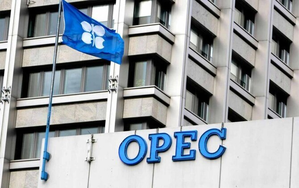
The United Arab Emirates announced its decision to exit the Organisation of the Petroleum Exporting Countries (OPEC) and the wider OPEC+ alliance on Tuesday, marking a significant shift in its long-term energy strategy.
UAE Energy Minister Suhail Al Mazrouei confirmed the development on X, noting that the decision reflects a policy-driven evolution. The minister stated that the move is aligned with long-term market fundamentals and follows decades of participation in the organization.
"The UAE's decision to exit from OPEC reflects a policy-driven evolution aligned with long-term market fundamentals. We thank OPEC and its member countries for decades of constructive cooperation. We remain committed to energy security, providing reliable, responsible, and lower-carbon supply while supporting stable global markets," Al Mazrouei said.
The withdrawal is scheduled to take effect on May 1, 2026. This move follows a comprehensive review of the country's production policy and its future capacity, as the nation seeks to align its energy profile with domestic economic goals and accelerated investment in production.
At the time of filing this report, Brent Crude stood at USD 111.15, up by USD 3.25 or 3.00 per cent. While near-term volatility, including disruptions in the Arabian Gulf and the Strait of Hormuz, continues to impact supply dynamics, according to the Emirates news agency-WAM, the UAE maintains that underlying trends point to sustained growth in global energy demand over the long term. The country plans to bring additional production to the market in a gradual and measured manner after the exit.
"We reaffirm our appreciation for the efforts of both OPEC and the OPEC+ alliance and wish them success. During our time in the organisation, we made significant contributions and even greater sacrifices for the benefit of all. However, the time has come to focus our efforts on what our national interest dictates and our commitment to our investors, customers, partners and global energy markets. This is what we will focus on going forward," the official communication said.
As a producer of cost-competitive and lower-carbon barrels, the UAE intends to continue its role as a reliable partner in the global energy system.
The government noted that the exit does not alter its commitment to market stability or its cooperative approach with both producers and consumers.
Instead, the move is intended to enhance the country's ability to respond to evolving market needs and support its own economic diversification.
"This decision follows decades of constructive cooperation. The UAE joined OPEC in 1967 through the Emirate of Abu Dhabi and continued its membership following the formation of the United Arab Emirates in 1971. Throughout this period, the UAE has played an active role in supporting global oil market stability and strengthening dialogue among producing nations," the official communication stated.
The UAE remains committed to investing across the entire energy value chain, including oil, gas, renewables, and low-carbon solutions. This forward-looking approach is designed to support a resilient energy transformation while valuing the five decades of cooperation it shared with its partners in the alliance.
The United Arab Emirates comprises seven emirates - Abu Dhabi, Ajman, Dubai, Fujairah, Ras Al-Khaimah, Sharjah and Umm Al-Quwain - located along the southeast coast of the Arabian Peninsula.
The country covers an area of around 84 thousand square kilometres and has a population of around 11 million. More than four million people live in the capital, Abu Dhabi.
Source: ANI