Boston, May 1
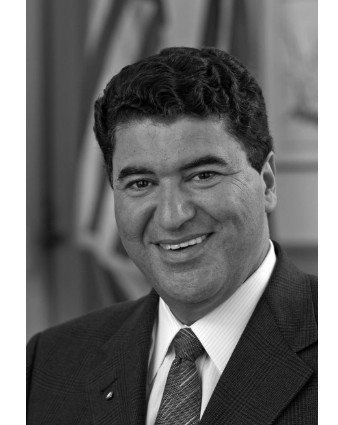
India’s emergence as a global pharmaceutical powerhouse is entering a new phase, driven by innovation, vaccine leadership and expanding clinical capabilities, according to Dr Elias Zerhouni, former Director of the US National Institutes of Health (NIH).
Zerhouni said the India-US relationship in healthcare and biotechnology has steadily strengthened over the years, moving beyond manufacturing to innovation-led collaboration.
“There’s a tremendous amount of exchanges and a presence of now larger and larger Indian companies, Lupin and Sun Pharma, and many others,” he told IANS in an interview. “I’ve seen an ascending and increasing relationship, which now is getting even better because I think we’re not just using or working with India as a manufacturing country, but also as an innovative country.”
The top American scientist said India continues to dominate in generics and active pharmaceutical ingredients (APIs), forming a critical backbone of global drug supply. “India is very strong in chemistry and all the APIs… they come either from India or from China,” he noted, adding that the country remains “a major source of generic principle drugs.”
But Zerhouni said India’s role has expanded beyond generics. He pointed to the country’s vaccine manufacturing capacity as a defining global contribution. “Without Indian contributions to the manufacturing of vaccines like the India Serum Institute, it would be very hard to immunise the population around the world,” he said.
He highlighted India’s approach to “frugal innovation” as a key differentiator. “Innovation that doesn’t cost such an amount of money that people don’t have access to it… I think that’s in the culture in India,” he said.
On pandemic lessons, Zerhouni said the COVID-19 crisis exposed vulnerabilities in global supply chains and forced countries to rethink health security. “We discovered that we were not set up very well for a pandemic situation or a global health emergency,” he said.
India and the US, as two large democracies, rely more on private-sector collaboration than central planning to address such challenges. “I don’t know that there is a grand plan… I think it’s the goodwill and the economic incentives that will drive that,” he said.
Reflecting on his experience with NIH collaborations in India, he noted bureaucratic delays as a key hurdle. He recalled engaging with then Prime Minister Manmohan Singh to address delays in grant approvals. “We are democratic, right, but also bureaucratic, both the US and India,” he said.
On clinical trials, he said India is still at an early stage but improving. “Clinical trials are very sensitive… the sites have to be capable,” he said, adding that regulatory systems and research culture are evolving.
Responding to a question, he pointed to a broader geopolitical shift benefiting India. “There’s a pivot right now… a lot of people are pivoting outside of China… to India in many ways,” he said, citing rising collaboration in medical technology and biomedical research.
Zerhouni identified contrasting healthcare challenges in the US and India. “In healthcare, America is the cost… people cannot afford the very expensive medications,” he said, while India’s focus remains on expanding access.
Artificial intelligence is also reshaping the sector, though its impact remains incremental. “It has improved the speed, improved the quality… but it has not really discovered anything that we didn’t know,” he said.
He described biotechnology as entering a “multipolar” phase, with India, China, and other nations contributing to innovation. “I don’t care where the cure comes from. I want patients to be cured,” he said.
Zerhouni, a physician-scientist, served as a faculty member at Johns Hopkins University School of Medicine and was executive vice-dean from 1996 to 2002. He later served as the 15th Director of the US National Institutes of Health from May 2, 2002, to October 31, 2008, under the George W. Bush administration, and was appointed as one of the first US presidential science envoys in 2009.
He was also a senior fellow at the Bill and Melinda Gates Foundation from 2009 to 2010.
-