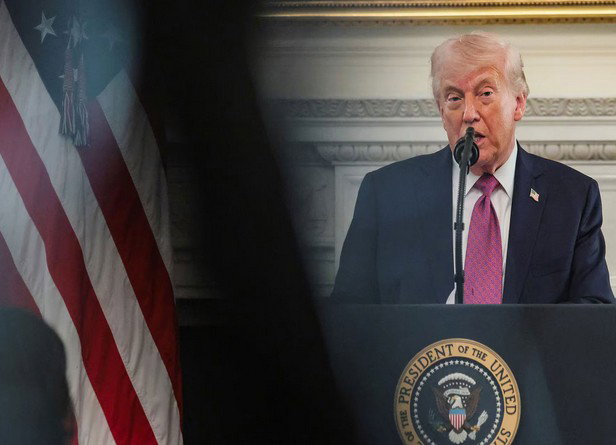
Washington, DC [US], May 1 (ANI): The administration of President Donald Trump has maintained that the United States is "not at war" with Iran, even as the military engagement reaches a pivotal legal threshold under the War Powers Resolution, establishing a potential confrontation between the White House and Congress.
House Speaker Mike Johnson stated on Thursday that authorisation from Congress is not required at this juncture, according to a report by NBC News.
Johnson argued that the US is not involved in active hostilities, telling the outlet at the Capitol, "I don't think we have an active, kinetic military bombing, firing, or anything like that. Right now, we are trying to broker a peace."
When questioned about the 60-day limit set by the 1973 War Powers Resolution, which expires this Friday, he was categorical, stating, "We are not at war."
The 1973 statute stipulates that a president must withdraw American forces from hostilities within 60 days unless a formal authorisation is granted by Congress.
President Trump officially informed lawmakers of the military campaign on 2 March, making 1 May the critical deadline.
As no such authorisation has been secured, the situation has sparked concerns of a constitutional standoff. While the law permits a 30-day extension, it remains uncertain if the President will utilise that provision.
Central to the White House's legal position is the argument that a current ceasefire effectively halts the War Powers timeline. US Secretary of War Pete Hegseth informed a Senate hearing that the cessation of active combat alters the legal requirements.
"I would defer to the White House and White House counsel on that. However, we are in a ceasefire right now, which, in our understanding, means the 60-day clock pauses or stops in a ceasefire," Hegseth noted.
This interpretation has met resistance from Democrats, who contend that the law does not allow for such a pause.
Senator Tim Kaine remarked, "I do not believe the statute would support that," further adding, "I think the 60 days runs (out) maybe tomorrow, and that's going to pose a really important legal question for the administration there."
Throughout the conflict, President Trump's own descriptions of the military action have varied. During the initial strikes on 28 February, he warned that "the lives of courageous American heroes may be lost, and we may have casualties. That often happens in war."
By March 9, he suggested that "the war is very complete, pretty much," and later characterised the mission as "both" a war and a "little excursion."
In subsequent remarks during March, the President hinted at avoiding the specific terminology of war because "you are supposed to get approval" from Congress.
Nonetheless, by mid-April, he stated, "I had to go to a war."
In a recent interview with Newsmax on Thursday, he continued this ambiguous rhetoric, noting that the stock market reached record levels "during the war, or the military operation, whatever you'd like to call it."
The hostilities began on 28 February following coordinated strikes by the US and Israel against Tehran and other regional targets. Iran responded by striking US bases and Israeli positions, alongside disrupting maritime traffic in the Strait of Hormuz, which caused a sharp spike in global oil prices.
Opposition lawmakers argue the administration is on precarious legal footing. Senator Adam Schiff stated that the 60-day mark is the moment many colleagues may join efforts to bring the engagement to a close.
"After two months of war, thirteen service members' lives lost, and billions of dollars squandered, it is time we recognised that the price we have paid is already too high," Schiff said.
Despite these protests, any legislative attempt to halt the administration's actions would face the challenge of a Republican-controlled House and a potential presidential veto. (ANI)