








AMERICA
If you wish to be of use after death – then donate your body
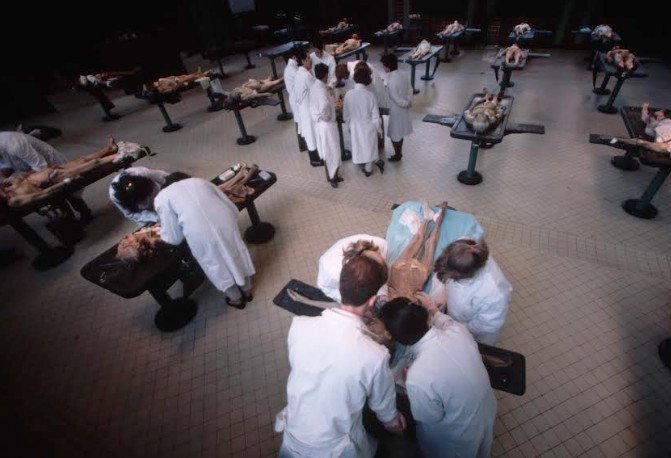
A few months ago, I decided to donate my body and went to KEM Hospital in Mumbai to
complete the formal process. The purpose behind this decision was to help dispel
superstitions, customs and misconceptions about death in society, to make my body useful
for medical education and research after my death, to promote scientific, rational and
humanist thought, and to increase scientific temper in society. I decided to donate my body
out of the feeling that I should be of use to society even after death, and to inspire others
towards body donation and organ donation. Many people like me donate their bodies, but
the recent Sejal Pawar case has raised some disturbing questions.
Sejal Pawar, an MBBS student at the prestigious KEM Hospital in Mumbai, made extremely
disgusting, obscene and insensitive jokes about donated dead bodies—especially about the
size of male cadavers’ genitals—on the stand-up comedy show'Pranit More Show'.
Laughingly, she and her colleagues told how they would mock the private organs of dead
bodies during their studies and, at the end of the procedure, cut them off. The video went
viral on social media in a flash, causing a massive wave of outrage among the medical
community and sensitive sections of society. In an earlier video, she refers to KEM Hospital
as ‘chindhi’ (shoddy), the people around her as ‘ugly’, and her teachers as ‘toxic’.
This incident struck at the very foundational ethics of medical education and profession. The
cadaver is regarded as a'Guru';, and gratitude is expressed to it through the Cadaveric Oath;
publicly ridiculing that body in this manner is not just insensitivity but an assault on the very
roots of humanity. Dr. Asha Kadam rightly said that in her time, despite the strong smell of
formalin in the dissection hall, compassion for that body used to well up. She says, "The
question would arise: did someone donate their body so that students could learn? Leave
alone entertaining inhuman thoughts about that body, I never even heard such a thought
from anyone." This is a part of our cultural values. She pointed out the hypocrisy: a society
that justifies someone losing their job for scooping out and eating a 370-rupee biryani, how
does it initially ignore the obscene remarks made by a woman doctor about dead bodies?
Many on social media reacted sharply, saying that people with such a depraved mentality
like her must be taught a lesson, and that action should be taken against Pranit More, who
hosted the show where this happened.
This controversy also marked the culmination of the excesses taking place in the name of
'dark comedy'and';freedom of expression'. Dentist Daphne Claire from Kerala thoroughly
dissected this issue in her social media post. She made it clear that laughing at the private
organs of a dead body is not'dark comedy;'Dark comedy'; originated from victims trying to
heal by joking about their own pain. But no one has the moral right to make fun of someone
else's body or organs—an experience you have not personally lived—and call it 'dark
comedy';. This is a violation of human dignity. Dr. Claire then highlighted a deep social
contradiction. She says, "When Seja's video first surfaced, it was men who followed her,
laughed, and gave her fame. They increased her followers. But when the 370-biryani case
came out—which glorified sexual violence against a woman—women immediately raised
their voices in united protest. This means, when men are insulted, women step forward, but
when women are insulted (or male body donors are insulted), men laugh and'follow',
especially if the woman is attractive!" This observation elevated the controversy beyond one
studen's irresponsible statements to a question on society's collective moral foundation.
Both incidents are reprehensible—one a posthumous cruelty and disrespect, the other a
celebration of sexual violence against a living woman. Both must be held accountable, but
the two cases are not identical crimes.
The Sejal Pawar case also highlighted another fact—merely acquiring a medical degree
does not automatically bring humanity, sensitivity or ethics. In a country where millions of
women do not even get the opportunity for education, for a female student who received this
opportunity to misuse it in this way is nothing short of a tragedy. Fortunately, the KEM
administration conducted an inquiry, sent her on compulsory leave, recommended
counseling, and she also offered a public apology. However, this incident has created an
urgent need to further strengthen the teaching of ethical values, communication skills and
compassion in medical education.
The true value of human life lies not just in its duration, but in what that life has done for
others. We have been hearing this statement for generations. But its deepest meaning
strikes you when you understand the concept of body donation. Death is an indisputable,
inevitable truth. Everyone must leave this physical body one day. Going beyond the usual
options of mixing with the soil, turning to ash or merging into water, the realization itself is
staggering that one’s body can become a pillar of future knowledge.
Body donation is when a person legally donates their entire body after death for noble
purposes such as medical education, surgical skill development and scientific research. It is
not merely a medical procedure or a legal obligation; it is the most precious and selfless
contribution to humanity. Often, there is discussion in society about organ donation, but the
unique importance of body donation is not highlighted as much. The body donated by one
person directly helps train hundreds of doctors, and through them, saves the lives of
thousands of patients. This donation has the extraordinary power to keep the flame of
knowledge, service and humanity burning continuously for society even after death.
While understanding the concept of body donation, it is first necessary to distinguish it from
organ donation. In organ donation, after a person becomes'brain-stem dead', their life-
saving organs such as heart, liver, kidneys, eyes, and skin are given for transplantation to
other needy patients. In contrast, in body donation, the entire body is made available to
medical colleges, government hospitals or recognized research institutions for learning
anatomy, for practice by surgeons, and for research into new medical technologies. This
donation is not limited to a single organ; instead, the whole body becomes the first and most
important textbook that shapes future medical experts. In a vast country like India, body
donation is governed by the'Anatomy Ac' and the specific rules of respective states. In
Maharashtra, body donation has full legal recognition under the'Maharashtra Anatomy Act,
1949'. Any competent adult in sound mind can make this pledge during their lifetime by
recording it in a will or by applying in the prescribed form to the concerned institution. While
legally it is binding on relatives to fulfill this wish after death, social sensitivity and the family's
consent are extremely important. That is why it is equally essential that this decision be
made after taking the family into confidence, understanding their feelings, and obtaining their
complete consent.
The foundation of medical education rests on an extremely minute and deep understanding
of human anatomy. The chambers of the heart, the cavities of the lungs, the contraction and
expansion of muscles, the invisible network of blood vessels and nerves—the complex
arrangement of all these is simply impossible to understand only by looking at flat diagrams
in books, images on a digital screen or videos. For this, the experience of actually dissecting
a human body is the true teacher. This body obtained through body donation, called a
'cadaver'; in medical terminology, is like a three-dimensional, living textbook for the students.
It is for this reason that in renowned medical institutions across the world, body donors are
addressed by highly respectful terms like'First Teache's or'Silent Mentor'. Although this
body does not speak, in its silence it unfolds every secret of the human body to the students.
When a budding doctor begins their career, their first real interaction with the human body
happens precisely because of this donated body. The very hands that are to perform
complex surgeries on countless patients in the future are given their first safe practice
platform by this body. This means that a single surgeon trained on the body of a donor can
save thousands of lives over their entire career. This is the immense power of this donation.
However, unfortunately, the rate of body donation in India is extremely low compared to the
need. While ideally there should be at least one body available for every ten students, in
reality, 30 to 40, or even up to 75 students in some places, have to depend on one body.
This adversely affects the practical quality of medical education. Students have to stand on
stools and watch from a distance, they get no hands-on practice, and are forced to rely
solely on bookish knowledge. Considering the severity of this shortage, it is an urgent
necessity to create public awareness about body donation in society.
When deciding on body donation, a natural and legitimate question arises in the minds of
family members—"After death, will the dignity and honor of our loved one's body be
maintained?" This concern is completely human and natural. However, in recognized
medical institutions, the body is treated with great respect, sanctity, and sensitivity. This is
not merely a matter of verbal assurance, but the core of strict protocols and the medical
code of ethics. From the moment the body is received until the studies are completed, its
dignity is maintained at every stage. Upon arrival at the institution, a registration number is
assigned to the body, so that the donor's personal identity remains completely confidential.
Students are given no information about the donor's name, place, or family. To preserve the
body, chemicals like formalin (embalming) are used to keep it in good condition. The law
strictly prohibits the use of the body for any purpose other than study. Students who engage
in mockery, mischief, or any act that might hurt the body's dignity face strict disciplinary
action. Nowadays, in almost all medical colleges, before starting the study, students are
administered the'Cadaveric Oath' In this oath, students accord the donor the status of their
teacher, express heartfelt gratitude for their noble sacrifice, and promise to treat the body
with respect, considering it a sacred instrument for acquiring knowledge. Besides, many
institutions organize an annual 'Gratitude Ceremony'by inviting the families of body donors,
where the directors, professors and students come together to offer an emotional tribute to
the work of these donors. The social need and the far-reaching aspects of the contribution of
body donation must be understood. This contribution is not limited only to students. New
techniques for complex neurosurgeries, cardiac surgeries, orthopedic surgeries are first
perfected by practicing on donated bodies. The safety testing of newly developed medical
devices—such as stents, pacemakers, artificial joints—is carried out on human bodies.
Students of forensic medicine also learn about decomposition processes and wound
patterns on such bodies. If the body of a person who died of a rare disease is donated, it
provides a direction to understand that disease in depth and search for a cure.
Moreover, an eco-friendly perspective is also embedded in this. On average, one large tree
is burned for the cremation of a dead body, causing massive smoke pollution. Body donation
avoids this environmental damage. However, a major obstacle in this journey of knowledge
and contribution is social superstition and misconceptions. Deep-rooted traditional beliefs
exist in society, such as: "The body must remain intact after death, otherwise the soul does
not attain liberation," or "If the body is cut, there will be disability in the next birth." However,
no religion opposes the service of humanity; in all religions—Hindu, Muslim, Sikh, Buddhist,
Jain—philanthropy is considered the highest duty. Body donation is indeed the ultimate act
of philanthropy. To overcome these obstacles, there is an urgent need for public awareness
campaigns in schools and colleges, positive use of social media, camps, and sharing the
experiences of families of successful donors. The feeling that body donation is not just
'giving a body' but 'donating knowledge'must be imprinted on the social psyche.
Against the backdrop of all this controversy, it becomes even more important to turn our
attention to the inspirational work and personalities in the body donation movement. In
Mumbai, the 'Jyeshtha Sthanik Nagarik Seva Manch' and social worker Savita Gharat have
been tirelessly running this movement for the last 15 years. The motto of their work is:
"Marave pari kirti rupe urave, ka nahi marave pari dehadaan, avayavadaan rupi urave"
(Better to die but endure in the form of glory; why not die but endure in the form of body
donation, organ donation?). Savita Gharat, Rashmi Parab and their colleagues go from door
to door, hold camps, and provide online guidance to dispel fears and remove obstacles
among people. Recently, they visited 92-year-old Mr. R.K. Sahgal. Mr. Sahgal, an engineer
himself and a graduate of Melbourne University, had been waiting for the organization for
two years. He and his 90-year-old wife live in India by their own choice even though their
children are abroad. Specially calling their youngest son from New Jersey and discussing all
legal aspects, Savita Gharat facilitated the path for his body and organ donation. Mr.
Sahga's words touch the heart—"I lived honestly all my life, everything went well. But now,
even in my last moments, I want to give something to society before I go. Everyone should
make these arrangements beforehand so that no obstacle comes in the way." Such people
are walking, talking sources of inspiration. Similarly, the work of Dombivli's 'Maharshi
Dadhichi Dehadaan Manda' active since 1988, is unforgettable. Gurudasji Tambe,
influenced by a lecture, founded this organization with the help of friends. This organization
promotes not only body donation but also eye donation, skin donation, blood donation and
organ donation free of charge. They tirelessly spread information that skin donation allows
skin grafting on burn patients; eye donation can give sight to four to six blind people.
If one wants to understand the true soul of this movement, one must listen to the
experiences of the actual activists. Vinod Davre of Parbhani, who donated his grandfather’s
(paternal grandfather’s) body in 2015, says, "A doctor friend of mine met me after 35 years
and said, 'I am a doctor today only because of your grandfather's body donation. Our entire
building of knowledge rests on that body. We talk to that body, a bond is formed. And after
all the learning is done, we perform their last rites in a very hygienic manner.'&' After hearing
this, all the pressure on his mind was lifted, and he himself became active in this field.
Through his personal efforts alone, he has facilitated 14 body donations and 3 organ
donations till date—he derives zero financial benefit from this, but he does this work as a
social commitment. He asks, "In a government medical college, 75 students are learning
anatomy by standing on stools around one body. If these same students are going to treat
you tomorrow, what will be the quality of this education?" This question compels all of us to
think. That is why body donation is not just an option, but the need of the hour. A doctor
friend himself once told a body donor’s family member, "If there is any person we doctors
consider the most honorable in the world after our mother and father, it is only this body
donor. Our entire medical edifice is built on this body. We wash our hands and eat lunch
during a break while dissecting, and immediately reconnect with that same body with a bond
of affection. So much so that we even talk to that body." After the medical study is complete,
the remains of that body are not disposed of like any waste material, but are given a very
dignified final rite, in accordance with religious traditions or the family's wishes. Some
institutions return the ashes to the family, while others perform a collective immersion.
Transparency and respect are the unshakeable rules in this entire process. Dr. Asha Kadam,
from her experience, said, "Even today, while performing a post-mortem, we doctors and the
support staff take full care of that body. Everyone follows the unwritten rule that the dignity of
the dead body must be maintained." This tradition of honor has been ingrained in Indian
culture for thousands of years; Maharshi Dadhichi donated his own bones for the peace of
the three worlds and is known as the first body donor in creation.
From this entire discussion, one thing emerges with absolute clarity—the movement of body
donation is not confined merely to the utilization of a dead body. It is the tangible
embodiment of the nobility of human life, the ultimate height of philanthropy, and an
unbroken tradition of knowledge donation. Maharashtra has seen a galaxy of medical
luminaries like Dr. Anandibai Joshi, Dr. Dwarkanath Kotnis, Dr. Kishore Shantabai Kale, Dr.
Nitu Mandke, Dr. Ravi Bapat, Dr. Prakash and Manda Amte, Dr. Tatyarav Lahane, who
devoted their lives to the service of humanity. This is the true tradition of doctors. A
mechanic in a garage bows to his tools in the morning, a trader worships his ledger—this is
gratitude towards one's profession. Similarly, an ideal doctor should have the same feeling
towards their patients and towards the body donor who became a means of their education.
As Anjali Jharkar said, "A perfectly healthy person won't go to a doctor; only the one with a
problem in their body goes, because for them, the doctor is God. Because of depraved
doctors who desecrate such living or dead bodies, what difference remains between the
mentality of a butcher and a doctor?" The time has come for society to take this question
seriously.
Brooke Borel, who writes in 'Popular Science', writes in one of her pieces – abroad, dead
bodies are used in science, safety, education and research. Dead bodies are needed for
many areas of research. For example, scientists who study the biomechanics of injury want
to understand how the human body gets injured. This can help them prevent injuries. For
this, they conduct controlled tests to understand how much trauma a dead body can
withstand. After applying the measurements obtained from these tests to a model or dummy,
scientists test and verify the protective gear (e.g. helmet, seat belt) that keeps us safe.
The use of a real body can help make car seat belts or train seats safer. The brain can help
design helmets that reduce traumatic brain injuries American football players suffer from
hard tackles. It can also be used to reduce the injury a soldier sustains from the shock of a
bomb blast. When this research is complete, if the family wishes, they can receive my
cremated remains. Otherwise, the donor can be honored along with other unclaimed donors
with a memorial plaque, a tree, or a solemn annual ceremony.
Forensic scientists also use dead bodies in their work. Some universities take donated
bodies and bury them in the ground or place them in a secluded forest. Then scientists
measure the time it takes for flies, dermestid beetles, and other scavenger insects to
skeletonize the bodies. This is a different kind of rebirth – becoming part of the ecosystem of
a field or a forest. This end might seem horrifying, but the data obtained from this process
helps forensic researchers identify when a person died and what injuries they might have
suffered. This helps law enforcement authorities solve murder cases.
In such processes, the body can be used to recreate the scene of a specific crime—for
example, hung in a forest, or stuffed in the trunk of a car, etc. This can help solve a case or
help a police officer bring a murderer to justice. Later, the skeleton can rest in a box in a
forensic collection, occasionally living on in the form of research on bone aging.
But there is another option for whole body donation, which is a long-standing tradition in
medical training, and which seems more suitable to me. Every first-year medical student has
to take a course called 'Gross Anatomy', in which they dissect a human cadaver. This is their
first patient. It may be the first dead body they have ever seen or touched. When they enter
the Gross Anatomy room, they see different bodies—each being an example of astonishing
diversity in human shape. The relationship between medical students and their first cadaver
is special. The cadaver provides the student with knowledge they could not otherwise obtain;
the student is amazed by and grateful for this gift. This is what doctors believe.
The body can teach future doctors the physical landmarks necessary to perform a spinal tap
or to rule out appendicitis. A surgeon can learn to dissect the delicate nerves in my hand. Or,
perhaps, a pathologist can perceive the difference between a pre-mortem and post-mortem
blood clot.
In this era of reels and social media, the mentality of sacrificing ethics for momentary fame is
on the rise. Dr. Asha Kadam's fear is genuine: "It is our responsibility to see whether, in the
craze for reels, our next generation is speaking something wrong or irresponsible, watching
it, or following it." Against this backdrop, deciding to donate one’s body is not just an
individual decision but a social statement—that we give the highest place to knowledge,
service and humanity. This is a movement that truly gives meaning to the adage, "Marave
pari kirti rupe urave" (Better to die but endure in the form of glory). Death is not the end of
life; through body donation, it becomes the starting point of a new, unending service and flow
of knowledge. People can help the living with their death. By burning away the mental pyre
of apathy, laziness, ignorance and superstition, all of us should set foot on this sacred path
of knowledge donation. Because, rather than our body mixing with the soil or turning into
ashes, if it becomes the light of someone’s knowledge, what act could be greater than that?
Kalpana Pandey


