Sep 1 :
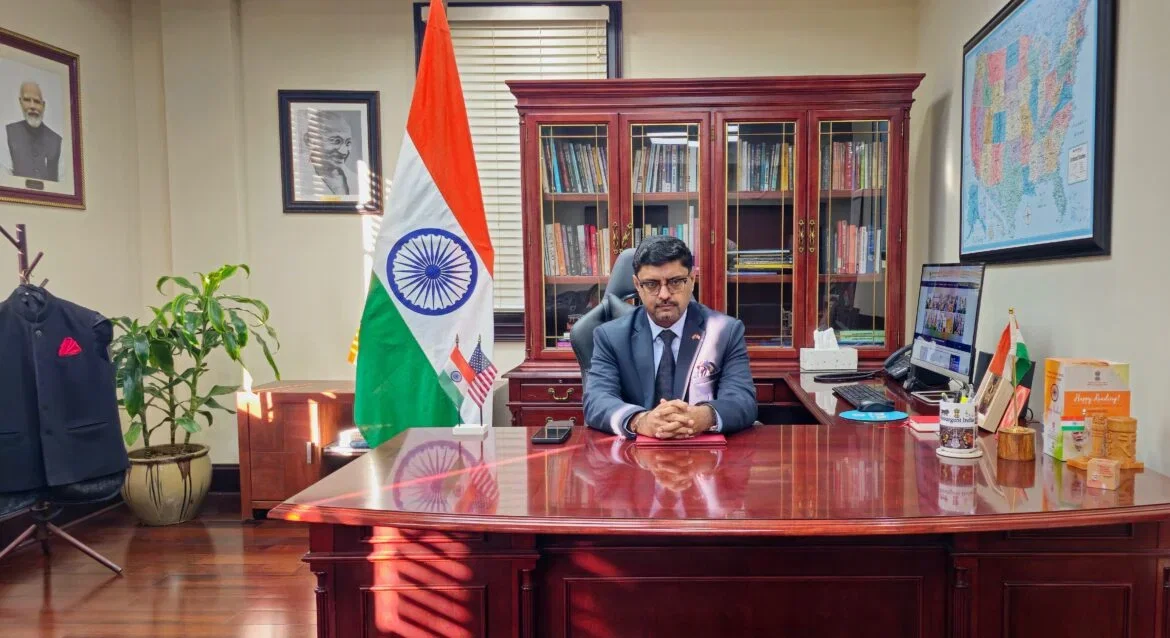
Three days after assuming charge as India’s Consul General in Atlanta on August 26, 2026, Dr. Sumit Seth has identified consular services, trade and investment, education and engagement with the Indian diaspora as his principal areas of focus. After taking charge, Seth outlined his priorities for the Atlanta Consulate and discussed the growing potential of India’s partnership with the southeastern United States.”
Consular services at the top of the agenda :
Seth said improving the delivery of consular services would be his immediate priority, arguing that the Consulate's work in this area has a direct impact on the lives of thousands of people. The Atlanta Consulate has issued more than 20,000 passports and processed over 8,000 Overseas Citizen of India (OCI) cards. Seth said each document represents an individual or family whose ability to travel, work, visit relatives or respond to an emergency may depend on timely consular assistance. His objective, he said, is to make dealings with the Consulate more efficient, predictable and responsive.
Economic engagement will be another major focus. Indian investment in the Southeast has exceeded $12 billion, while imports from India into the region are valued at more than $19 billion. Seth sees the Southeast as an important entry point for Indian businesses seeking to expand in the United States. He wants the Consulate to facilitate connections among Indian and American companies, state governments, chambers of commerce, investors and entrepreneurs.
Universities seen as another major opportunity :
Education is also expected to feature prominently during Seth's tenure. Nearly 20 universities from across the Southeast recently participated in discussions with India's Ambassador to the United States, Shri Vinay Kwatra. Seth said the next step should be turning such discussions into concrete collaborations involving research, student and faculty exchanges, technology and institutional partnerships.
He also pointed to India's decision to permit foreign universities to establish campuses in the country as a potential avenue for deeper cooperation. Seth said he would welcome universities from the Southeast exploring opportunities to establish a presence in India. Beyond physical campuses, he sees potential for joint degree programs, research initiatives and cooperation in emerging technologies.
Diaspora outreach beyond Atlanta :
Seth emphasized that his responsibilities extend well beyond the Atlanta metropolitan area. The Consulate's jurisdiction covers Georgia, Florida, Alabama, Mississippi, Tennessee and South Carolina, along with Puerto Rico and the U.S. Virgin Islands.
He said he intends to travel extensively across the region and engage with Indian-American communities outside major metropolitan centers. His approach draws partly on his experience as India's ambassador to Panama. There, he organized his work around what he described as the "five Ts" — Traditions, Trade, Technology, Tourism and Talent He plans to retain the basic framework in Atlanta while adapting it to the economic and institutional opportunities available in the Southeast.
Southeast could become a bigger pillar of India-U.S. relations :
Seth described the Southeast as one of the regions with the greatest untapped potential within the broader India-U.S. partnership. Georgia alone combines major transportation and logistics assets, including the world's busiest airport and one of the fastest-growing container ports in the United States. The wider region is also home to major Indian and American corporations, prominent universities and a rapidly developing technology ecosystem.
Indian companies including Novelis and Birla Carbon have established substantial operations in the region, while major American corporations such as UPS, Delta, Coca-Cola, Home Depot, AGCO and Intercontinental Exchange are headquartered there. The opportunity becomes even more significant in the context of the India-U.S. objective of reaching $500 billion in bilateral trade by 2030 under Mission 500.
Seth argued that such a target will ultimately depend on business activity taking place across individual American cities and states rather than being driven solely by decisions in Washington and New Delhi. For the Atlanta Consulate, that means helping create connections between Indian businesses and regional governments, companies, universities and other institutions.
G20 meetings provide a diplomatic opportunity :
The Southeast will also receive considerable international attention this year. Atlanta is scheduled to host the G20 Foreign Ministers' Meeting on October 30 and 31, while Miami will host the G20 Leaders' Summit on December 14 and 15. Both locations fall within the Atlanta Consulate's jurisdiction.
Seth said the events should be viewed as opportunities to expand India's engagement with political leaders, businesses, universities, technology organizations and communities throughout the region. The objective, he said, is to turn the Southeast's existing economic and institutional potential into lasting partnerships.
Central America experience :
Seth's previous diplomatic assignment gave him experience working across three distinctly different Central American countries — Panama, Costa Rica and Nicaragua. He described Panama primarily as a major logistics and trade hub, with its canal occupying a critical position in global commerce. During his tenure, he said relations with India broadened into areas including investment, maritime cooperation, education, logistics and technology.
Panamanian Foreign Minister Javier Martínez-Acha visited India for five days in July and expressed interest in strengthening Panama's role as a gateway for Indian trade and investment into Latin America.
Seth also highlighted the growing presence of Indian consumer brands in the country. Earlier this year, he launched three Royal Enfield motorcycle models in Panama City, an experience he viewed as evidence of the changing global reach of Indian businesses. Costa Rica presented a different set of opportunities. Seth pointed to the country's emphasis on education, environmental protection and clean energy, as well as its decision decades ago to abolish its army.
India's cooperation with Costa Rica included training through the Indian Technical and Economic Cooperation program, scholarships, technology and pharmaceuticals. Seth believes the relationship has further potential in innovation and knowledge-based partnerships.
In Nicaragua, India's development cooperation was particularly visible in areas such as electricity transmission and healthcare. The two countries also established an umbrella framework for Quick Impact Projects covering initiatives in areas including roads, community facilities, education, healthcare and sanitation.
Seth singled out Nicaragua's recognition of the Indian Pharmacopoeia as an especially significant development. It was the first Spanish-speaking country to take that step, potentially supporting greater access to affordable and quality medicines. He characterized the three relationships in broad terms: Panama offered opportunities centered on connectivity, Costa Rica on knowledge and sustainability, and Nicaragua on development cooperation. Across all three, however, he said trust remained the foundation.
Five lessons from Panama :
Seth said his experience in Panama left him with five important lessons. First, a relatively small diplomatic mission can achieve substantial results when its priorities are clearly defined. The five-T framework helped his team determine which initiatives deserved attention and resources.
Second, physical presence matters. Seth said diplomats cannot rely exclusively on meetings in capitals and official correspondence. Visiting communities, universities and businesses outside the capital can produce relationships that would otherwise never develop.
Third, language can substantially deepen diplomatic engagement. Seth holds an advanced diploma in Spanish and said his ability to communicate directly with people in their own language allowed him to understand perspectives that might otherwise remain inaccessible. Fourth, diplomatic relationships often produce results over a long period. Scholarships, business introductions, parliamentary contacts and community projects may deliver their greatest benefits years after the diplomat who initiated them has moved on. His fifth lesson came from his medical background: prevention is preferable to cure. For diplomacy, he said, that means building relationships before a crisis makes them necessary.
From forensic medicine to diplomacy :
Seth's professional journey is unusual for an Indian diplomat. He studied medicine at Maulana Azad Medical College and later specialized in forensic medicine at Lady Hardinge Medical College in New Delhi. Before turning to diplomacy, he worked as a forensic surgeon between 2000 and 2005 and was involved in more than 200 homicide investigations, including the Phoolan Devi murder case.
He also taught medical students and wrote *Review of Forensic Medicine*, which began as a revision guide and has now reached its eighth edition. Seth said the idea of becoming a diplomat had existed even before his medical career. He ultimately concluded that he wanted to work earlier in the chain of events — helping establish relationships, prevent misunderstandings and create opportunities before problems became difficult to reverse. He joined the Indian Foreign Service in 2005 after clearing the Civil Services Examination.
Medical training continues to influence his diplomatic style :
Seth said his medical training continues to affect how he approaches diplomatic work. One lesson is the importance of taking a detailed history. In medicine, careful questioning and listening often provide the basis for diagnosis. Seth said diplomacy similarly requires diplomats to listen before deciding what action to take.
He also applies the medical principle of diagnosis before treatment. Rather than arriving at a new assignment with a predetermined program, he prefers to first understand existing systems, identify gaps and determine what stakeholders actually need. Another concept he applies is triage. A consulate must distinguish between routine matters and genuine emergencies, particularly when dealing with citizens facing serious difficulties abroad.
His forensic training has also made him attentive to evidence, documentation and verification — qualities he considers valuable in negotiations, official drafting and assessing information.
Health diplomacy remains another area of professional interest. During his time at India's Permanent Mission in Geneva, Seth worked on issues involving the World Health Organization.
His new assignment has brought him to Atlanta, where the U.S. Centers for Disease Control and Prevention is headquartered and where Indian pharmaceutical companies already have a significant presence in the healthcare sector.
Seth said he hopes to explore additional opportunities for cooperation between India and the Southeast in pharmaceuticals, healthcare, medical research and health technology. For the new Consul General, the Atlanta assignment therefore represents more than a traditional diplomatic posting. His stated ambition is to strengthen practical connections across an entire region — from businesses and universities to diaspora communities and government institutions — and convert the existing potential in India-Southeast relations into sustained partnerships.