Kozhikode, Sep 14
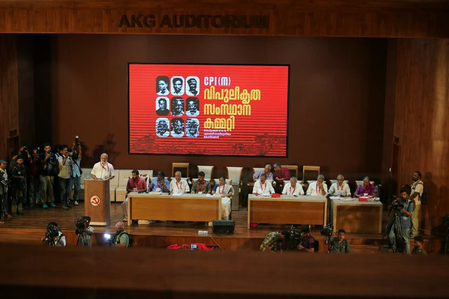
The CPI(M)’s top leadership has come under indirect fire from within its own stronghold of Kannur, with delegates at the extended state committee meeting questioning the attempt to shift the blame for the party’s crushing electoral defeat to ordinary party workers and lower-level committees.
What surprised many at the end of the first day of discussions was that the sharpest criticism of the draft rectification report presented by the party's State Secretary, M.V. Govindan, came initially from Kannur delegates.
They argued that the rank and file could not be held responsible for the party’s failures when the real powers of decision-making were concentrated with the state leadership and those who took the crucial decisions.
Similar criticism subsequently came from delegates from Kollam, indicating that the resentment was not confined to Kannur.
The discussions have therefore put both former Chief Minister Pinarayi Vijayan and M.V. Govindan under indirect pressure, even though the criticism was not framed entirely as personal attacks.
The delegates questioned the logic of asking party workers to undertake self-correction when those at the top were unwilling to accept responsibility for their own decisions.
They also criticised what they described as the parliamentary ambitions of those at the higher end and personality-centred politics that had taken root in the party during its prolonged spell in power.
The draft report was particularly criticised for placing much of the responsibility for the defeats at the lower organisational levels.
Delegates argued that problems, which should have been addressed by the state leadership, had been allowed to accumulate, eventually contributing to the party’s collapse.
The omission of the Taliparamba candidature controversy from the report also came under fire.
While the report refers to lapses in candidate selection and discusses the Payyannur defeat, delegates questioned why the Taliparamba setback was not given similar attention.
The decision to shift K.K. Shailaja to another constituency and the handling of A.N. Shamseer’s candidature were also raised during the discussions.
The Kannur delegates further alleged that the party had developed a system in which different standards were applied to leaders and ordinary workers.
The practice of protecting those close to the leadership while subjecting others to criticism, they argued, had damaged the party’s credibility.
The wider organisational crisis also figured prominently in the meeting. Delegates pointed to the erosion of the party’s traditional vote base, the decline in active membership and the weakening of support from mass organisations.
The inability of party leaders to directly engage with people and effectively communicate the party’s political position was also highlighted.
The attempt in the draft report to highlight investigations by central agencies and the Enforcement Directorate (against Vijayan and his family) as a major challenge to the party failed to evoke much sympathy among the delegates.
Instead, the discussions conveyed the message that the CPI(M)’s immediate crisis was largely internal.
Since the 2021 Assembly elections, the CPI(M)-led Left has failed to win a subsequent election, culminating in its severe setback in the latest Assembly polls.
Delegates argued that repeated warnings from successive defeats had been ignored and that the present crisis was the result of the leadership failing to act in time.
On Monday, the second day of the three-day meeting, it remains to be seen whether the criticism will intensify and whether more delegates will directly question the state leadership.
Tuesday’s concluding session, when the discussions will be summed up, is expected to be crucial.
The focus will then be on whether Pinarayi Vijayan and M.V. Govindan will actually be held accountable for the massive defeat suffered by the CPI(M)-led Left in the Assembly polls, or whether the criticism raised from the grassroots will once again be absorbed into the party’s familiar exercise of rectification without any major change at the top