








Articles features
Five degree mercury rise in Hindu Kush by 2050, warn experts
New Delhi, Dec 11
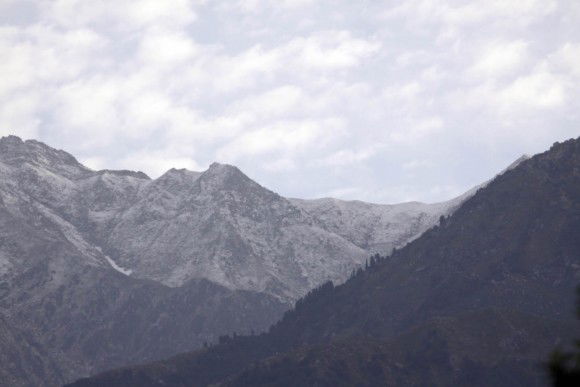
Temperatures across the Hindu Kush, a mountain range extending west of the Himalayas, will increase by about one to two degrees Celsius, in some places by four to five degrees, in the next 35 years, international researchers said on Friday.
They warned that extreme rainfall events are becoming less frequent but more violent and are likely to increase in intensity.
These startling facts came to light in a climate and water atlas, "Mapping an uncertain future: Atlas of climate change and water in five crucial water basins in the Hindu Kush Himalayas", published by three international institutes.
They are the International Centre for Integrated Mountain Development (ICIMOD), GRID-Arendal, a Norwegian Foundation, and the Centre for International Climate and Environmental Research-Oslo (CICERO).
The first-of-its-kind atlas offers a comprehensive, regional understanding of the changing climate and its impact on water resources in five of the major river basins - the Indus, the Brahmaputra, the Ganges, the Salween and the Mekong.
The atlas was released jointly by the research institutes on the sidelines of the Paris COP-21 to mark International Mountain Day on Friday.
"This atlas sheds light on the state and fate of the water resources of the Hindu Kush Himalayas, a region that is highly vulnerable to climate change and one of the poorest regions in the world," Kathmandu-based ICIMOD director general David Molden told IANS in an email.
The information in the atlas presents science-based information that will help develop solutions and take the necessary action to deal with changes in the region, he added.
It uses maps and info graphics to show how the region's climate is changing now and into the future, with severe consequences for populations - both local and downstream.
Increased temperatures by 2050 will not only increase the rates of snow and ice melt but can also result in a change of precipitation, with the main loss in the Indus basin. Communities living immediately downstream from the glaciers are the most vulnerable to glacial changes.
The Hindu Kush Himalayan region is home to 210 million people and providing water to over 1.3 billion people - more than the entire continent of Europe.
Precipitation will change with the monsoon expected to become longer and more erratic, said the researchers.
Despite the overall greater river flow projected, higher variability in river flows and more water in pre-monsoon months are expected, which will lead to a higher incidence of unexpected floods and droughts, greatly impacting on the livelihood security and agriculture of river-dependent people, they said.
Changes in temperature and precipitation will have serious and far-reaching consequences for climate-dependent sectors, such as agriculture, water resources and health.
The atlas stresses on development of flexible and cooperative strategies among countries to meet the challenges posed by either too much or too little water.
(Vishal Gulati can be contacted at vishal.g@ians.in)
They warned that extreme rainfall events are becoming less frequent but more violent and are likely to increase in intensity.
These startling facts came to light in a climate and water atlas, "Mapping an uncertain future: Atlas of climate change and water in five crucial water basins in the Hindu Kush Himalayas", published by three international institutes.
They are the International Centre for Integrated Mountain Development (ICIMOD), GRID-Arendal, a Norwegian Foundation, and the Centre for International Climate and Environmental Research-Oslo (CICERO).
The first-of-its-kind atlas offers a comprehensive, regional understanding of the changing climate and its impact on water resources in five of the major river basins - the Indus, the Brahmaputra, the Ganges, the Salween and the Mekong.
The atlas was released jointly by the research institutes on the sidelines of the Paris COP-21 to mark International Mountain Day on Friday.
"This atlas sheds light on the state and fate of the water resources of the Hindu Kush Himalayas, a region that is highly vulnerable to climate change and one of the poorest regions in the world," Kathmandu-based ICIMOD director general David Molden told IANS in an email.
The information in the atlas presents science-based information that will help develop solutions and take the necessary action to deal with changes in the region, he added.
It uses maps and info graphics to show how the region's climate is changing now and into the future, with severe consequences for populations - both local and downstream.
Increased temperatures by 2050 will not only increase the rates of snow and ice melt but can also result in a change of precipitation, with the main loss in the Indus basin. Communities living immediately downstream from the glaciers are the most vulnerable to glacial changes.
The Hindu Kush Himalayan region is home to 210 million people and providing water to over 1.3 billion people - more than the entire continent of Europe.
Precipitation will change with the monsoon expected to become longer and more erratic, said the researchers.
Despite the overall greater river flow projected, higher variability in river flows and more water in pre-monsoon months are expected, which will lead to a higher incidence of unexpected floods and droughts, greatly impacting on the livelihood security and agriculture of river-dependent people, they said.
Changes in temperature and precipitation will have serious and far-reaching consequences for climate-dependent sectors, such as agriculture, water resources and health.
The atlas stresses on development of flexible and cooperative strategies among countries to meet the challenges posed by either too much or too little water.
(Vishal Gulati can be contacted at vishal.g@ians.in)

11 seconds ago
Flydubai aircraft would have crashed without a third pilot, says Federation of Indian Pilots chief

1 minute ago
ED files charge sheet in Rs 66 crore bank fraud case involving Ruchi Global Ltd

2 minutes ago
'Will overcome problems caused due to rainfall deficit': Farmers relieved with MSP hike for rabi crops

3 minutes ago
Emirates’ London flight diverted to Frankfurt after medical emergency onboard

4 minutes ago
Maha govt unveils ‘Invest Maharashtra’ brand, signs 66 MoUs worth Rs 8.58 lakh crore

4 minutes ago
Gujarat: GSECL enters nuclear power sector, signs MoU with NPCIL for new project

5 minutes ago
Himachal govt raises apple procurement price, announces higher milk support rate

6 minutes ago
Piyush Goyal pushes UK, Australia trade ties at G20

7 hours ago
Grand Opening: RASNNA Brings Authentic Sweets and Chaat to Edison’s Oak Tree Road EDISON, NJ

11 hours ago
ZEE5 Brings a Power-Packed October Watchlist to Audiences Across the U.S. and Canada

13 hours ago
Brazil, US move closer to trade deal

13 hours ago
US sanctions Pakistani entities over alleged Iran links

14 hours ago
Odisha Observes World Heart Day in Bhubaneswar with Major Community CPR and Heart-Health Initiatives