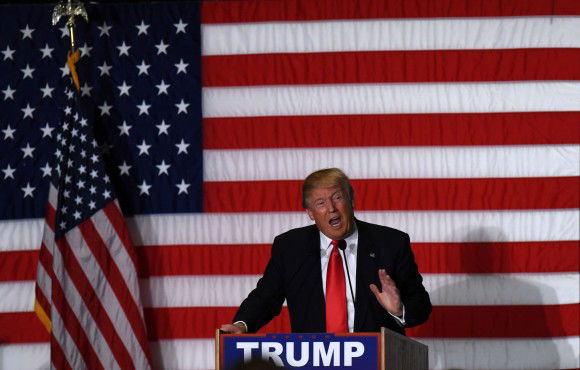
New York, March 18 Even if Donald Trump goes on to win the Republican nomination despite a “dump Trump†campaign within his own party reportedly getting stronger, the chances of the billionaire businessman winning the presidential election may be slim as researchers have found that divided political parties rarely win the race for the White House.
The study, which examined national party division in past presidential elections, found that both national party division and divisive state primaries have significant influence on general election outcomes.
"History shows that when one party is divided and the other party is united, the divided party almost always loses the presidential election," said one of the researchers Paul-Henri Gurian, associate professor of political science at the University of Georgia in the US.
"Consider, for example, the elections from 1964 through 1984; in each case the divided party lost," Gurian explained.
The study, published in the journal Political Behavior, measured party division during the primaries and indicated how much the more divided party loses in the general election.
The study found that divisive state primaries can lead to a one to two percent decrease in general elections votes in that state.
For example, Hillary Clinton received 71 percent of the Democratic vote in the Georgia primary, while Donald Trump received 39 percent of the Republican vote.
According to the historical model, a Republican-nominated Trump would lose almost one percent of the Georgia vote in the general election because of the divided state primary.
National party division has an even greater and more widespread impact on the national results, often leading to decreases of more than three percent nationwide, the study said.
Looking again at the current presidential election cycle, Trump had received 39.5 percent of the total national Republican primary vote as of March 16, while Clinton had received 58.6 percent of the Democratic vote.
If these proportions hold for the remainder of the nomination campaign (and if these two candidates win the nominations), then Trump would lose 4.5 percent of the vote in the general election, compared to what he would have received if the national Republican Party was not divided.
"In close elections, such as 2000, 2004 and 2012, four to five percent could change the outcome in terms of which party wins the presidency," Gurian said.