








Articles features
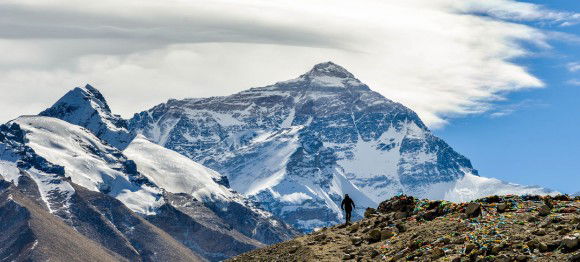
Post-quake, cracks and holes develop in Mt Everest
Kathmandu, March 26
The world tallest mountain, Everest, has developed several cracks and holes due to the devastating April 25, 2015 earthquake, 'ice-fall' doctors who are installing ropes and aluminum ladders from base camp to top of the mountain have said.
These ice-fall doctors prepare the route from the base camp to the summit, paving the way for climbers to ascend the peak.
Several media reports in Kathmandu said that although a week has passed since the ice-fall doctors began their work, the high-altitude specialists have not yet reached Camp 1 due to difficulties in installing the equipment.
"There are several cracks and holes along the Everest route this year," said Ang Kami Sherpa, adding that tbe earthquake might have caused the cracks. "As a result, we need more aluminum ladders this year compared to previous years to navigate through the cracks and holes."
The climbing season for Everest will being next month, one the most adventurous and dangerous efforts in the world due to a lot of risk that are associated with it.
Khumbu region where the Mt Everest is located, is well-known for difficult ice-pits but due to new cracks and holes this time, ice-fall doctors are facing new challenges in fixing the route.
After 19 climbers and porters were killed in 2014, the remaining had abandoned their expeditions en masse and last year too, there was no expedition to Everest due to the earthquake.
It is difficult to summiyt Everest only after fixing ladders in-between small peaks in between the routes and ice-pits. Nepal has just seven such ice-fall doctors who are trained for fixing the route.
According to the Sagarmatha Pollution Control Committee (SPCC), more than 40 ladders have been installed below Camp 1, and the number could hit 200 by the time the ice- fall doctors reach Camp 2. The SPCC manages the ice-fall doctors and has been launching garbage clearing campaigns on the mountain.
There is a small window for climbing Everest in early May and there is a huge rush of climbers and porters. When the weather is clear, climbers rush to ascend the mountain. At that moment, Everest sees a traffic jam. This time, to avoid overcrowding, the ice-fall doctors are making a two-way route."
"The move is aimed at reducing crowds and ensuring the safety of climbers," said SPCC administrator Nishan Shrestha.
Seven ice-fall doctors have been mobilized to set the spring expedition routes. They said the cracks and holes are less visible after Camp 2.
The SPCC said it would take at least a month for the climbing to begin after the routes are prepared.
"Climbing will probably begin by the first week of May," the SPCC said. Some climbers' groups who have obtained permits have started setting up camps at the Everest Base Camp.
This March, the government extended the climbing permits of hundreds of mountaineers who had been forced to abandon their expeditions last year due to avalanches triggered by the earthquake. The permits have been extended for two years, until 2017.
Last year, 103 teams consisting of 801 individuals had received the permits to climb various peaks in the Himalayas. Among them, 357 mountaineers, including 18 Nepalis, had obtained permits to climb Everest.
(Anil Giri can be contacted at girianil@gmail.com)
These ice-fall doctors prepare the route from the base camp to the summit, paving the way for climbers to ascend the peak.
Several media reports in Kathmandu said that although a week has passed since the ice-fall doctors began their work, the high-altitude specialists have not yet reached Camp 1 due to difficulties in installing the equipment.
"There are several cracks and holes along the Everest route this year," said Ang Kami Sherpa, adding that tbe earthquake might have caused the cracks. "As a result, we need more aluminum ladders this year compared to previous years to navigate through the cracks and holes."
The climbing season for Everest will being next month, one the most adventurous and dangerous efforts in the world due to a lot of risk that are associated with it.
Khumbu region where the Mt Everest is located, is well-known for difficult ice-pits but due to new cracks and holes this time, ice-fall doctors are facing new challenges in fixing the route.
After 19 climbers and porters were killed in 2014, the remaining had abandoned their expeditions en masse and last year too, there was no expedition to Everest due to the earthquake.
It is difficult to summiyt Everest only after fixing ladders in-between small peaks in between the routes and ice-pits. Nepal has just seven such ice-fall doctors who are trained for fixing the route.
According to the Sagarmatha Pollution Control Committee (SPCC), more than 40 ladders have been installed below Camp 1, and the number could hit 200 by the time the ice- fall doctors reach Camp 2. The SPCC manages the ice-fall doctors and has been launching garbage clearing campaigns on the mountain.
There is a small window for climbing Everest in early May and there is a huge rush of climbers and porters. When the weather is clear, climbers rush to ascend the mountain. At that moment, Everest sees a traffic jam. This time, to avoid overcrowding, the ice-fall doctors are making a two-way route."
"The move is aimed at reducing crowds and ensuring the safety of climbers," said SPCC administrator Nishan Shrestha.
Seven ice-fall doctors have been mobilized to set the spring expedition routes. They said the cracks and holes are less visible after Camp 2.
The SPCC said it would take at least a month for the climbing to begin after the routes are prepared.
"Climbing will probably begin by the first week of May," the SPCC said. Some climbers' groups who have obtained permits have started setting up camps at the Everest Base Camp.
This March, the government extended the climbing permits of hundreds of mountaineers who had been forced to abandon their expeditions last year due to avalanches triggered by the earthquake. The permits have been extended for two years, until 2017.
Last year, 103 teams consisting of 801 individuals had received the permits to climb various peaks in the Himalayas. Among them, 357 mountaineers, including 18 Nepalis, had obtained permits to climb Everest.
(Anil Giri can be contacted at girianil@gmail.com)

3 hours ago
ZEE5 Brings a Power-Packed October Watchlist to Audiences Across the U.S. and Canada

6 hours ago
Brazil, US move closer to trade deal

6 hours ago
US sanctions Pakistani entities over alleged Iran links

6 hours ago
Odisha Observes World Heart Day in Bhubaneswar with Major Community CPR and Heart-Health Initiatives

9 hours ago
Nicole Kidman says she ‘loved working’ with Zoe Saldana, celebrates ‘Lioness’ team

9 hours ago
Alia Bhatt excited to celebrate global changemakers finding ‘new ways forward’ at Earthshot Prize

9 hours ago
Soha Ali Khan says she’s ‘still connected’ to daughter Inaaya nine years after cutting the umbilical cord

9 hours ago
Anne Hathaway says during her pregnancy she could ‘smell time’

9 hours ago
Britney Spears reveals why she felt ‘set up’ during outing

9 hours ago
Hrithik Roshan & Saba Azad celebrate 5 years of togetherness, Sussanne Khan says 'Soooo sweeet'

9 hours ago
Sonakshi Sinha teases ‘love & obsession’ in ‘Tu Hai Meri Kiran’ first look with husband Zaheer Iqbal

9 hours ago
Bhagyashrii Borse tells Mohanlal: To be your co-actor feels like a blessing!

10 hours ago
Flydubai Flight Crisis: Cockpit Violence Forces Emergency Landing in Saudi Arabia; UAE Opens Investigation