Headlines
Brexit rattles Indian markets, Jaitley and Rajan seek calm
Mumbai, June 24
Britain's decision to opt out of the European Union (Brexit) rattled Indian financial markets on Friday, shaving over 880 points, or 3.27 per cent, off a key equities index, while pulling the rupee around Rs 68 to a US dollar mark.
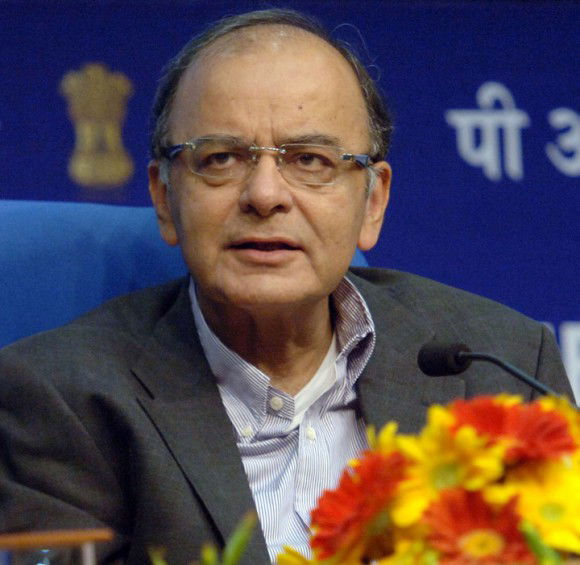
Both Finance Minister Arun Jaitley and Reserve Bank of India Governor Raghuram Rajan sought to calm the markets and assured there was no cause for panic as India's economic fundamentals remained strong along with other macro indicators.
The sensitive index (Sensex) of the BSE, which had closed on Thursday at 27,002.22 points, opened the next morning at 26,367.48 points. At around 1.00 p.m., it was ruling at 26,119.38 points, down 882.84 points, or 3.27 per cent. At one point, it had lost nearly 1,090 points.
Each of the 30 stocks that go into the Sensex basket was in the red, led by Tata Motors, which was down as much as 9.43 per cent and Tata Steel, lower by 7.82 per cent, due to their large presence in Europe in general and Britain in particular.
At the National Stock Exchange (NSE), where the 51-scrip Nifty had closed at 8,270.45 points, the opening bell was at 8,029.10 points. Thereafter, the index was ruling below the 8,000-points mark at 7,978.15 points, down 292.30 points, or 3.53 per cent.
In Europe, London's FTSE 100 was lower by 6.98 per cent, Germany's DAX Index was down by 8.40 per cent, and France's CAC 40 was lower by 10.16 per cent at the closing of the Indian markets.
The Indian rupee too faced negative consequences. It weakened by 72 paise during the mid-afternoon trade at 67.98 against a US dollar from its previous close of 67.25-26 to a greenback.
The rupee had dived over 1.4 per cent to 68.21 per dollar during the intra-day trade so far, while the British pound -- that had rallied to nearly $1.5 in early trades -- fell sharply to its lowest level since 1985 at $1.35.
But India's finance ministry said there was no cause for alarm.
"We are well prepared to deal with the short and medium term Brexit consequence -- strongly committed to our macro-economic framework with focus on stability," Finance Minister Arun Jaitley tweeted from Beijing.
"Our macro-economic fundamentals are sound with a very comfortable external position, solid commitment to fiscal discipline and declining inflation," he said.
"The government and the Reserve Bank of India as well as other regulators are well prepared and working closely together to deal with any short term volatility. Our aim will be to smooth this volatility, minimize its impact on economy in short term. For the medium term, we will pursue our reforms agenda."
Reserve Bank Governor Rajan said investors need not panic over the rupee. "We are comfortable on foreign exchange reserves. We can use it when necessary," he added. "We also expect to see lesser swings in bond markets compared to peers."
The chairman of India's largest lender, the State Bank of India (SBI), Arundhati Bhattacharya said that as risk aversion sets in, there would be a decline in financial markets and India would see this impact along with other nations.
"However, as trade strategies are reworked, there could be potential advantages in the form of better market access for India to EU and UK,†Bhattacharya said.
Anand James, Chief Market Strategist at Geojit BNP Paribas Financial Services, told IANS: "This is one of the steepest falls that equity markets have witnessed as investors went in for panic selling."
"The Indian markets are taking cues from the global markets. The Asian markets as well as the European markets are down. The Nikkei has fallen by 8 per cent and the Hang Seng by 5 per cent. Dow features have also slipped. The currencies -- Yen, rupee, pound -- are also falling."
According to Vaibhav Agrawal, Vice President and Research Head at Angel Broking, Britain's decision to opt out of the European Union led investors to jump into safe havens.
"GBP sterling crashed in early trade against USD and hence gold and silvers also saw spurt in trades," Agrawal told IANS.
"Global markets will continue to be under pressure due to volatility in currency and bond markets in the days to come."
For months, the global stocks, currency and commodity markets have been on the edge over how Britons will vote on whether or not to remain a member of the European Commission, which the nation had joined in 1973.

Both Finance Minister Arun Jaitley and Reserve Bank of India Governor Raghuram Rajan sought to calm the markets and assured there was no cause for panic as India's economic fundamentals remained strong along with other macro indicators.
The sensitive index (Sensex) of the BSE, which had closed on Thursday at 27,002.22 points, opened the next morning at 26,367.48 points. At around 1.00 p.m., it was ruling at 26,119.38 points, down 882.84 points, or 3.27 per cent. At one point, it had lost nearly 1,090 points.
Each of the 30 stocks that go into the Sensex basket was in the red, led by Tata Motors, which was down as much as 9.43 per cent and Tata Steel, lower by 7.82 per cent, due to their large presence in Europe in general and Britain in particular.
At the National Stock Exchange (NSE), where the 51-scrip Nifty had closed at 8,270.45 points, the opening bell was at 8,029.10 points. Thereafter, the index was ruling below the 8,000-points mark at 7,978.15 points, down 292.30 points, or 3.53 per cent.
In Europe, London's FTSE 100 was lower by 6.98 per cent, Germany's DAX Index was down by 8.40 per cent, and France's CAC 40 was lower by 10.16 per cent at the closing of the Indian markets.
The Indian rupee too faced negative consequences. It weakened by 72 paise during the mid-afternoon trade at 67.98 against a US dollar from its previous close of 67.25-26 to a greenback.
The rupee had dived over 1.4 per cent to 68.21 per dollar during the intra-day trade so far, while the British pound -- that had rallied to nearly $1.5 in early trades -- fell sharply to its lowest level since 1985 at $1.35.
But India's finance ministry said there was no cause for alarm.
"We are well prepared to deal with the short and medium term Brexit consequence -- strongly committed to our macro-economic framework with focus on stability," Finance Minister Arun Jaitley tweeted from Beijing.
"Our macro-economic fundamentals are sound with a very comfortable external position, solid commitment to fiscal discipline and declining inflation," he said.
"The government and the Reserve Bank of India as well as other regulators are well prepared and working closely together to deal with any short term volatility. Our aim will be to smooth this volatility, minimize its impact on economy in short term. For the medium term, we will pursue our reforms agenda."
Reserve Bank Governor Rajan said investors need not panic over the rupee. "We are comfortable on foreign exchange reserves. We can use it when necessary," he added. "We also expect to see lesser swings in bond markets compared to peers."
The chairman of India's largest lender, the State Bank of India (SBI), Arundhati Bhattacharya said that as risk aversion sets in, there would be a decline in financial markets and India would see this impact along with other nations.
"However, as trade strategies are reworked, there could be potential advantages in the form of better market access for India to EU and UK,†Bhattacharya said.
Anand James, Chief Market Strategist at Geojit BNP Paribas Financial Services, told IANS: "This is one of the steepest falls that equity markets have witnessed as investors went in for panic selling."
"The Indian markets are taking cues from the global markets. The Asian markets as well as the European markets are down. The Nikkei has fallen by 8 per cent and the Hang Seng by 5 per cent. Dow features have also slipped. The currencies -- Yen, rupee, pound -- are also falling."
According to Vaibhav Agrawal, Vice President and Research Head at Angel Broking, Britain's decision to opt out of the European Union led investors to jump into safe havens.
"GBP sterling crashed in early trade against USD and hence gold and silvers also saw spurt in trades," Agrawal told IANS.
"Global markets will continue to be under pressure due to volatility in currency and bond markets in the days to come."
For months, the global stocks, currency and commodity markets have been on the edge over how Britons will vote on whether or not to remain a member of the European Commission, which the nation had joined in 1973.
4 hours ago
EU proposes social media ban for children under 13 years
5 hours ago
Messi's record-breaking 100th goal guides Inter Miami to Campeones Cup victory
5 hours ago
South Korea says Hormuz talks focus on navigation, energy security over US ties
5 hours ago
MEA Fact Check flags misleading posts claiming world leaders fell ill after BRICS Summit
5 hours ago
US State Dept extends visa ban for Palestinian officials over non-compliance ahead of UNGA
6 hours ago
Meghna Gulzar’s ‘Daayra’ is a nail-biting theatrical experience rooted in reality
7 hours ago
Canada's been terrible partner; will put very tariffs on Europe: Trump amid trade deal row
8 hours ago
Trump ties $5,000 payout to Republican victory
10 hours ago
Kerala faces 28 per cent monsoon rain deficit, Wayanad worst hit
10 hours ago
Dev Sharma and Anjali Arora bring Shri Ram-Sita’s divine journey to big screen in ‘Mahakavya Shri Ramayan Katha’ trailer
10 hours ago
Shilpa Shetty wears 100-year-old heritage jhumkas for Lalbaug Ganpati darshan with Shamita Shetty
10 hours ago
Jackie Shroff wishes PM Narendra Modi on his 76th birthday, shares picture with Hon’ble Prime Minister
10 hours ago
Vijay Deverakonda, Rashmika Mandanna-starrer Ranabaali's shooting wrapped up!