




America
Mutant Chernobyl wolves develop anti-cancer abilities, may pave way for cure: Study
New York, Feb 9
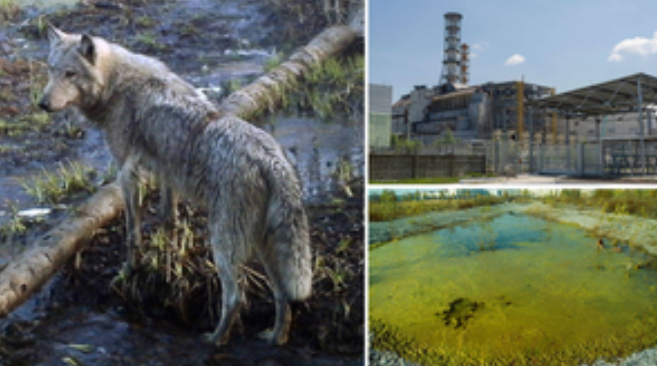
Mutant wolves around Chernobyl, where the world’s worst nuclear accident took place 35 years ago, has now developed anti-cancer abilities, an advance that may open door for cure against the deadly disease, according to a study.
In 1986, a nuclear reactor at the Chernobyl power plant exploded, releasing cancer-causing radiation and irradiated debris into the environment.
The Chernobyl Exclusion Zone (CEZ), a 1,000 square mile zone surrounding area, cordoned off to prevent further exposure to radiation, has been recolonised by wildlife like horses, wolves, forests, and fungi.
Now, researchers at the Princeton University in the US are studying how the wolves of Chernobyl survive and thrive despite generations of exposure and the accumulation of radioactive particles in their bodies.
The team led by Cara Love, an evolutionary biologist and ecotoxicologist in Shane Campbell-Staton’s lab at Princeton in 2014 went to the CEZ, radio-collared wolves, and took blood to understand the wolves’ responses to cancer-causing radiation.
Using these specialty GPS collars armed with radiation dosimeters, “we get real time measurements of where they are and how much (radiation) they are exposed to,” said Love.
They discovered that Chernobyl wolves were exposed to upwards of 11.28 millirem of radiation everyday for their entire lives, over six times the legal safety limit for the average human worker.
Unlike wolves living exclusively outside the CEZ, Love found that Chernobyl wolves have altered immune systems, similar to cancer patients undergoing radiation treatment. And most promising, she has identified specific regions of the wolf genome that seem resilient to increased cancer risk.
Most human research has found mutations increasing cancer risk (like BRCA does with breast cancer), but Love's work hopes to identify protective mutations that increase the odds of surviving cancer.
Tragically, Covid-19 and ongoing war in the region have prevented Love and her collaborators from returning to the CEZ since.
“Our priority is for people and collaborators there to be as safe as possible,” she said. Love presented the findings at the Annual Meeting of Society of Integrative and Comparative Biology’s Annual Meeting in Seattle, Washington in January.
47 minutes ago
People of Gilgit-Baltistan urged to unite and expel occupying Pakistani forces
50 minutes ago
Cabinet approves twin tube rail-cum-road tunnel under Brahmaputra river; Assam CM thanks PM
54 minutes ago
‘Ek Din’ Valentine’s Day poster features sweet, intimate moment between Sai Pallavi, Junaid Khan
1 hour ago
T20 WC: ‘We turned it around and played with positivity,’ says Tucker after Ireland’s 96-run win
1 hour ago
Urmila Matondkar discloses how to be in the 'Valentine Day zone' all your life
1 hour ago
Sandeepa Dhar says her ‘Do Deewane Seher Mein’ character taught her that comparison is thief of joy
1 hour ago
Soha Ali Khan shares video of unseen candid moments with Kunal Kemmu on Valentine's Day
1 hour ago
Vignesh Shivan: Happy Valentine’s Day to everyone who believes in love beyond anything!
1 hour ago
Preparations underway for Mahashivratri celebrations at Adiyogi in Tamil Nadu
1 hour ago
Tarique Rahman's Pakistan test: Can Dhaka recalibrate after Yunus reset?
1 hour ago
Jamaat’s electoral surge near India frontier triggers vigil before West Bengal polls
1 hour ago
Rahul Gandhi claims India-US deal will 'destroy' textile sector, BJP MP dares him to debate
1 hour ago
BLO held for murdering youth, chopping body into pieces after luring him on pretext of SIR documents
