




Headlines
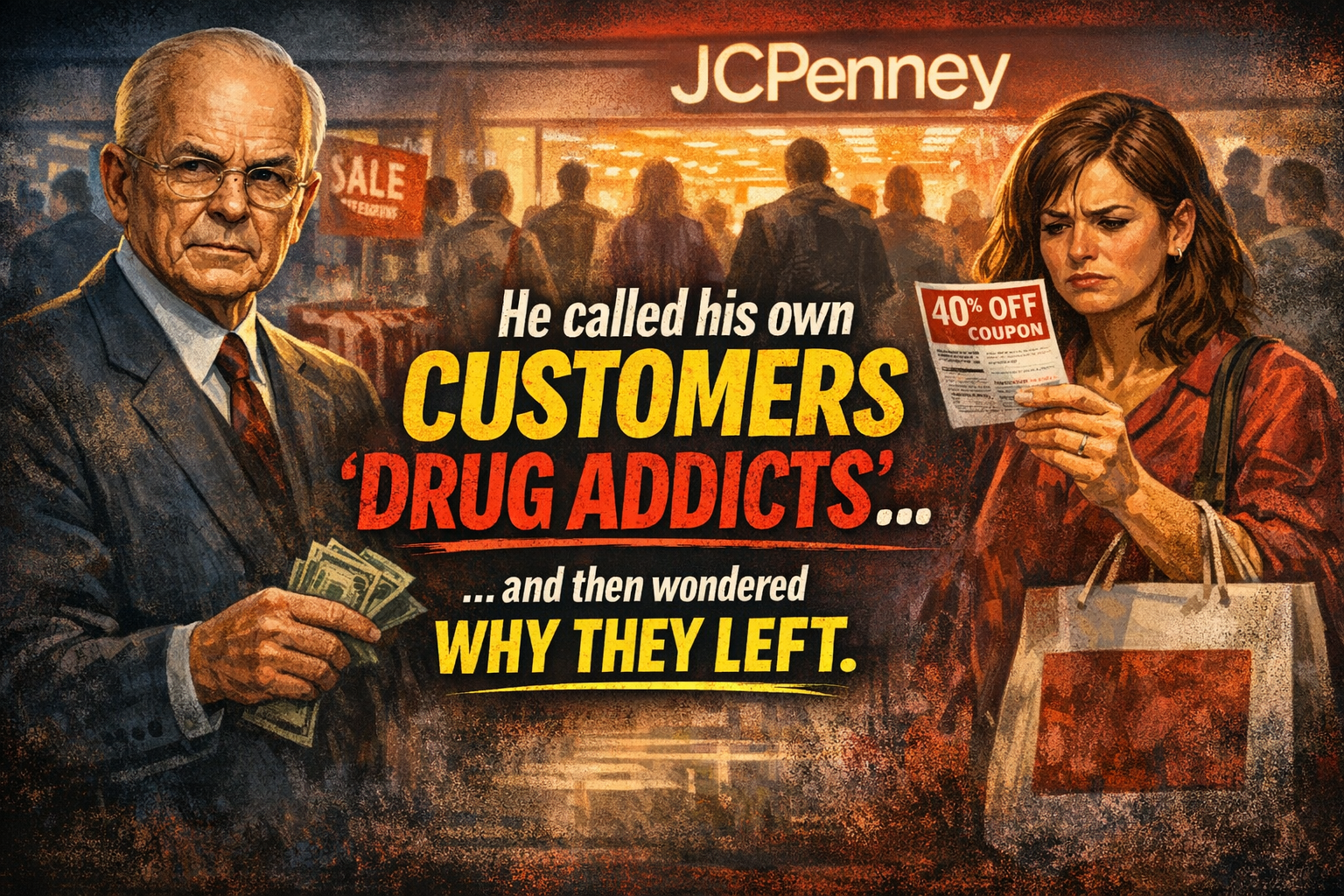
He Called His Own Customers “Drug Addicts” — Then Wondered Why They Left
The idea behind it was simple and powerful.
Fair prices.
Quality merchandise.
Honest service.
No gimmicks.
No credit.
Just value.
Families working in mining towns across the American West began lining up at the store because they trusted him. The concept worked so well that the single shop quickly turned into a growing retail chain.
By 1929, JCPenney had expanded across the country and was listed on the New York Stock Exchange.
Even during the Great Depression, the company survived and continued growing because customers knew exactly what they were getting.
Reliability.
Consistency.
Trust.
The Rise of an American Retail Giant
By 1973, JCPenney reached its peak.
The company operated more than 2,000 stores across the United States. In nearly every suburban mall, JCPenney served as the anchor department store.
For millions of American families, shopping there was part of everyday life.
For more than a century, the company followed the same retail formula:
Coupons
Sales promotions
Seasonal markdowns
Clearance racks
Customers loved it.
Shoppers clipped coupons from newspapers.
They waited patiently for big sale days.
They hunted through racks looking for bargains.
At the bottom of every receipt was a line that customers adored:
“You Saved: $XX.XX.”
For many shoppers, that number felt like winning a small victory.
JCPenney understood its customers perfectly.
Until one decision changed everything.
The CEO Who Tried to Reinvent Everything
In November 2011, JCPenney’s board hired a new CEO:
Ron Johnson.
Johnson had built the famous retail stores for Apple, helping transform Apple stores into some of the most profitable retail locations in the world.
But there was one major difference.
Apple sold premium technology products.
JCPenney sold affordable clothing and household goods to middle-income families.
Johnson’s plan was bold—and risky.
He wanted to eliminate:
Coupons
Sales events
Promotions
Discounts
In their place, he introduced a new system called “Fair and Square Pricing.”
Instead of frequent sales, every product would simply have one everyday low price.
No games.
No fake markdowns.
Just honesty.
On paper, it sounded brilliant.
In reality, it was a disaster.
When Customers Walked Away
Johnson launched the new pricing model in February 2012, only three months after becoming CEO.
There was no major testing phase.
The reaction was immediate.
Customers simply stopped coming.
Sales collapsed.
Revenue fell 25% in one year
The company lost $985 million in 2012
Same-store sales dropped 32% in one quarter
It became one of the worst quarterly declines in modern retail history.
Shoppers weren’t responding to the new strategy.
They were rejecting it.
When customers complained that the new system removed the excitement of shopping, Johnson responded with a controversial explanation.
He said customers had become “addicted to coupons.”
In other words, the problem wasn’t the strategy.
The problem was the customers.
Johnson envisioned JCPenney becoming something closer to an Apple-style retail experience.
But the company’s core shopper was not an Apple customer.
JCPenney’s typical shopper was a woman earning between $35,000 and $100,000 per year—someone who loved finding a good deal.
She didn’t want to be “educated.”
She wanted her 40% off coupon back.
The Fallout
After just 17 months, Ron Johnson was fired.
The company brought back the previous CEO in an attempt to reverse the damage.
But the harm had already been done.
Customers had left.
Trust had been broken.
Sales never fully recovered.
In May 2020, JCPenney filed for bankruptcy.
A company that survived:
Two World Wars
The Great Depression
Multiple economic crises
…could not survive a leadership strategy that misunderstood its own customers.
The Company That Stayed the Same
While JCPenney struggled to reinvent itself, another retailer took the opposite approach.
TJ Maxx stayed true to its original model.
Treasure-hunt shopping.
Discounted brand-name products.
Constantly changing inventory.
No identity crisis.
No reinvention.
Just consistency.
Today, the parent company TJX Companies operates more than 5,000 stores worldwide and generates over $56 billion in annual revenue.
Customers know exactly what to expect when they walk in.
And that certainty builds loyalty.
The Lesson Every Business Should Learn
The story of JCPenney offers a powerful reminder for companies everywhere.
Customers don’t need to be “educated.”
They need to be heard.
The people buying from your business right now are telling you what they want every single day.
Their behavior.
Their purchases.
Their loyalty.
It’s all feedback.
The smartest companies don’t rush to reinvent what already works.
They protect it.
Because the moment a company tells its most loyal customers that they’re wrong for loving what it built…
it has already started losing them.