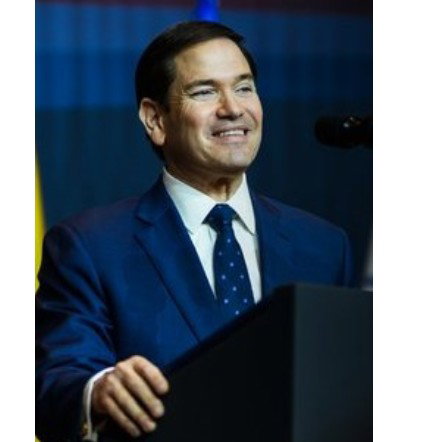
Washington, May 6
US Secretary of State Marco Rubio defended President Donald Trump’s authority to conduct military operations against Iran without congressional approval, calling the War Powers Act “100 per cent unconstitutional”.
The remarks came during a wide-ranging White House briefing on Tuesday in which Rubio defended the administration’s military response in the Strait of Hormuz, broader pressure on Iran and Washington’s Middle East strategy.
“The War Powers Act is unconstitutional, 100 per cent,” Rubio said. “That has been the position of every single presidential administration since the day that law passed.”
Rubio said the White House would continue consulting Congress but insisted the president retained constitutional authority to act militarily when necessary.
“We comply with elements of it for purposes of maintaining good relations with Congress,” Rubio said. “We want them to be involved, and we want them to be informed.”
The comments followed questions about whether the Trump administration’s military operations linked to Iran and the Strait of Hormuz required congressional authorisation.
Rubio said the earlier military campaign known as “Operation Epic Fury” had already achieved its objectives and was now concluded.
“The operation is over,” Rubio said. “We achieved the objectives of that operation.”
He said the administration had now shifted its focus to “Project Freedom”, the ongoing naval effort aimed at protecting commercial shipping through the Strait of Hormuz.
At the same time, Rubio stressed that Trump still preferred diplomacy with Iran despite escalating military pressure.
“What the president would prefer is a deal,” Rubio said. “He would prefer to sit down, work out a memorandum of understanding for future negotiations.”
Rubio said Iran’s leadership remained divided and difficult to negotiate with because of its complex internal power structure.
“An offer will be made, and then it takes five or six days to get a response,” Rubio said. “They have to find the supreme leader, wherever he hides.”
The secretary of state also expanded on the administration’s broader Middle East strategy, including US efforts involving Lebanon, Israel and Hezbollah.
Rubio described Hezbollah as the main obstacle to lasting peace between Israel and Lebanon.
“The problem with Israel and Lebanon is not Israel or Lebanon, it’s Hezbollah,” Rubio said. “Hezbollah operates from inside of Lebanese territory.”
He accused Iran of supporting militant groups across the region.
“If you go through that Middle East and you identify every problem, Hamas, Hezbollah, to some extent, the Houthis, behind every one of these groups is Tehran,” Rubio said.
Rubio said Washington wanted a stronger Lebanese government capable of challenging Hezbollah’s military influence.
“There shouldn’t be a Hezbollah and a government,” Rubio said. “There should be a government.”
The briefing also touched on Rubio’s upcoming trip to the Vatican and Italy.
Rubio rejected suggestions that the visit was linked to tensions between Trump and Pope Leo, saying the discussions would focus on humanitarian aid, religious freedom and the persecution of Christians in parts of the world.
“We share with the Catholic Church a concern about the destruction of religious liberty,” Rubio said.
He also defended US humanitarian efforts toward Cuba, saying Washington had attempted to channel aid through the church but faced resistance from the Cuban government.
“We were willing to give more humanitarian aid to Cuba,” Rubio said. “The Cuban regime has to allow us to do it.”
Rubio repeatedly framed the administration’s foreign policy as a defence of international order and US strategic interests.
“We cannot live in a world where a rogue state like this Iranian regime is allowed to claim control over an international shipping lane,” Rubio said.
The War Powers Act, passed by Congress in 1973 after the Vietnam War, was designed to limit presidential authority to commit US forces to military conflict without congressional approval. Successive administrations from both parties have often questioned parts of the law while continuing to comply with some reporting requirements.