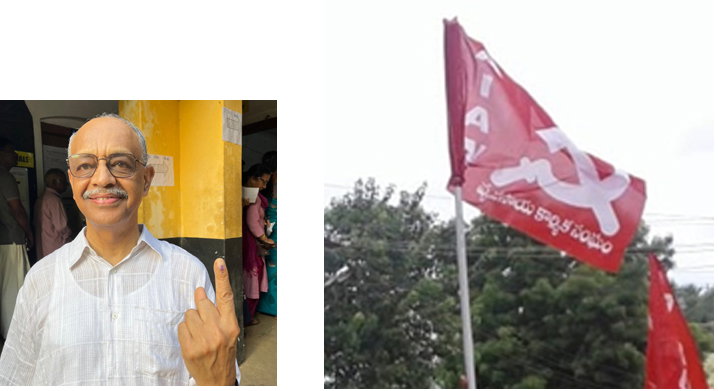
Now that the elections in Kerala have concluded, attention has shifted decisively toward the question of leadership—who will assume the role of Chief Minister? This lingering uncertainty is expected to be resolved in the coming days, as the Congress High Command deliberates carefully, weighing both electoral mandates and public sentiment. The party, having been entrusted with a renewed mandate after a decade, faces the responsibility of selecting a leader who can embody both competence and credibility while meeting the aspirations of a politically aware electorate.
Among Congress supporters, there is a palpable sense of euphoria following what they perceive as the end of a long and controversial phase of governance under the previous administration. However, beneath the celebratory mood lie deeper, more complex trends that merit careful reflection. A closer analysis of the electoral outcome reveals shifts in voter behavior and political alignments that could carry long-term implications for Kerala’s social fabric and political stability.
One of the most striking developments is the broader national context in which this result sits. For the first time in decades, it appears that no state government in India will be led by a communist or leftist party, a dramatic reversal for a movement that once wielded significant influence and was rooted in the ideals of social justice, equality, and resistance to feudal and caste-based oppression. This decline raises important questions about the evolving relevance of ideological politics in contemporary India.
For much of its post-independence history, Kerala has been shaped by the alternating stewardship of two major political fronts, whose competitive yet stable governance model contributed significantly to the state’s social cohesion and institutional continuity. Both formations have, by and large, upheld a strong commitment to secularism and have consistently resisted communal polarization. In doing so, Kerala largely avoided the large-scale religious tensions and riots that have periodically affected other parts of India. This relative insulation from divisive politics has been a key factor in preserving the state’s pluralistic ethos and social harmony.
Equally important has been Kerala’s remarkable progress on human development indicators. The state’s achievements in literacy, healthcare, and social welfare have often been cited as benchmarks not just within India, but in comparison with many developed regions globally. This trajectory did not emerge by accident; it was the result of sustained policy choices and a political culture that prioritized public welfare over narrow sectarian interests.
There is little doubt that the Left Democratic Front (LDF) played a pivotal role in laying this foundation. The election of the first democratically elected communist government in 1957 marked a turning point not just for Kerala but also for the global history of democratic politics. The government initiated a series of far-reaching reforms that reshaped the state's socio-economic landscape. Land reforms weakened entrenched feudal structures, redistributing ownership and empowering marginalized communities. Investments in free and universal education, along with a robust primary healthcare system, created a more equitable society with high levels of human capital. Additionally, the establishment of a public distribution system ensured food security for vast sections of the population, while progressive labor laws sought to protect workers from exploitation.
Over time, these policies helped entrench Left politics as a durable force in Kerala and in states like West Bengal and Tripura, while also maintaining a presence in regions such as Bihar and Tamil Nadu. Their legacy, therefore, is not merely electoral but structural and embedded in the very fabric of Kerala’s development model.
The more pressing and perhaps unsettling question now is whether the decline of the Left Front witnessed earlier in states like West Bengal and Tripura could, over time, replicate itself in Kerala. This election appears to signal not just a routine political transition, but the possibility of a deeper structural weakening of the Left’s organizational strength and ideological appeal. A key criticism emerging from observers and sections of the electorate is that this downturn has been driven less by ideological defeat and more by a gradual drift away from foundational principles, such as centralized decision-making, diminishing internal democracy, and an increasingly insulated leadership, which have contributed to a growing disconnect between the party and its grassroots base. The term “Pinarayism,” as used by critics, reflects this perceived transformation from a collective, ideology-driven movement to a more personality-centric style of governance.
Looking beyond Kerala, some analysts trace the broader weakening of Left politics in India to earlier strategic decisions at the national level. The withdrawal of support from the UPA government over the Indo–US civil nuclear agreement is often cited as a turning point. At that time, the Left had significant parliamentary strength and, arguably, an opportunity to exert influence from within the government. The decision to step away, combined with internal disagreements and the sidelining of prominent leaders, has been interpreted by critics as a moment of strategic overreach that contributed to a longer-term erosion of political capital.
In Kerala, the recent phase of governance under the Left was, in fact, marked by an unprecedented consecutive electoral mandate, an indication of strong public trust. However, sustaining that trust required a careful balance between authority and accessibility. Critics argue that over time, a perceived sense of arrogance, the marginalization of alternative voices within the party, and concerns over fiscal management may have weakened that bond with the electorate.
One of the most striking developments in this election is the visible emergence of a third political force, led by the BJP. Securing a small but symbolically important number of assembly seats, the party has signaled that it is no longer a marginal player in Kerala’s political landscape. For decades, the state’s politics has been defined by a bipolar contest, but this result suggests the beginnings of a gradual shift toward a more triangular dynamic.
A particularly notable trend is the apparent drift of a section of traditional Left supporters toward the BJP. This shift cannot be explained by a single factor. Among the narratives gaining traction is the long-standing allegation of “minority appeasement,” which appears to be resonating with segments of the Hindu electorate, including sections of OBC, SC, and ST communities. At the same time, while Muslim and Christian voters largely consolidated behind the UDF in this election, there are subtle signs of a shift in the once-solid resolve to keep the BJP at the margins. Together, these developments suggest that the BJP may be laying the groundwork for a more sustained presence in Kerala.
Historically, Kerala’s relative social harmony has been underpinned by a political culture that emphasized coexistence, welfare, and inclusive development. The concern among some observers is that a shift toward more identity-driven politics could strain that balance. What is clear, however, is that the changing dynamics place new responsibilities on all major political actors. For the UDF, the challenge will be to translate its electoral success into governance that reassures all communities and sustains broad-based trust. For the Left, this moment may call for introspection, renewal, and a reconnection with its traditional base. And for the BJP, any long-term expansion in Kerala will depend on how it adapts its messaging and engagement to the state’s unique social fabric.
In this evolving context, the argument that a strong and credible Left opposition is essential to Kerala’s democratic health remains significant. The state’s history of alternating governments has often been criticized, but it has also contributed to accountability, policy continuity, and social cohesion.
Kerala now stands at an inflection point. The emergence of a third front does not, by itself, determine the future, but it undeniably adds a new layer of complexity. How this plays out will depend not just on electoral arithmetic, but on whether the core values that have long defined the state, such as pluralism, social justice, and political maturity, continue to guide its path forward.