




AMERICA
South Korea says Hormuz talks focus on navigation, energy security over US ties
Seoul, Sep 17
Discussions over South Korea's potential role in securing the Strait of Hormuz are focused on safe navigation, energy security and the safety of nationals, rather than its relations with the United States, a senior foreign ministry official said Thursday.
The Seoul government has been weighing whether to deploy military assets to the crucial waterway amid pressure from the Donald Trump administration for Seoul to make a contribution, Yonhap News Agency reported.
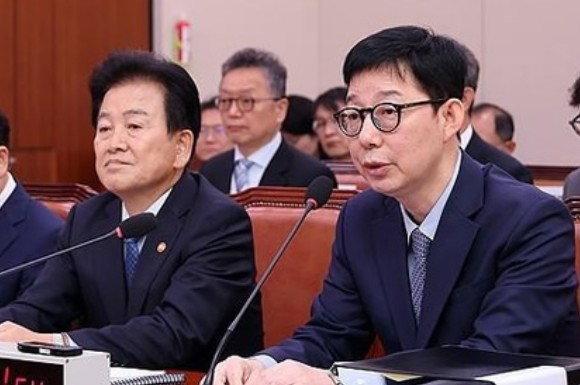
"The government is looking at the issue basically not from the perspective of South Korea-US relations, but in terms of ensuring safe navigation, the security of energy supply routes and the safety of our people," First Vice Foreign Minister Park Yoon-joo told the National Assembly's foreign affairs and unification committee.
Addressing the widespread use of the term "deployment" in South Korea, Park said the government has been in close talks with the international community on how to make a "contribution" to restoring stability in the region.
Media reports have said assets under consideration for possible deployment included maritime patrol aircraft, explosive ordnance disposal teams and unmanned systems for detecting and clearing naval mines, with the government saying no decision has been made yet.
Heading to Washington earlier Thursday for talks with US Secretary of State Marco Rubio, Foreign Minister Cho Hyun reiterated that the government will prioritise international cooperation while giving foremost consideration to the safety of its people and freedom of navigation through the strait.
"The government remains in the internal deliberation and review stage. Minister Cho is also expected to approach the ministerial talks with the overall situation in mind," Park said.
Iran has strongly opposed any foreign military involvement and warned of "serious consequences" for "dangerous choices."
Some lawmakers also voiced opposition to the possible deployment during the committee meeting.
Rep. Woo Won-shik of the ruling Democratic Party (DP) said he was "absolutely" opposed to any deployment, arguing it would lack justification as the U.S.-Iran war is "fundamentally" different from the Iraq War and that the ongoing war is not supported even by the US public.
Others also voiced concerns over national interests, the safety of Koreans in the region and the potential for Iran to view even noncombatant personnel as military intervention. Some called for Seoul to focus instead on contributing to postwar reconstruction and humanitarian efforts.
Members of the main opposition People Power Party (PPP) criticised the ruling party lawmakers' opposition, saying the apparent divide between the government and the ruling party could cause public concern.
