





AMERICA
It Is the War, Stupid!
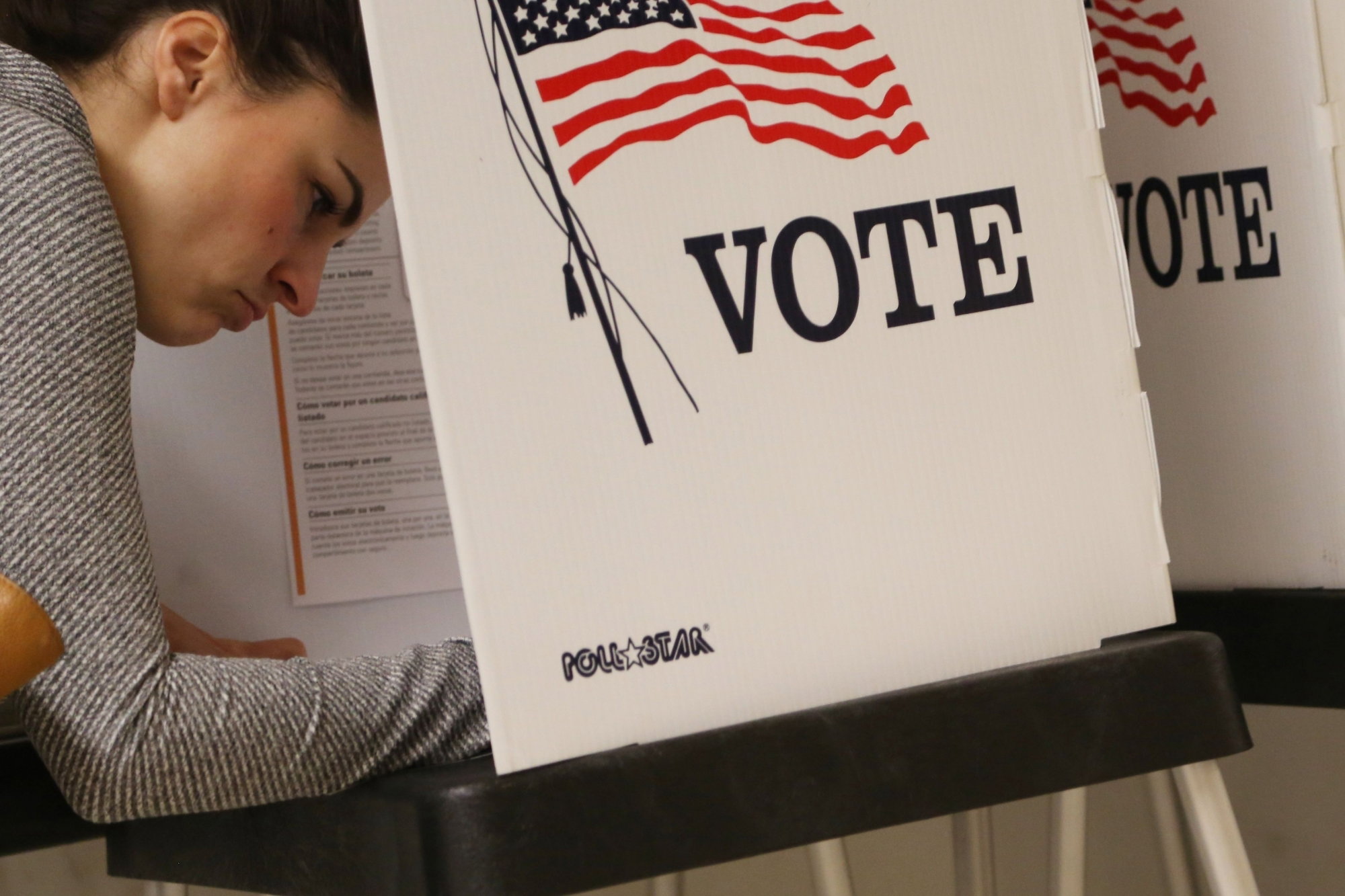
Now that the midterm election results are in, everyone seems to have their own explanation for why the Republicans suffered such a shellacking across the country. The damage was not limited to urban areas or traditional Democratic strongholds. Even rural districts in deeply Republican states were not spared from the blue tsunami that swept across the nation. What was once considered safe Republican territory suddenly became vulnerable, leaving party leaders searching for answers and wondering what went wrong.
Vice President JD Vance was quick to declare that the war with Iran was the principal reason for the Republican defeat. He even suggested that the United States needed to reconsider its relationship with Israel, a remarkable turnaround in a bilateral relationship that, not long ago, was considered almost sacrosanct in American politics.
However, from my vantage point, it was not simply the war that changed the trajectory of the Trump presidency. It was the failure to finish the war and achieve its objectives that brought about this political disaster. Americans love a winner. They are willing to endure hardship and even sacrifice when they believe their country is moving toward a decisive victory. What they cannot tolerate indefinitely is a war without an end, mounting costs without visible results, and leadership that continues to proclaim victory while the facts on the ground tell a different story.
Trump went into this conflict with enormous confidence in America's military superiority. His administration appeared to believe that overwhelming American firepower, combined with Israeli military capabilities, could cripple Iran, destroy its military infrastructure, and perhaps even bring about a regime change in Tehran. Instead, Iran survived, retaliated, and demonstrated that it could continue to inflict enormous economic and strategic costs on the United States and its allies.
Trump failed to bring about a regime change in Tehran. Instead, American voters chose to change the political balance in Washington, while voters in Israel delivered their own rebuke to Benjamin Netanyahu's governing coalition. What an extraordinary reversal of fortunes!
The problem with America for quite some time has been its inability to conclude wars with the decisive victory its leaders promise at the outset. Apart from limited military operations in its own backyard in the Western Hemisphere, America's record since World War II has been anything but impressive. The Korean War ended in a stalemate. Vietnam was a disaster. Iraq became a quagmire that destabilized the entire region. Afghanistan ended with the humiliating withdrawal of American forces after twenty years of fighting. And now Iran has turned into another war of attrition, with no clear political settlement in sight.
I remember the much-celebrated Powell Doctrine, which argued that America should go to war only when its objectives were clearly defined, its national interests were at stake, and it possessed the overwhelming force and determination necessary to achieve victory. Yet, ironically, the very man associated with that doctrine later appeared before the United Nations Security Council to defend the deeply flawed intelligence used to justify the invasion of Iraq.
That war not only destabilized Iraq but also strengthened Iran's regional influence and opened the door to extremist movements that continue to haunt the Middle East.
There is an adage that those who fail to learn from history are doomed to repeat it. That is precisely what happened here once again.
The Trump administration appears to have failed both in planning the war and in understanding its consequences. The intelligence community and the Defense Department should have anticipated not only Iran's military capabilities but also its willingness to use unconventional methods to impose costs on a vastly superior adversary.
One of the most serious miscalculations was underestimating Iran's ability to launch precision missile and drone attacks against American military installations throughout the region. Although American and Israeli forces inflicted considerable damage on Iranian military facilities, Tehran demonstrated that it retained enough capabilities to threaten military bases, infrastructure, and critical economic installations across the Gulf.
The damage and the cost of defending and repairing these installations have raised serious questions about the vulnerability of America's military presence in the region. How could a country possessing the world's most sophisticated intelligence apparatus and military technology underestimate an adversary whose asymmetric warfare strategy has been developed over decades?
But the biggest failure, in my view, was the apparent inability to anticipate the consequences of Iran's ability to threaten the Strait of Hormuz. This narrow waterway carries roughly one-fifth of the world's petroleum liquids consumption and is a vital supply route for energy markets in Asia and beyond. Any prolonged disruption would have immediate repercussions for global oil prices, international trade, and economies already struggling with inflation.
Iran demonstrated that it did not need a superior navy or air force to threaten this crucial passage. A missile here, a drone there, or a few naval mines could be enough to make commercial shipping through the strait a dangerous proposition. Even a relatively small disruption could send insurance premiums soaring and force shipping companies to reconsider their operations. After all, which shipowner would willingly risk a multimillion-dollar tanker, its cargo, and the lives of its crew in waters where insurance coverage might be restricted or withdrawn?
This is where Iran came to understand the vulnerabilities of the global economy better than those who planned the war. The United States may possess the world's most powerful navy, but it cannot guarantee uninterrupted commercial shipping by deploying aircraft carriers and destroyers alone. Even a small threat can have enormous economic consequences when the world's energy lifeline passes through such a narrow corridor.
The second major consequence was the vulnerability of American naval facilities in the Persian Gulf. The threat from Iranian missiles and drones forced a reassessment of how safely American warships could operate from established bases in the region. Ships that previously relied on these facilities for logistics, maintenance, supplies, and rest and recuperation increasingly had to consider the dangers of remaining within range of Iranian weapons.
Suddenly, military installations built at enormous expense were exposed to threats that their planners may not have adequately anticipated. A base is valuable only as long as it can perform its intended mission. If American naval assets must operate farther away to reduce their vulnerability, the strategic advantages of those facilities are considerably diminished.
The third consequence was the tremendous damage inflicted on the confidence and economic security of the Gulf Cooperation Council nations. For decades, countries such as the United Arab Emirates, Qatar, Bahrain, Kuwait, and Saudi Arabia have worked tirelessly to transform their economies into international centers of commerce, tourism, finance, transportation, and investment. They built magnificent cities, airports, ports, hotels, and business centers, attracting millions of expatriates and billions of dollars in foreign investment.
All those achievements depend upon one essential ingredient: stability. When missiles and drones begin flying across the region, confidence disappears. Investors become nervous, businesses reconsider their commitments, airlines face disruptions, and ordinary people begin to worry about their safety. The image of the Gulf as a safe haven for international business has suffered a serious setback.
Those with the financial means to leave can relocate their businesses and families. But what about the millions of migrant workers from India, Pakistan, Bangladesh, the Philippines, and other developing nations whose livelihoods depend upon employment in these countries? They have few alternatives. Their families back home depend upon the money they send every month. The human and economic costs of this war extend far beyond the battlefield.
The fourth consequence may prove even more damaging to American interests in the long run. It is the growing realization among Gulf leaders that the United States may no longer be able to guarantee their security. For decades, these nations have depended upon America's military presence, sophisticated weapons systems, and security commitments to protect them from external threats. They spent billions purchasing American military equipment and providing facilities for American forces.
Yet when the confrontation with Iran escalated, their territories and economic interests became targets of retaliation. They discovered that hosting American military facilities could make them vulnerable rather than necessarily provide the security they had expected. This realization could fundamentally alter the strategic calculations of Gulf leaders. They cannot simply move away from Iran. Geography does not permit that luxury. They must somehow learn to coexist with Tehran, whether Washington likes it or not.
Consequently, we may witness a gradual realignment of relationships in the Middle East, with Gulf nations seeking greater independence in their foreign policies and exploring new security arrangements. China and other powers could find opportunities to expand their influence as confidence in American security guarantees diminishes. For a country that has invested so much blood and treasure in maintaining its influence in the Middle East, this would be a remarkable strategic setback.
Finally, there is the danger of an emboldened Iran emerging from this conflict. Despite the enormous punishment inflicted upon its military infrastructure, Iran has survived the initial assault and retained sufficient capabilities to threaten its neighbors and disrupt global energy supplies. That alone could strengthen the regime's claim that it successfully resisted the combined military power of the United States and Israel.
Tehran may attempt to leverage its ability to threaten the Strait of Hormuz in future negotiations. Rather than abandoning its regional ambitions, it may demand concessions in return for restoring stability and reducing tensions. The United States, anxious to escape another costly Middle Eastern confrontation, could find itself negotiating from a position far less favorable than its leaders anticipated when they launched the war. What an irony! A war intended to weaken Iran could end up strengthening its bargaining position.
The intelligence and strategic failures surrounding this conflict will undoubtedly be studied for years to come. How did America's military planners misjudge the resilience of the Iranian regime? Why was there such confidence that military pressure would produce political capitulation? Why was insufficient attention apparently given to the economic consequences of a prolonged confrontation?
Iran's military strategy was hardly a secret. For years, it had invested in missiles, drones, underground facilities, and unconventional warfare, knowing full well that it could never match American military power. Tehran did not need to defeat the United States on the battlefield. It only needed to survive long enough to make the war politically and economically unbearable for Washington. That is where the Trump administration and its intelligence agencies failed so miserably. Even the diplomatic negotiations conducted by Jared Kushner and Steve Witkoff appeared to underestimate the resilience and strategic calculations of the Iranian leadership. It is another case of David confronting Goliath, not by matching his strength but by exploiting his vulnerabilities.
Trump's constant threats, exaggerated claims, and undiplomatic pronouncements did little to inspire confidence among America's friends or intimidate its adversaries. His administration seemed to believe that overwhelming military power could accomplish anything. But destroying military installations is not the same as winning a war, and bringing an adversary to the negotiating table is not the same as forcing him to surrender. That distinction appears to have been lost on those who planned and executed this ill-conceived adventure.
Vice President Vance may be correct in blaming the Iran war for the Republican defeat. However, I would go one step further. Americans did not necessarily reject the Republicans because they went to war. They rejected them because they failed to win it, failed to finish it, and failed to explain why billions of American dollars were being spent abroad while economic problems at home remained unresolved.
Trump came to power promising to put America First and end the endless foreign wars. Instead, he ended up repeating the same mistakes he had so loudly condemned. Vietnam, Iraq, and Afghanistan should have taught him that military superiority does not necessarily translate into political victory.
There is a lesson here for every future American president. Never go to war unless it is in the nation's vital interests, and never begin one without a clear objective and a strategy to finish it.
Trump believed that he could bring about a regime change in Tehran. Instead, American voters chose to change the political balance in Washington. What an irony!
Americans may forgive a president for going to war when national security is at stake, but they are far less likely to forgive one who takes them into a war without knowing how to get them out.
That is what brought about the Republican shellacking at the polls.
It is the war, stupid! But more precisely, it is the war you failed to finish!