New Delhi, Sep 25
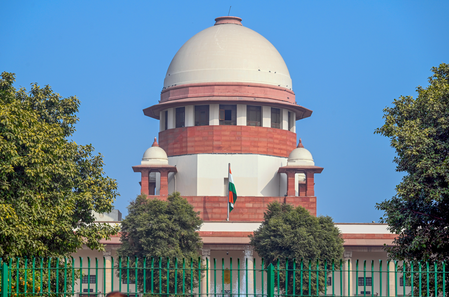
The Supreme Court has upheld the Bombay High Court's view that offering 'Dua' (prayer) for electoral success does not, by itself, amount to undue influence or soliciting votes in the name of religion, while dismissing an appeal challenging the election of AIMIM's Mufti Mohammad Ismail Abdul Khalique from Maharashtra's Malegaon Central Assembly constituency.
A Bench of Justices Vikram Nath, Augustine George Masih and Sandeep Mehta dismissed the appeal filed by Samajwadi Party candidate Shaan-e-Hind Nihal Ahmed against the Bombay High Court's judgment upholding Mufti Ismail's election.
The controversy before the High Court centred, among other allegations, on instances where Mufti Ismail allegedly offered 'Dua' for his electoral success during prayers and campaign meetings.
The election petitioner had alleged that when people attending such gatherings responded with "Amen" to the prayers, it amounted to a collective pledge to vote for Mufti Ismail.
The Bombay High Court rejected the contention, holding that saying “Amen” in response to a prayer could not be equated with making a formal pledge to vote.
"By saying Amen, the person can be said to have agreed with or seconded the prayer for the electoral success of the Respondent No.1 (Mufti Ismail). However, saying Amen is materially distinct from making the pledge, which is in the nature of a formal promise or undertaking,” it had held. It further held that a prayer for electoral success did not amount to soliciting votes on the ground of the candidate's religion or prejudicing the prospects of a rival candidate on that basis.
"As the Dua is essentially a form of communication by the believer with God, saying prayer for success in the election neither amounts to exercise of undue influence nor soliciting votes in the name of the religion," a single-judge Bench of Justice N. J. Jamadar had observed.
The High Court was dealing with an election petition challenging Mufti Ismail's victory in the November 2024 Maharashtra Assembly polls from Malegaon Central. The election petition alleged that the returned candidate and his campaigners had committed various corrupt practices under the Representation of the People Act, 1951, including allegedly appealing to voters on religious grounds.
Applying the legal test under Section 123(3) of the Representation of the People Act, the High Court concluded that mere reference to religion or religious organisations, without an appeal to vote for a candidate on the ground of religion, would not by itself constitute a corrupt practice.
The election petition was consequently rejected at the threshold, with the High Court holding that it failed to make out a complete cause of action warranting a trial. With the Supreme Court dismissing Nihal Ahmed's appeal, the Bombay High Court's findings, including its view on the 'Dua' offered for electoral success, stand affirmed.