AMERICA
India at the Crossroads: Strategic Autonomy or Strategic Isolation?
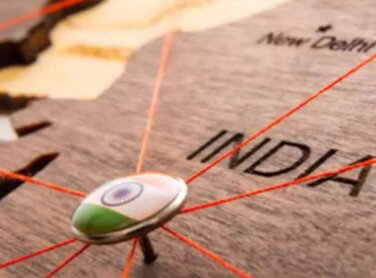
An important development is taking place in international politics. The United States and China remain major strategic competitors, but at the same time they are talking, negotiating, and finding ways to reduce tensions when it serves their interests. They understand that rivalry does not prevent engagement. As a matter of fact, powerful nations know how to compete and cooperate simultaneously.
The question before us is where India stands in all this? External Affairs Minister S. Jaishankar has said that India is pursuing a policy of multi-engagement rather than relying on a single superpower. On the surface, that sounds sensible. India should not surrender its independence to Washington, Beijing, Moscow or anyone else. Strategic autonomy through non-alignment has always been part of India's foreign policy tradition since the Nehruvian days.
However, there is a difference between strategic autonomy and strategic isolation. There is a difference between having many relationships and having dependable friends. And today, India must seriously ask whether its foreign policy has produced real influence or left the country trying to balance too many contradictory relationships.
If we take a look at our own neck of the woods, Pakistan remains openly hostile. Bangladesh, which once enjoyed a much warmer relationship with India, has seen that relationship become increasingly complicated. Nepal is carefully balancing India against China. China itself remains India's biggest long-term strategic challenge. If a country aspiring to become a major global power cannot maintain stable and trusted relations even in its own neighborhood, then something has clearly gone wrong, and the situation is deeply troubling.
In addition, if we look at the BRICS, India sits alongside China, Russia, and other countries that openly advocate for a more multipolar world. BRICS is encouraging greater trade in national currencies and looking for ways to reduce dependence on the U.S. dollar. There is no common BRICS currency at present, but the political direction is obvious. The group wants to reduce the overwhelming influence of the dollar-centered international financial system.
Naturally, Washington watches this closely. At the same time, India is also a member of the Quad with the United States, Japan and Australia. The Quad is concerned with security in the Indo-Pacific and, whether openly stated or not, much of its strategic importance comes from the rise of China.
Therefore, the contradiction here is that India sits with China in BRICS talking about a multipolar world and reducing Western financial dominance. Then India sits with the United States, Japan, and Australia in the Quad, discussing how to address China's growing influence in the Indo-Pacific.
How long can India successfully remain on both sides of that equation? This becomes even more important when we ask a hypothetical question. If there were ever a serious military conflict between the United States and China, would India stand with the United States?
Most foreign-policy analysts would say no. India would most likely remain on the sidelines unless its own direct security interests were at stake, especially given that it shares a 2,167-mile border with China. There is nothing wrong with India asserting that right. But then America also has every right to ask what kind of strategic partner India really is.
India wants American technology, American investment, defense cooperation, intelligence sharing, access to universities, and economic opportunity. The Indian diaspora in America has become one of the strongest bridges between the two countries. Yet when Washington looks at India strategically, it cannot ignore the possibility that in a major confrontation with China, India may stand still. The truth of the matter is that one cannot expect all the benefits of a close strategic partnership while remaining completely free from the responsibilities that may come with it.
Then there is China. China can never be treated as an ordinary partner by India. The two countries fought a war in 1962. Indian soldiers were killed in Galwan in 2020. The border dispute remains unresolved. China continues to make territorial claims that India rejects. And China's deep military and economic relationship with Pakistan is another permanent source of concern. Moreover, there were allegations that certain leftist parties in India encouraged disruptive labor strikes, contributing to India's image as an unreliable destination for foreign investment.
So, what kind of friend is China to India? India may need to talk with China, and the geography gives India no other choice. But talking with China is very different from trusting China. China has spent decades building manufacturing capacity, infrastructure, technological strength and economic leverage. India, meanwhile, has remained heavily dependent on Chinese imports in important sectors. That imbalance itself should tell us something about how far India still has to go.
Russia presents another problem. India greatly increased its purchases of discounted Russian oil after the war in Ukraine began. It defended those purchases on the grounds of national interest and affordable energy. That was understandable, but when pressure from Washington increased, India's room for maneuver became much more visible. China also maintained deep economic ties with Russia, but Washington treated China differently because China has far greater economic leverage.
The real lesson here is that strategic autonomy does not come from speeches. It comes from national power. A country that wants freedom in foreign policy must first build the economic, technological, and military strength necessary to resist pressure from others.
The Middle East presents yet another balancing problem. India's relationship with Israel has grown much closer, especially in defense and technology. At the same time, India depends heavily on the Gulf states for energy, trade and the livelihood of millions of Indians working in that region. Again, India is attempting to remain close to every side. That works when the region is relatively peaceful. But when tensions rise, neutrality becomes much harder.
And then there is the most serious long-term issue of all: technology. The twenty-first century may be defined by artificial intelligence more than by almost anything else. The United States and China have already emerged as the two major competitors in this field. Let us ask a simple question. Where is India in all this?
India has enormous human talent. Indians are running some of the world's greatest technology companies. Indian engineers and scientists are found in every developed country. But that may also expose one of India's greatest policy failures.
For decades, India celebrated the success of sending its brightest young people abroad. H-1B visas became almost a symbol of achievement. Talented Indians went to America, built companies, joined research institutions and strengthened the American innovation system.
Meanwhile, China concentrated on building its innovation machine at home. China invested heavily in universities, manufacturing, research laboratories, artificial intelligence, semiconductors and industrial technology. It created an environment where national technological capacity became part of national power.
India should ask itself a painful question: why did so many brilliant Indians have to leave the country to reach their full potential? Why couldn't India create the right ecosystem for the next Google, Nvidia, OpenAI or DeepSeek to emerge from Bengaluru, Hyderabad, Chennai or Delhi?
Sending talent abroad is not a technology policy, but building institutions at home definitely is!
This is why India's present foreign-policy position deserves much more serious examination. For the last ten years, we have heard endlessly that India's global prestige has never been higher. If India’s global prestige has risen, much of it is due to the achievements of its diaspora. We have heard about India becoming a Vishwaguru. We have seen massive diaspora events, international summits, ceremonial embraces and carefully staged photographs with world leaders.
But foreign policy cannot be measured by photographs. It must be measured by results. We must ask ourselves a series of questions to assess ourselves. Are India’s neighbors closer today? Is China less threatening? Is Pakistan less hostile? Can India make its energy decisions without external pressure? Does America see India as a dependable strategic partner? Does China see India as a genuine technological and economic competitor? Is India leading in artificial intelligence?
And most importantly, if India faces a major international crisis tomorrow, which powerful country will unquestionably stand with India? These are the questions that matter. The Pulwama-Balakot crisis of 2019 offered a glimpse of this vulnerability.
India is not literally without friends. It has important relationships with the United States, France, Japan, Australia, Israel, Russia, Saudi Arabia, the UAE and many others. But relationships are not the same as alliances. Diplomatic photographs are not the same as strategic guarantees.
India has deliberately avoided formal alliances for decades, and that has given the country freedom of action. But freedom without sufficient national strength can slowly turn into isolation. That is where the danger lies. India today finds itself balancing BRICS against the Quad, America against Russia, China against the Indo-Pacific strategy, Israel against its interests in the Arab world, and strategic autonomy against growing dependence on foreign technology and capital.
At some point, a country must decide what its core interests are and who genuinely shares them. India does not have to become an American satellite. It certainly should not become dependent on China. It does not have to abandon Russia or the Global South. But it must stop pretending that simply maintaining relationships with everyone automatically amounts to a successful foreign policy.
The foreign policy of the last decade was built on the belief that India could engage with everyone, commit fully to no one, and still gain maximum advantage from all sides. That assumption is now being tested. And the results are not very encouraging.
Multi-engagement can be useful. Strategic autonomy can be valuable. But if neither produces dependable partnerships, technological strength, economic leverage or security in India's own neighborhood, then we must ask whether the policy has really succeeded.
India today may have many acquaintances. But when the next great international crisis comes, the real question will be much simpler: Who are India's genuine friends? That is a question New Delhi can no longer afford to avoid!
(writer is a former Chief Technology Officer at the United Nations and Vice-Chairman of the Indian Overseas Congress, USA)