Washington, Oct 8
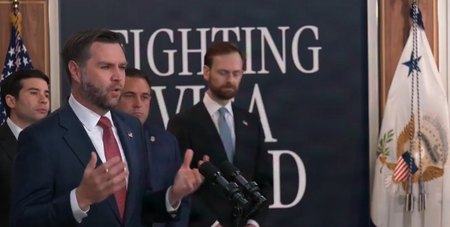
US Vice President JD Vance on Thursday accused foreign IT outsourcing companies of playing a central role in alleged H-1B visa fraud, claiming that workers hired through such firms were paid substantially less than Americans performing similar jobs.
His remarks came as the Trump administration suspended six major outsourcing companies, including India's Infosys, Tata, Wipro and HCL, from the permanent labour certification programme.
Cognizant and Capgemini were also included in the action.
Vance alleged that outsourcing companies helped American corporations recruit lower-paid foreign workers, undermining wages and employment opportunities for US citizens.
"These firms are as complicit or maybe more so complicit in the visa fraud than any American corporation," he said.
He claimed that H-1B employees earned about $20,000 less annually than American citizens working in comparable positions.
The wage difference was even greater for workers recruited through foreign outsourcing firms, he alleged.
"If you were brought in by one of these foreign outsourcing firms, you're making $48,000 less than an American citizen in a similar position," Vance said.
He argued that employers were exploiting the dependence of foreign workers on their sponsoring companies.
Vance described such employees as effectively being controlled by their employers because losing their jobs could jeopardise their ability to remain in the United States.
He accused companies of using this vulnerability to reduce labour costs.
Labour Secretary Keith Sonderling announced the suspension of the six outsourcing companies following investigations by the Department of Labour's Inspector General.
The action stops the acceptance of new permanent labour certification applications involving the companies and the processing of pending applications.
Sonderling said the companies covered by the broader enforcement action, including Microsoft and Adobe, had received more than 230,000 H-1B visa approvals and over 100,000 permanent labour certifications since 2009.
He presented those figures as evidence of the scale of reliance on foreign workers, but did not provide a company-wise breakdown.
Vance urged Congress to reform the H-1B programme, saying existing enforcement powers were insufficient to address all alleged abuses.
He said the administration would continue using regulatory and investigative measures while seeking legislative changes.
The Vice President also defended efforts to increase the cost of H-1B applications, arguing that companies seeking genuinely exceptional foreign talent should be willing to pay more.
The allegations carry particular significance for India's technology services industry, whose business model includes providing skilled personnel and technical services to American corporate clients.
The H-1B programme is a temporary employment visa category for specialised occupations. Permanent labour certification is a separate employer-sponsored process that can support applications for employment-based permanent residence.