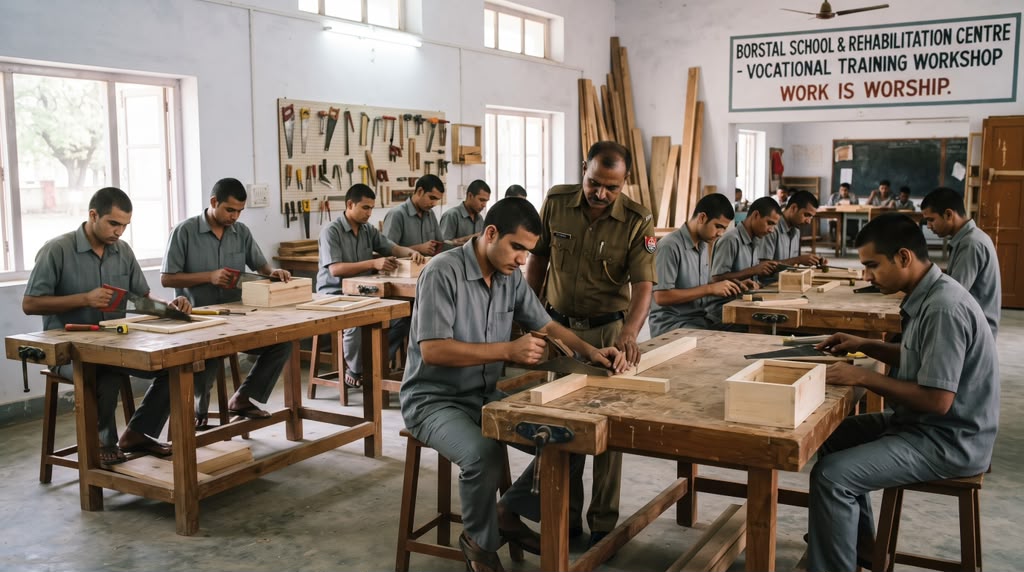
A Borstal School in India is a specialized, secure custodial institution designed specifically for the detention, training, and rehabilitation of young adult or adolescent offenders (typically aged 18 to 21, though historical and state-specific laws have sometimes covered ages 16 to 23).
Unlike regular adult prisons, the core philosophy of a Borstal school is reformative rather than punitive.
1. Core Objectives
Isolation from Hardened Criminals: The primary aim is to keep young, impressionable first-time or minor offenders away from the "contaminating" atmosphere of standard jails, where they might mix with hardened criminals.
Rehabilitation through Education and Skill-Building: Inmates are provided with structured environments that focus on transforming their behavior, mindset, and career prospects.
1. Key Features and Routine
Vocational and Agricultural Training: Inmates are taught practical trades—such as carpentry, tailoring, masonry, and farming—so they can earn an honest living upon release.
Formal Education and Moral Guidance: Daily schedules heavily feature academic classes, physical drills, moral instructions, and counseling designed to instill discipline, social responsibility, and impulse control.
Structured Daily Life: Statutes governing these institutions typically mandate a disciplined routine of structured work, study, and physical training within defined working hours (usually capped around 6 to 8 hours daily).
1. Legal Framework and Distinction
Juvenile Justice (JJ) Act vs. Borstals: Under Indian law, juveniles below the age of 18 are handled separately through the Juvenile Justice system (observation homes and special homes). Borstal schools historically bridged a crucial gap for young adults (typically 18–21) who fell outside the strict definition of a child under the JJ Act, protecting them from being cast directly into the adult prison system.
Governance: Borstal schools are governed by specific state-level legislative acts (such as the Kerala Borstal Schools Act or historical provincial acts) and operate under the supervision of state prison departments. Across India, only a select number of states maintain functional Borstal schools, and their presence, management, and legal relevance continue to evolve as criminal justice reforms debate better transitional frameworks for young adult offenders.