Washington, Oct 20
Sajeeb Wazed Joy, son of former Bangladesh Prime Minister Sheikh Hasina, alleged that the US helped engineer the 2024 protests that toppled his mother's government.
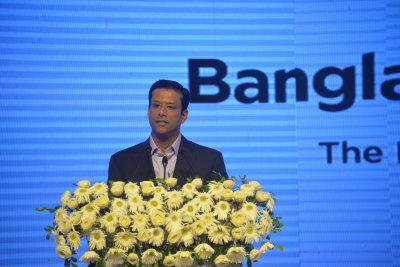
Speaking at a Washington-based press conference organised by the Center for US-Bangladesh Relations, Joy claimed that the former Biden administration had supported activities that contributed to Hasina's removal from power in August 2024.
He alleged that the United States Agency for International Development (USAID), along with organisations involved in democracy promotion, had helped mobilise groups participating in the protests.
"Of course, the Biden administration was heavily involved through USAID funding to the tune of $50 million for this regime change," Joy said.
He also accused the National Democratic Institute and International Republican Institute of helping organise and train groups that subsequently participated in the unrest.
Joy did not present documentary evidence during the press conference establishing that US government funds were intended to overthrow Hasina.
His allegations have not been independently verified.
Joy further claimed that former interim government chief Muhammad Yunus had been installed following American diplomatic pressure on Bangladesh's military leadership.
He alleged that the US ambassador in Dhaka had influenced the selection of Yunus to lead the interim administration.
The allegations were made during a politically charged event involving former officials and supporters of Hasina's Awami League.
Turning to regional security, Joy accused the authorities that succeeded Hasina of releasing convicted militants and allowing extremist organisations to regain influence.
He cited the release of prisoners allegedly associated with attacks involving foreign nationals and claimed that Pakistan-linked militant groups had increased their activities in Bangladesh.
Joy also alleged that individuals associated with Lashkar-e-Taiba had appeared at public gatherings in Bangladesh.
Joy said the developments posed potential risks to India and the wider region, particularly as Bangladesh's political and security relationships continued to evolve.
He also accused the authorities in Dhaka of strengthening ties with China and claimed that Chinese companies were benefiting from political changes following Hasina's departure.
Joy alleged that corruption had influenced commercial relationships with Chinese businesses.
On economic relations with Washington, he questioned Bangladesh's ability to honour major commercial commitments to American companies.
Joy referred to contracts involving US energy company Excelerate Energy and aircraft manufacturer Boeing, claiming that Bangladesh lacked sufficient financial resources to meet its obligations.
"They've signed a contract for 29 Boeings. The government of Bangladesh does not have the money to pay for them," he said.
He also claimed that American energy suppliers were not receiving full payments under existing arrangements.
Neither the companies nor the Bangladesh government provided responses in the supplied transcript.
Former senior Bangladeshi official Ahmad Kaikaus, who served under Hasina, separately argued that political instability and weakening institutions were damaging investor confidence and threatening economic development.
He said the United States and other international partners should encourage dialogue, due process and peaceful political competition rather than deepen Bangladesh's political divisions.
The allegations emerge against the backdrop of Hasina's removal from power following mass protests in August 2024. Her administration had faced criticism over political repression, disputed elections and the handling of demonstrations before its collapse.