Washington, Oct 23
The United States on Thursday proposed widening restrictions on overseas investments in sensitive technologies, adding biotechnology, hypersonic systems and advanced computing to a programme intended to prevent American capital from strengthening foreign adversaries.
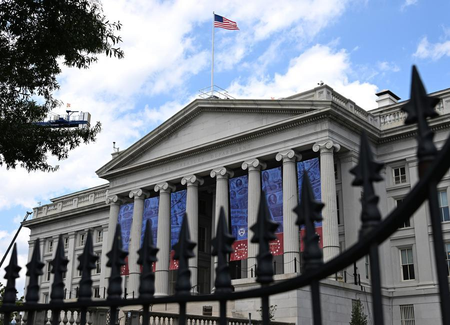
The Treasury Department’s proposal would expand its Outbound Investment Security Programme under the Comprehensive Outbound Investment National Security Act, known as the COINS Act.
Certain investments would be prohibited, while others would require notification to Treasury. The proposed regulations have not taken effect. Public comments are due by December 7, and final regulations will establish an implementation date.
The measure covers activities involving semiconductors and microelectronics, artificial intelligence, quantum technologies, high-performance computing and supercomputing, hypersonic systems, and biotechnology.
Treasury said the restrictions were intended to address investments that could support military modernisation, intelligence, surveillance and other capabilities threatening US national security.
“The proposed regulations would strengthen the existing Outbound Investment Security Program to prevent our adversaries from using U.S. investment to develop critical technologies that threaten U.S. national security,” Treasury Secretary Scott Bessent said.
The proposal would extend the programme’s country coverage beyond China, including Hong Kong and Macau, to Cuba, Iran, North Korea and Russia.
The statutory language also names Venezuela under the regime of Nicolás Maduro. However, Treasury’s accompanying guidance says Venezuela does not currently meet that definition because the Maduro regime no longer exists. Investments involving entities there could nevertheless fall within the rules through other covered connections.
The proposed obligations would apply to US citizens, lawful permanent residents and American entities, with additional requirements concerning controlled foreign entities. Indian-origin investors who fall within those categories would therefore need to assess covered transactions under the same rules as other US persons.
Treasury said the programme would target particular transactions and technologies rather than prohibit all investment in the countries concerned. Proposed exceptions include certain publicly traded securities, investment funds and transactions within corporate groups, subject to applicable conditions.
“The proposed regulations are designed to address risks that can arise when foreign adversaries try to benefit from U.S. investment in key technology sectors,” said Christopher Pilkerton, assistant secretary for investment security.
The proposal also addresses the information investors would have to provide, expectations for reasonable and diligent inquiries, and conduct that could constitute a violation.
It would create a process for eligible parties to seek non-binding feedback from Treasury on whether a transaction would be prohibited.
Treasury’s underlying proposal says it has received approximately 100 investment notifications in the semiconductor and AI industries since the existing programme began operating.
The existing programme originated in an August 2023 executive order and took effect on January 2, 2025. It focused on specified investments connected to China in semiconductors, quantum technologies and artificial intelligence.
Congress enacted the COINS Act in December 2025 as part of the fiscal 2026 defence authorisation law. It placed the outbound-investment framework on a statutory footing and authorised its expansion to additional technologies and countries.