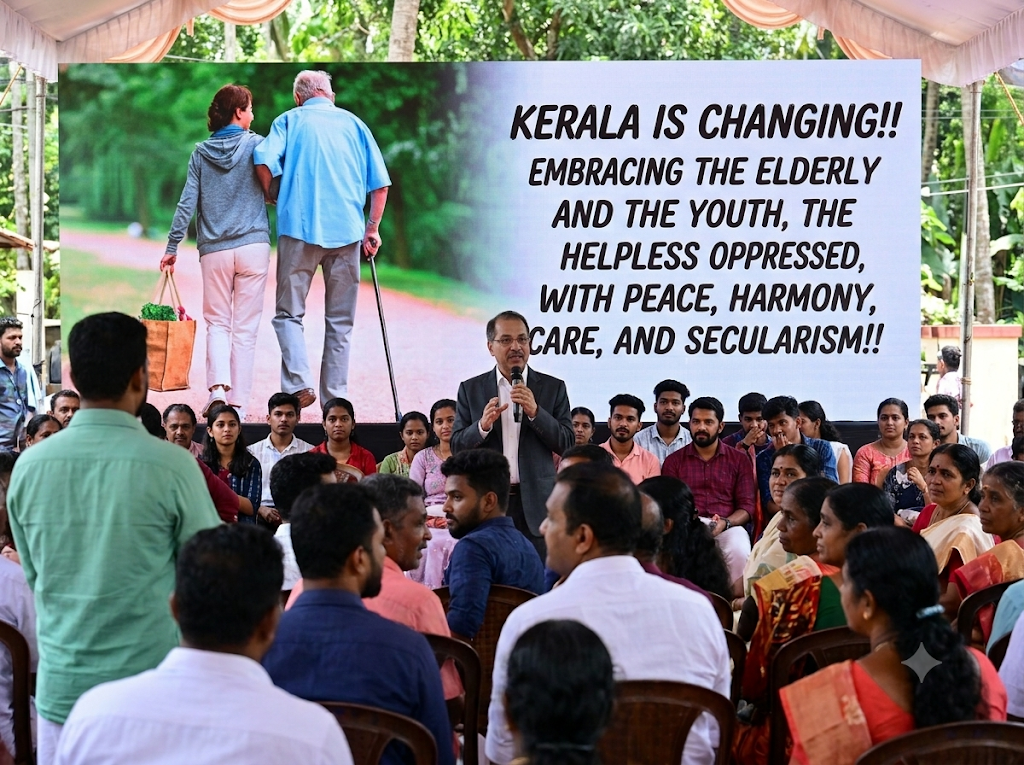
Drawing lessons from countries like Japan, as well as models in the US and UK, Kerala aims to channel the vast wisdom and experience of retirees into economic growth.
"A new step to provide legal protection to senior citizens"
as Kerala Chief Minister V. D. Satheesan introduced the Keralam Senior Citizens (Care and Protection of Rights) Bill, 2026 in the Kerala Legislative Assembly on October 13, 2026.
Key Points of the Speech
1. A Historic Department & Legal Guarantee
With the passage of this bill, the Kerala Legislative Assembly sets a global model for the protection of senior citizens.
Fulfilling an election guarantee made during the first cabinet meeting itself, Kerala became the first state in India to establish an exclusive Department for Senior Citizens.
The overarching goal of the bill is to ensure that care and protection are not treated as charity, but as the legal right and privilege of every senior citizen.
2. Demographic Shift & Brain Drain
All future state planning must factor in the dramatic demographic changes taking place in Kerala.
Due to delayed marriages, changing family preferences, and declining birth rates, the youth population—often referred to as the demographic dividend—is shrinking (evidenced by declining 1st-standard enrollments and SSLC exam numbers).
Simultaneously, widespread youth migration ("brain drain") for education and employment is occurring alongside rising life expectancy. By 2036, Kerala's senior citizen population is projected to be double the national average.
3. Transitioning to a "Silver Economy"
The new Department for Senior Citizens should not be misunderstood as merely a welfare project. While welfare and care form a vital component, the primary focus is building a "Silver Economy"—making individuals over 60 constructive and creative contributors to society.
In many foreign universities, professors do not retire at 60 because losing their accumulated research and expertise is viewed as a loss to the state. While service rules prevent changing retirement ages directly, the state can act as a facilitator to connect retired experts (as technical, management, and marketing mentors with an honorarium) to young startup entrepreneurs who lack industry experience.
4. Comprehensive Data Drive & Ward-Level Neighbourhood Networks
Many elderly citizens live alone or are bedridden due to strokes, dementia, or cancer. The government is launching a massive data drive to map every senior citizen in the state, specifically identifying those requiring palliative care or medical support.
To ensure that no senior citizen ever feels alone, neighbourhood support groups (modeled after Ayalkoottam / Kudumbashree networks) and a dedicated volunteer corps will be formed in every local body ward. These units will work alongside local palliative care systems to check daily on whether elderly residents have eaten, taken their medication, and received necessary medical attention.
5. Certified Caregivers Course & Living Will
Adapting syllabi from the UK, Germany, and Australia, an expert academic team is designing a formal Caregivers Course (positioned just below nursing qualifications) to begin in the next academic year, complete with a one-year internship.
While affluent families can hire certified caregivers directly, the government, local bodies, and CSR initiatives will fund caregiver services for economically disadvantaged seniors—simultaneously creating thousands of new job opportunities.
The bill also introduces progressive legal provisions, including the right to execute a "Living Will" (advance medical directive) for end-of-life care, mandatory registration for care homes, and strict penalties (up to three years imprisonment) for abandoning or abusing senior citizens.
If that bill also included a provision to give senior citizens a monthly pension of Rs 10,000, we could call it a model for the world. Instead, after raising salaries for MLAs and Ministers, it would be good if they clarified exactly what they will give to Senior citizens.
Embracing the elderly and the youth, the helpless and the oppressed, with peace, harmony, care, and secularism!!