Washington, Nov 11
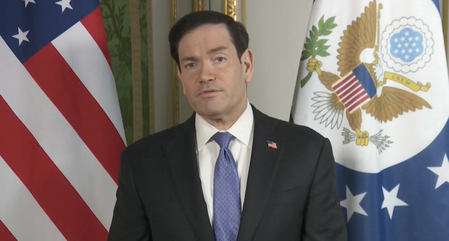
The United States and China have held technical-level discussions on artificial intelligence safeguards but have nothing to announce, Secretary of State Marco Rubio has said, signalling that the issue remains unresolved ahead of upcoming international summits.
Rubio on Tuesday (local time) said the subject should be raised at a forthcoming summit and would likely feature in discussions involving leaders of Asia-Pacific economies and the Group of 20.
"I know there's been conversations with them sort of at a -- at a technical level, but we don't have anything to announce on it," Rubio told reporters after a G7 meeting.
"Obviously, we've heard their perspective, they've heard ours, but that's still a work in progress," he added.
He was responding to questions about whether Washington and Beijing had held serious discussions on AI guardrails since their last presidential-level meeting, and whether the issue would be taken up again at the next summit.
Rubio indicated that the debate would not be confined to bilateral discussions between the two countries.
"Yeah. Well, it should be an issue that we raise at the summit," he said.
He expected leaders attending the Asia-Pacific Economic Cooperation (APEC) gathering to discuss AI and said the subject would also feature at the G20, where China would be represented.
Rubio described the exchanges as technical-level conversations in which each government had presented its perspective.
Responding to a question, Rubio said both governments would pursue their own national interests.
"Well, let me just say I think that the Chinese system, it's always going to act in the best interest of the Chinese system, and the United States will always act in the best interests of the United States," he said.
Rubio said the Trump administration would measure its positions by what it considered beneficial to Americans, even when that created disagreements with Beijing.
"And that will often put us in conflict or in disagreement with other countries, including China," he said.
The Secretary of State also linked Washington's approach to AI to a broader insistence that US foreign policy put American interests first.
"We don't work for the global order. We don't work for other countries. We work for the United States," he said.
When asked about prospects for a meeting involving the United States, Russia and China, potentially covering nuclear weapons and proliferation, he said there was an intention to hold such a meeting and that officials were working on its organisation, but gave no date or formal announcement.
He declined to speculate on what China might accept, saying President Donald Trump wanted the meeting to take place if possible and regarded the status of nuclear weapons worldwide as a subject worth discussing.