Mumbai, Nov 21
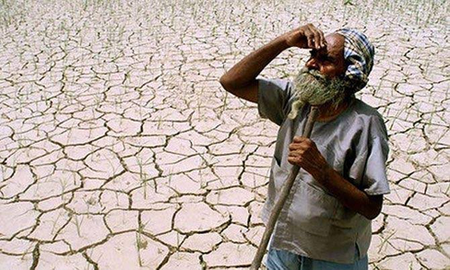
Maharashtra is facing one of its worst droughts in recent history, with Rabi sowing falling well below levels recorded during the devastating 1972 drought. According to the state Agriculture Department, only 14.74 lakh hectares have been sown so far in the 2026-27 Rabi season, compared with 47.29 lakh hectares during the 1972-73 season, raising fears that this could become the lowest Rabi sowing season on record in the state.
The India Meteorological Department (IMD) and global weather organisations have declared the active El Niño in the Pacific Ocean to be a powerful "Super El Niño." Its direct impact on the monsoon led to a 19 per cent rainfall deficit across Maharashtra compared to the average, with Solapur recording the sharpest drop at 59 per cent below normal.
Almost every district received deficient rainfall, and whatever rain did fall occurred largely within a 15-day window in July. Consequently, the Kharif season failed, and acute drinking water shortages in rural areas have slowed Rabi sowing to a crawl.
The state Agriculture Department holds Rabi sowing records dating back to 1960. While Maharashtra's average Rabi sowing area is 55 to 60 lakh hectares, the historical comparison underscores the severity of the current crisis.
"During the 1972-73 Rabi season, sowing for food grains was done on 36,64,000 hectares against 7,79,812 hectares this year, pulses 4,31,000 hectares against 6,78,385 hectares and oil seeds 6,34,000 hectares against paltry 16,106 hectares. Against the total sowing area of 47,29,000 hectares in 1972-73, only 14,74,304 hectares are there across the state in 2026-27," added the agriculture department.
Previously, the lowest Rabi sowing in the state's history was recorded in 1991–92 at 40 lakh hectares. Experts see virtually no possibility of this year's total crossing the 20 to 25 lakh hectare mark by the end of December.
"Farmers in the state are genuinely facing a severe drought situation. The Agriculture Department has appealed to farmers to cultivate fodder crops using whatever water is available for irrigation. Providing food grains to people is manageable, but supplying fodder and water for livestock is a massive challenge. The government and the Agriculture Department are planning meticulously to tackle the impending crisis," said the state Agriculture Minister Dattatray Bharane.
The drought has visibly disrupted rural life and impacted the Kartiki Yatra, a major pilgrimage of the Warkari sect. Anticipating a turnout of 12 to 15 lakh devotees, the local administration had made extensive arrangements in Pandharpur. However, only a little over 3 lakh devotees arrived in the temple town by Friday. The official Mahapuja was performed on Saturday by Deputy Chief Minister Eknath Shinde.
Earlier, the Maharashtra Relief and Rehabilitation Minister Makarand Jadhav-Patil on November 19 announced that the state government has included six additional talukas in its list of drought-affected regions, taking the total number of drought-hit talukas in the state for the Kharif 2026 season to 310. The newly added talukas are Dindori (Nashik district), Wada and Vikramgad (Palghar district), Chiplun (Ratnagiri district), and Hatkanangale and Gadhinglaj (Kolhapur district). A Government Resolution (GR) formalising the decision has been issued.
The state had earlier declared 304 talukas drought-affected based on rainfall deficit and other parameters during the 2026 Kharif season. Following representations seeking the inclusion of remaining affected areas, Chief Minister Devendra Fadnavis directed the administration during a recent Cabinet meeting to conduct a 20 per cent sample survey of five major crops and carry out on-ground field verification in accordance with Central government norms. Based on subsequent reports submitted by the respective District Collectors, these six talukas were added to the list, Minister Jadhav-Patil said.
With this notification, a comprehensive package of drought relief measures and concessions has come into effect across the newly included talukas.
Minister Jadhav-Patil said the government has provided exemptions in land revenue, restructuring of crop loans, and a stay on the recovery of agriculture-related loans. While agricultural pumps up to 7.5 horsepower (HP) already enjoy a full power bill waiver, pumps exceeding 7.5 HP in these talukas will receive concessions on current electricity bills.
Furthermore, power connections to agricultural pumps in scarcity-declared villages will not be disconnected.