








AMERICA
Market Sell-Off: What Should Physicians Do With Their Portfolios?
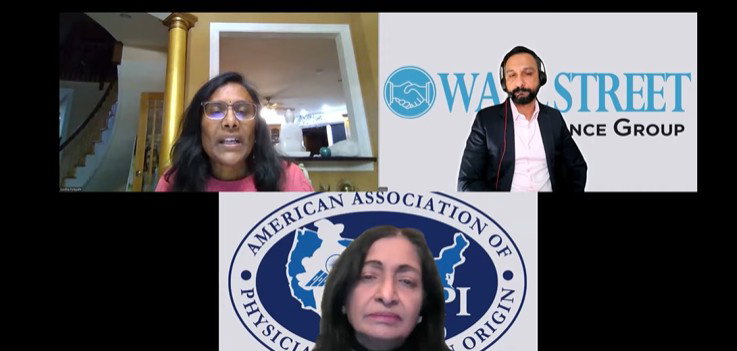
AAPI Virtual Webinar Urges Physicians to Stay Disciplined, Diversify, and Focus on Long-Term Financial Goals Amid Market Volatility
OAK BROOK, IL, November 27, 2026: Amid market volatility and growing concern among investors, the American Association of Physicians of Indian Origin (AAPI) hosted a virtual webinar on Sunday, November 22, bringing together physician leaders and financial experts to examine how Doctors should respond to a market sell-off without allowing short-term anxiety to undermine long-term financial goals.
With technology and artificial-intelligence stocks under pressure and market volatility unsettling investors, a virtual educational webinar brought physician leaders and financial expertise together to tackle a timely question: What should physicians do with their portfolios during a market sell-off?
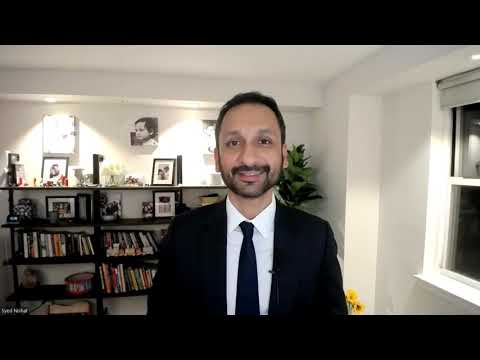
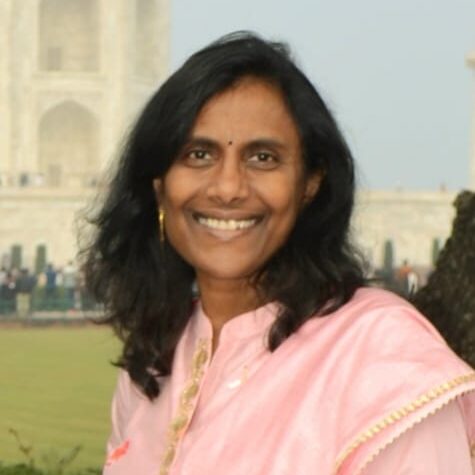
The virtual program featured Dr. Meher Medavaram, President of AAPI; Sunita Polepalli, MD, Board of Trustees member for national AAPI; and Syed Nishad, a Certified Financial Planner, and Certified Plan Fiduciary Advisor. The discussion explored the market decline, diversification, portfolio rebalancing, retirement preparedness, and year-end tax planning.
Opening the virtual session, Dr. Medavaram acknowledged the anxiety generated by recent market movements and said the objective was to understand “what’s going on” and “what to do.”
As Medavaram emphasized, the objective is to help physicians make “informed decisions.” In volatile times, “that may be the most valuable investment prescription of all: replace panic with perspective, speculation with diversification, and attempts to outguess the market with a disciplined plan built for the long term.”
Dr. Polepalli placed the conversation within a broader mission of financial education. “AAPI’s goal is to educate its members about the importance of financial planning and becoming financially independent,” she said. She emphasized that participants should consult their own advisers and attorneys for individualized advice and noted that RPI was not endorsing particular recommendations or financial advisers.
A Correction, Not Necessarily a Crisis
Nishad sought to put the market decline into historical perspective. Using the figures presented during the webinar, he said the S&P 500 had fallen about 11.6% from its October 6 peak, while the Nasdaq was down approximately 18% from its peak. He described a 10% to 20% decline as correction territory, while a fall exceeding 20% is generally characterized as a bear market.
“This kind of correction is quite normal,” Nishad told participants, cautioning against interpreting every significant decline as the beginning of a prolonged financial crisis
A major concern, he said, was the heavy concentration of some portfolios in individual technology and AI-related stocks. His argument for physicians was that broad diversification can help prevent a decline in one company or sector from inflicting disproportionate damage on an investor’s wealth.
“No one can beat the market, including Syed Nishad,” he said, advocating passive investing and broadly diversified index funds over heavy concentration in individual stocks. “Index funds are already diversified for you.”
That advice is particularly relevant for physicians who have accumulated significant positions in a few high-performing technology companies. Nishad said there was “no right answer” for someone already holding a heavily concentrated portfolio and emphasized that the appropriate response depends on personal circumstances, risk tolerance and proximity to retirement.
“Stay Invested”
Perhaps the clearest message of the webinar concerned market timing. “Market timing does not work. It’s very dangerous,” Nishad said. “I highly recommend in this down market stay invested.” To illustrate the potential cost of moving in and out of the market, he presented statistics covering 2005 through 2024.
According to his presentation, $10,000 that remained fully invested would have grown to approximately $71,000, whereas the example involving an investor who attempted to time the market and missed its strongest days resulted in roughly $32,000.
“Selling it is a big mistake in this market,” he said. Instead, for investors with additional cash, he discussed gradual dollar-cost averaging during substantial declines rather than attempting to predict the precise bottom.

Rebalancing With Discipline
The webinar also focused on whether physicians’ existing asset allocations continue to reflect their age, career stage, retirement horizon and financial objectives.
Nishad illustrated rebalancing with a hypothetical portfolio holding 70% equities and 30% bonds. After falling stock prices alter that balance, an investor might consider moving the portfolio back toward its intended allocation rather than abandoning the investment strategy altogether. “This is a good time to rebalance the portfolio,” he said. [(19) AAP W...- YouTube]
For physicians approaching retirement, however, liquidity becomes increasingly important.
“I highly recommend about two years’ worth of savings at least to pay your bills,” Nishad said. The danger, he explained, is being fully invested with little cash available when markets fall, potentially forcing an investor to sell assets during a downturn.
The broader program similarly emphasized protecting money earmarked for near-term priorities, such as a home purchase, a medical-practice buy-in or tuition expenses, rather than exposing essential short-term funds to unnecessary market swings.
Tax Planning During a Down Market
Volatility can also create tax-planning opportunities for high-income physicians. Nishad called attention to tax-loss harvesting before December 31, noting that investment losses in appropriate circumstances can potentially be used in relation to gains. He repeatedly urged physicians to review applicable strategies with their CPAs and professional advisers.
He also discussed partial Roth conversions when investments have declined, saying, “It’s a very important, a good time to do a Roth conversion,” while stressing that such decisions depend on an investor’s circumstances.
The webinar’s broader educational agenda also drew attention to maximizing appropriate contributions to retirement and tax-advantaged vehicles, including 401(k), 403(b), 457(b), backdoor Roth and Health Savings Accounts, along with the importance of avoiding tax mistakes when implementing year-end strategies.
Financial Security Goes Beyond the Stock Market
Another important takeaway was that a physician’s financial health cannot be measured simply by the performance of an investment account. Emergency savings, disability protection, debt, taxation, estate considerations, and concentration risk can be equally significant components of long-term financial independence.
Questions from the audience brought particular attention to physicians five to ten years from retirement, while Nishad stressed the importance of reducing excessive concentration and creating greater breadth within the portfolio as retirement approaches.
The hour-long virtual conversation consequently moved beyond the immediate question of whether markets would rise or fall next. It became a discussion about creating financial plans capable of surviving either outcome.
Replacing Panic With Perspective
Closing the webinar, Dr. Medavaram described the session as “very informative and especially really needed” given prevailing market conditions and thanked Nishad for helping physicians “make some informed decisions” about navigating the uncertainty. That may ultimately be the webinar’s most enduring message.
Physicians cannot reliably know where the market will be tomorrow, and neither can financial professionals. But investors can control diversification, asset allocation, liquidity, saving, taxes and their own reactions when markets become volatile.
For physicians accustomed to making consequential decisions based on evidence rather than emotion, the same principle can apply to investing. The prescription offered by the webinar was not to predict every turn of the market, but to replace panic with perspective, concentration with diversification, and impulsive selling with a disciplined long-term plan. Fore more details, please visit: www.aapiusa.org


