








HEADLINES
Why Do We Need All of These Data Centers?
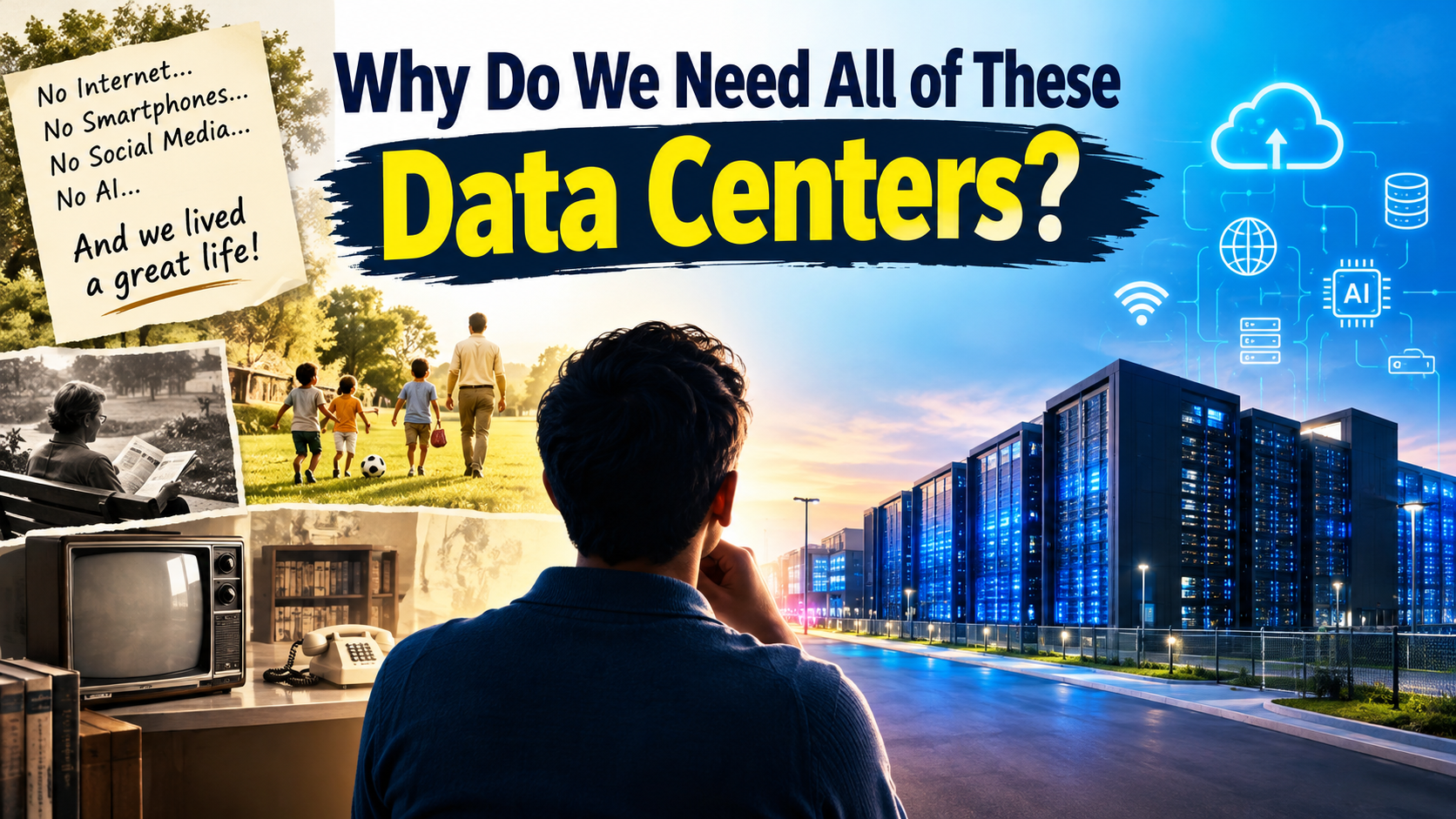
Thirty years ago, most households had no internet connection. Twenty years ago, cloud computing and artificial intelligence were nowhere near as dominant as they are today. Yet businesses operated, children received an education, hospitals treated patients, families communicated, and communities flourished. People built successful businesses, made remarkable discoveries, and lived meaningful lives without depending on enormous buildings filled with computer servers. Technology has undoubtedly made many things faster and more convenient, but we must ask ourselves a fundamental question: Are we building these massive facilities because humanity truly needs them, or because technology corporations want us to become increasingly dependent on their services? Across America and around the world, enormous investments are being made in new data centers, particularly to support the explosive growth of artificial intelligence.
These facilities consume tremendous amounts of electricity, require substantial water resources for cooling in many cases, and place increasing demands on local infrastructure. Communities are being asked to accommodate massive industrial developments, expanded power grids, and potentially higher utility costs, while technology companies promise economic growth and a brighter digital future. But who ultimately benefits the most? Is it the average family struggling to pay electricity bills, or the multibillion-dollar corporations competing to dominate the AI industry? We already have extensive digital infrastructure supporting banking, healthcare, communications, education, and countless essential services. The real question is not whether data centers serve a purpose, but whether the relentless construction of additional facilities is justified by genuine public needs. Progress should improve human life, not force humanity into an endless race for more technology, more electricity, and more dependence on machines.
We survived without the internet, smartphones, social media, and artificial intelligence, and in many ways, life was simpler, more personal, and less complicated. Families spent more time together, children played outdoors, and human relationships were not measured by screens, clicks, or algorithms. No one is suggesting that we abandon modern technology or ignore its extraordinary benefits. However, before approving another massive data center, shouldn't we ask whether its long-term benefits outweigh its environmental, economic, and social costs? Do we really need every new AI application, every additional server, and every technological convenience being marketed to us? Perhaps the most important question is not how many more data centers we can build, but how much technology we actually need to live a better life.


